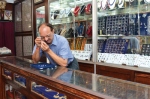
As you stroll down M Groad, tucked between the building that houses the office of the Excise, and thestatue of Aba de Faria, is a store that to a large extent, sells memories. Itis rumoured that many happy couples have ventured in and out of the storehaving procured wedding bands and mangalsutras that mark their commitment toeach other, all courtesy of the Sirsat family.
Started in the year 1870in the Mapusa marketplace, the then incumbent, Shankar Sirsat decided that hishometown would be the ideal location for a store that dealt in gold, gems andornaments. However, as the generations advanced, and it became evident thatPanjim was the emerging centre of commerce in the state, his successors decidedthat in the best interests of the store, a move to the capital would be thebest possible decision, and thus, the Panjim outlet of the store came intoexistence in the year 1949.
Currently headed byAshok and his brother Motilal, the fourth generation of the Sirsat legacy, thestore is known for their specializing in intricate craftsmanship, with specialattention paid to gold filigree. Although, for Ashok, it is much more than justthe end product that makes Sirsat products so special. “We are known primarilyfor our attention to detail, punctuality when it comes to delivery, and thequality of our end product,” he says.
Today, the Sirsats areknown to cater to all communities, and have a unique knack for being able tosingle out the preferences of their varied clientele. For instance, as Ashok’sbrother Motilal points out, “The Catholic community prefers their gold to havea slightly different look as compared to the Hindus. While the Hindu’s prefer abrighter, clearer finish, Catholics tend to prefer a slightly oxidised lookthat we achieve by mixing a small percentage of silver to the gold.”
One of the mainreasons that Sirsat Jewellers still stands out, is because of their ability toretain their signature style that has made them popular over the years, whilestill being able to evolve to suit today’s needs. “We have had to adapt topeople’s wants, but what makes us different is the fact that we still insist onproducing hand-made items, as 75 per cent of today’s jewelry is machine made,”Ashok continues, “I believe that this is what sets us apart.”