Late last week, the Supreme Court of India, in an order that could have far-reaching consequences, ruled that citizens have a fundamental right to walk on a demarcated footpath, a right that shall have priority over movement by motorised vehicles, and asked the government to frame a law to protect pedestrians. The order has thousands across the country, both in urban and semi-urban India, nodding in agreement. Anyone who has ever tried to walk in a city -- be it in a residential area or a business area of a city or semi-urban village will know that footpaths are close to non-existent. The only exception being the parts of cities that were planned during the colonial era -- provided they were fortunate enough not to have their walking spaces paved over for parking.
Pedestrians are forced to walk on the roads, or along streets where there are footpaths; they are either occupied by illegal stalls, hutments or packed with vendors, they end abruptly and without warning, or are piled up with wares from the nearby shops and business establishments. What’s even worse is that these so-called footpaths are regularly used by two-wheelers to try and get ahead of others in traffic with no attempt by either the municipal authorities or traffic police to regulate such illegal behaviour.
All one needs is to visit any country outside of South Asia to experience how much importance cities across the world give to pedestrians. The footpaths are clearly demarcated, and in areas where there aren’t any, adequate signage is prominently displayed warning drivers to watch out for pedestrians, and the speed limit for such roads is severely limited to ensure that pedestrians are given priority on such streets. In India, there have been several orders and judgements from various High Courts and the Supreme Court directing municipal authorities to ensure that footpaths are free of encroachments, only for such orders to be ignored.
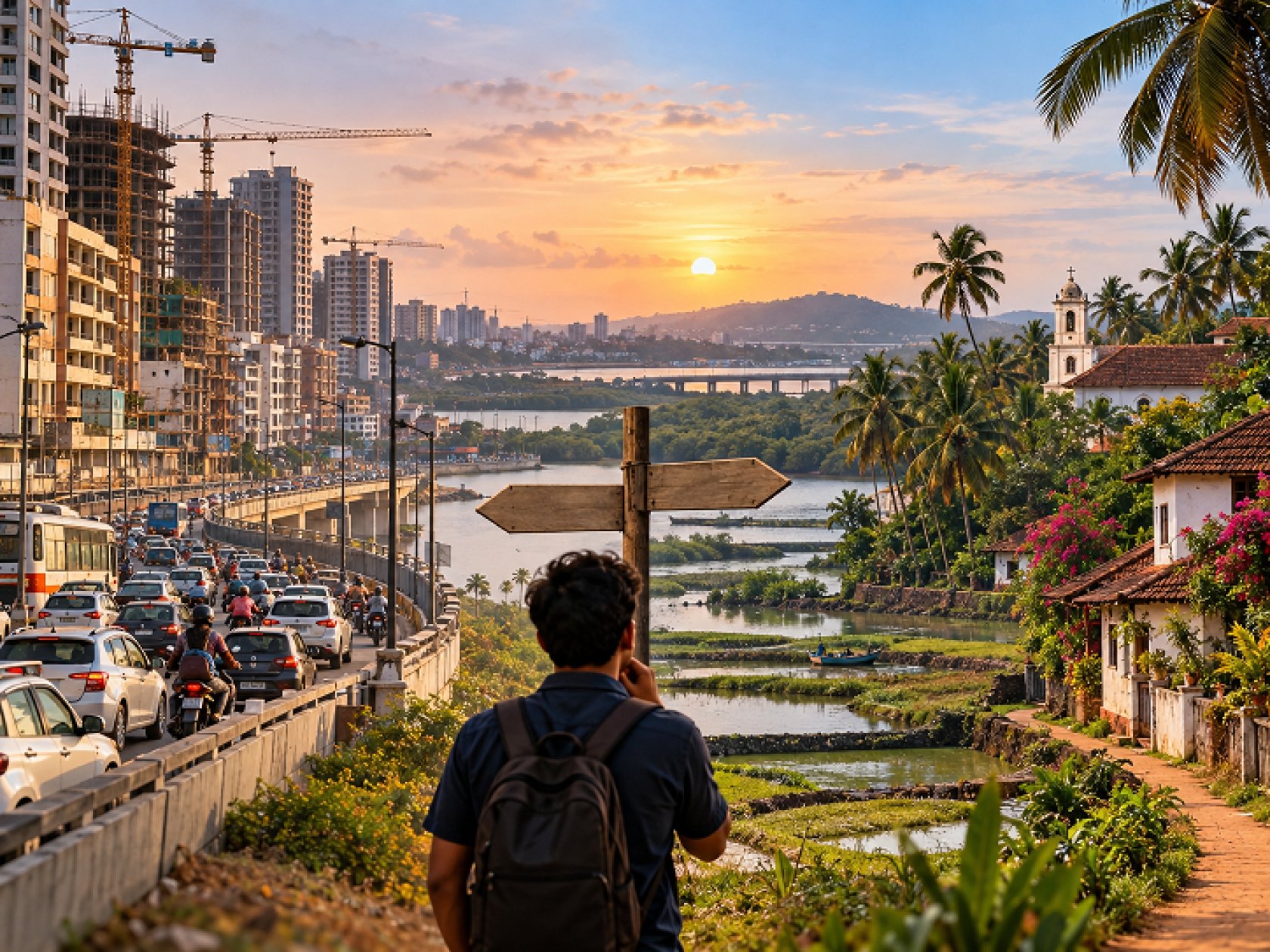
In Goa, barring a few central areas of cities like Panaji, Vasco and Margao, whose planning dates back to the colonial era, roads in the state are completely devoid of footpaths. The problem is especially exacerbated in tourist areas and coastal villages like Calangute and surrounding villages, where the lack of footpaths has meant people have no option but to walk on the road, placing themselves at the risk of being run over by motorists who themselves harbour the mistaken notion that they have preference over pedestrians.
What separates the present order from those that have come before it is that it, for perhaps the first time, lays down the law stating that the rights of pedestrians have precedence over the rights of motorists. Besides that, by stressing that safe, clearly demarcated footpaths are not merely a right, but a fundamental right under Article 19 of the Constitution, the Supreme Court has given pedestrian safety the priority it deserves.
However, ultimately the benefits of the court’s order on footpaths will lie in its implementation. So far, both central and state governments are yet to react. What’s of utmost importance is that the state government draws up a plan, secures the funding and rolls out a project to ensure that residential and commercial areas of every road in the state (excluding highways) have footpaths built alongside to make it safer for pedestrians. Walking to church, or to the market or simply taking an evening stroll should not be a life-threatening experience for anyone.