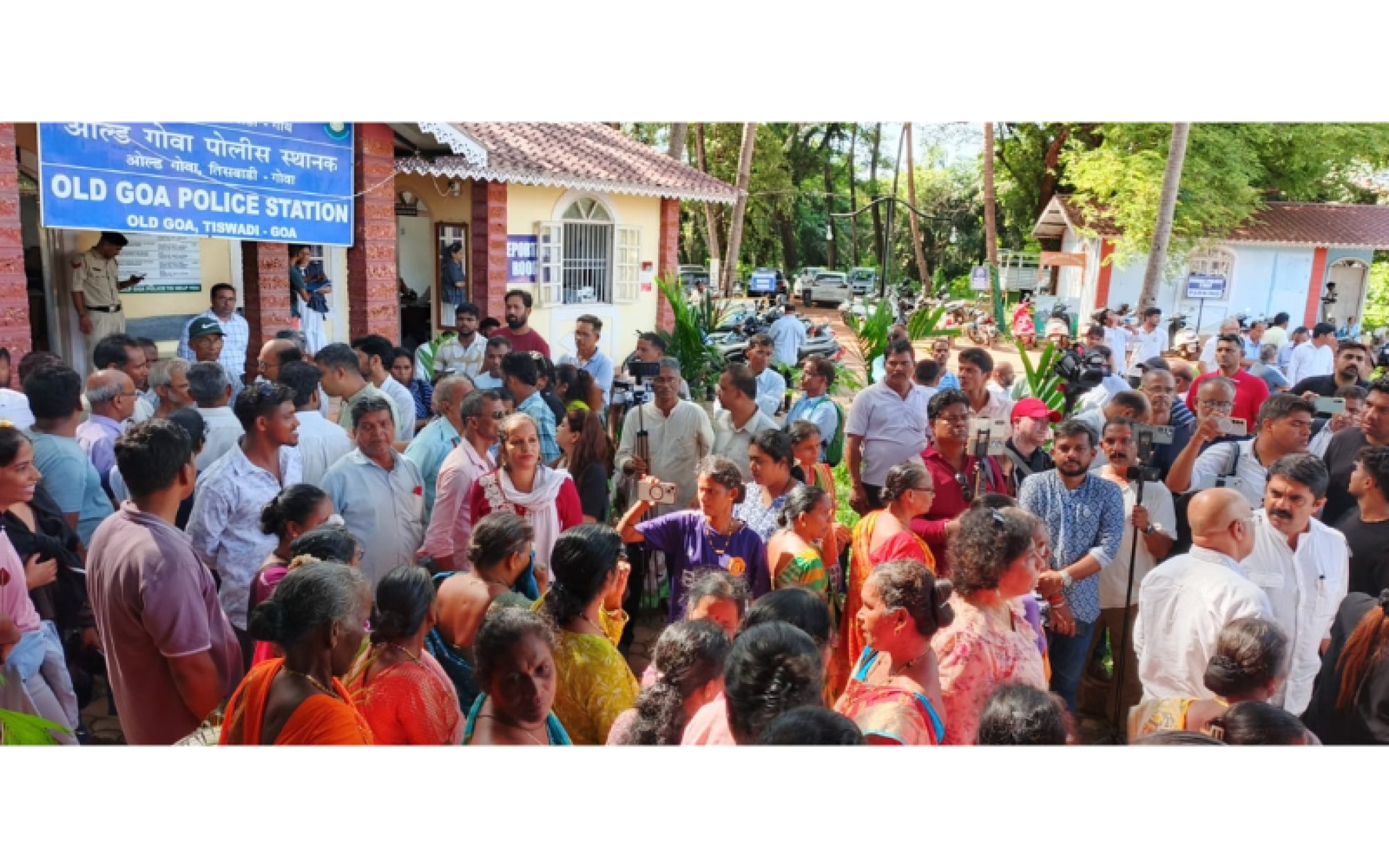
On Friday afternoon, a driver of a Mercedes car, allegedly so intoxicated that he couldn’t even stand, was stopped and dragged out of a car by locals after he knocked over a two-wheeler, killing the rider and injuring the pillion rider at Sancoale in Goa. He dragged the motorcycle under the car for about two kilometres until it burst into flames due to sparks and overheating from the dragging. Even as the car was engulfed in flames, he refused to exit the vehicle, unable to realise how close he was to losing his life.
It wasn’t the only incident involving public order to have shocked the conscience of the State over the past few weeks. Weeks earlier, a man believed to be a thief was lynched to death by a mob at Nuvem for allegedly stealing a motorcycle. Both incidents could have been avoided with timely alerts or police action, either bystanders notifying the police in advance or the police themselves being alert to such instances through existing monitoring mechanisms. Unfortunately, ever since the Chief Minister issued directives to reduce the presence of traffic police enforcement along roads in the state, such mechanisms have taken a backseat.
It may be recalled that around a year ago, Goa Chief Minister Pramod Sawant announced that only Police Inspectors with a body camera were qualified to issue fines for traffic violations. Since then, traffic police involved in enforcement have all but disappeared from the streets and are only found at odd locations along highways, where they are found with speed cameras. Lost in the bargain is police presence on the streets -- at least around crucial junctions and crowded areas -- who would serve as an extra pair of eyes for any untoward incidents, ongoing situations and violent behaviour that threatens life, limb and property. It is not possible for the police to be everywhere, all the time. Yet at the same time, we should not have a situation where the police are nowhere to be seen most of the time.
It is the latter situation that leads to people taking the law into their own hands, road rage, etc. The people of Goa haven’t forgotten how, at the start of the tourism season last year, fights between staff and guests at several beach shacks turned deadly, resulting in deaths and people on both sides of the fight being seriously injured. Such fights only go out of hand when those involved believe that involving the police will mean they are too slow to respond or that the response, whenever it comes, will be inadequate. And the trend of people taking the law into their own hands has only been increasing, but paradoxically, visible police presence is decreasing. The Goa government, in response, has claimed that it has reduced police response time to an average of nine minutes. It was obviously too late for the man lynched to death in Nuvem.
A state like Goa especially needs visible police presence given the number of clashes between road users, tourists, drunken behaviour and, as we have seen over the past few weeks, public lynchings and drunken driving. It’s time the police stepped up their game before violence and lawlessness become the order of the day in Goa.