Khyati Mashru Vasani
For The Goan
When Global Events Feel Personal
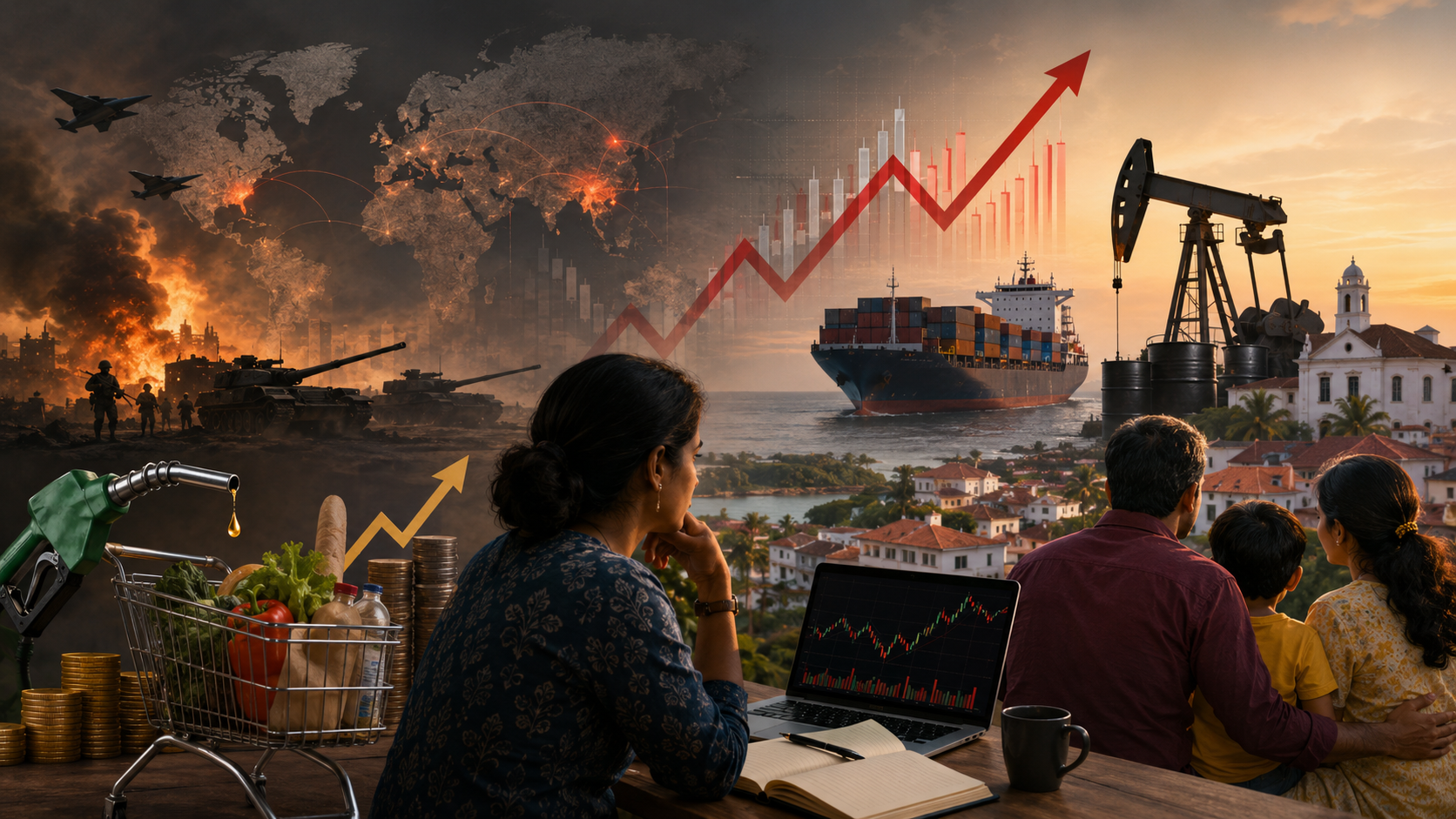
Every time a major international conflict dominates the news, whether it’s a geopolitical standoff, a trade dispute, or an armed conflict, it doesn’t stay confined to distant borders for long. Before we know it, conversations shift from battlefields to rising fuel prices, inflation, market volatility, and the cost of everyday living.
For families in Goa, these developments can feel especially relevant. A state that thrives on tourism, hospitality, small businesses, and global connections often experiences the ripple effects of international events sooner than expected. Whether it’s higher travel costs, rising household expenses, or uncertainty surrounding investments, global events can quickly become personal. Yet, while uncertainty is real, reacting emotionally to it is rarely productive.
Not Every Crisis Changes Everything
History reminds us that the world has faced periods of uncertainty time and again. Wars, economic slowdowns, pandemics, financial crises, and geopolitical tensions have all created moments when it seemed as though normality would never return. During each of these phases, markets experienced volatility, businesses adapted, and economies slowed before eventually finding their footing again. This doesn’t mean the challenges were insignificant. They certainly weren’t. What history does show, however, is that uncertainty itself is not unusual. What often feels like a permanent disruption in the moment frequently becomes one chapter in a much longer economic story.
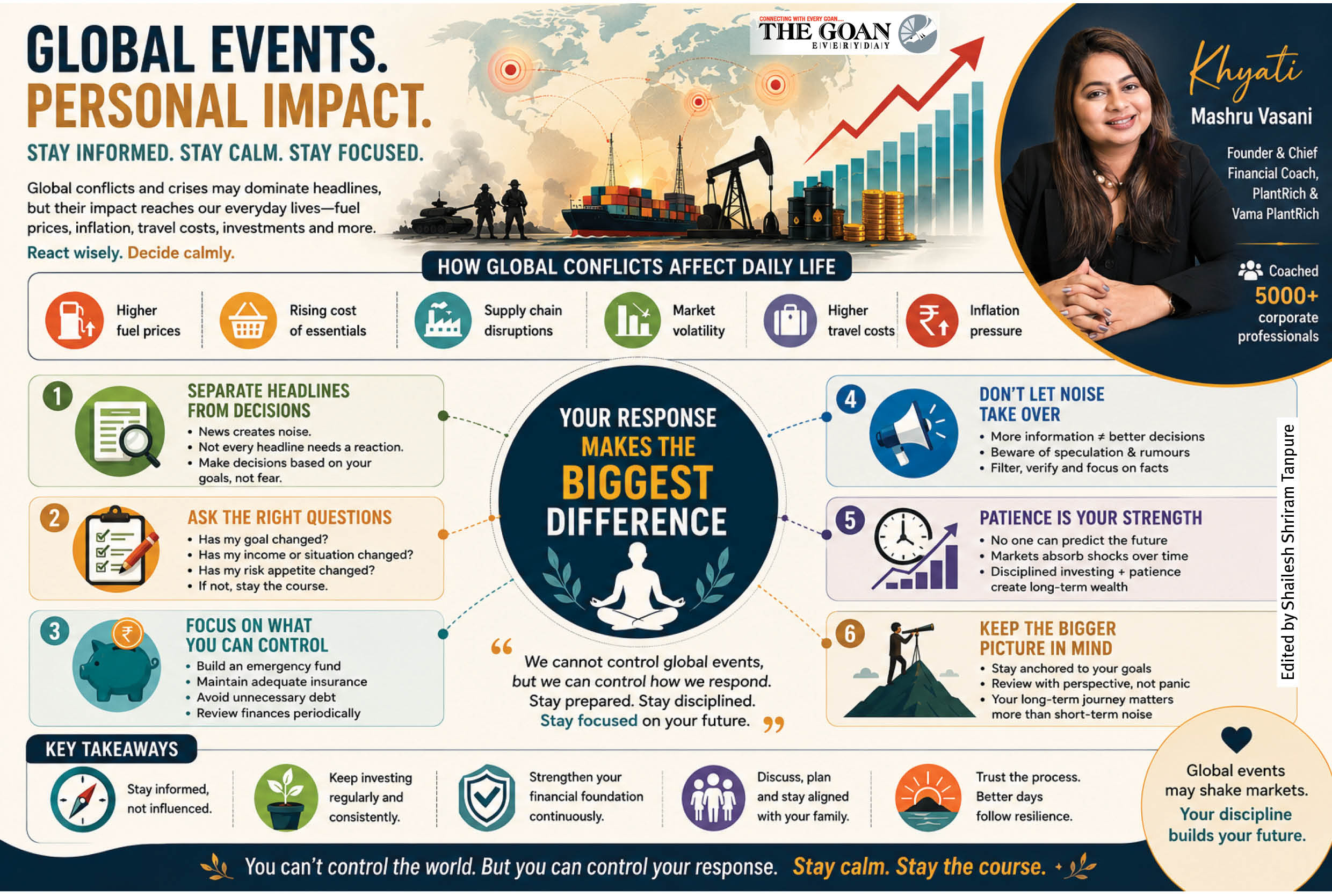
How Global Conflicts Affect Daily Life
One of the earliest economic consequences of international conflicts is often seen in energy prices.
India continues to rely significantly on imported crude oil, and any disruption in global supply can gradually influence transportation costs, manufacturing expenses, and inflation. The result is something every household notices: higher fuel bills, increased grocery expenses, and rising costs for essential goods and services.
Businesses, too, may experience supply chain disruptions or increased operating costs, which can temporarily affect profitability across different sectors.
These are genuine economic effects. But it’s equally important to recognise that financial markets often react not only to facts but also to expectations and emotions.
Separate Headlines from Decisions
Periods like these often tempt people to make sudden changes simply because the news cycle feels overwhelming.
Some consider stopping their regular investments. Others think about moving money entirely out of market-linked products or waiting indefinitely until “everything settles”. While these reactions are understandable, they are not always beneficial. Before making any significant financial decision, it helps to pause and ask a few simple questions: Has my financial goal changed? Has my income or household situation changed substantially? Has my ability to take financial risk changed?
If the answers remain largely the same, temporary market movements alone may not justify changing a long-term approach. The circumstances around us may have changed, but our personal goals often haven’t.
Focus on What You Can Control
Global events are beyond anyone’s control.
What remains within our control is how prepared we are.
Building an adequate emergency fund, maintaining suitable insurance protection, avoiding unnecessary debt, and reviewing financial arrangements periodically are habits that become even more valuable during uncertain times.
These are not actions taken because markets are falling.
They are habits that strengthen financial resilience regardless of market conditions.
Don’t Let Noise Take Over
Today’s investors have access to more information than ever before. Unfortunately, they are also exposed to more speculation than ever before. Television debates, social media posts, viral videos, and instant opinions often amplify fear long before facts become clear. Predictions are presented with certainty, and worst-case scenarios receive far more attention than balanced perspectives. Staying informed is important. But allowing every headline to influence financial decisions can become counterproductive. One of the most valuable disciplines an investor can develop is learning to distinguish useful information from temporary noise.
Patience Is Your Strength
No one can accurately predict how long geopolitical tensions will continue or how markets will respond over the coming weeks or months. What has remained remarkably consistent over decades, however, is that disciplined investing and patient decision-making have generally served investors better than emotional reactions to short-term events. Markets eventually absorb new information. Economies adapt. Businesses evolve. The path may not always be smooth, but history repeatedly demonstrates that resilience has been a recurring feature of both economies and investors.
Keep the Bigger Picture in Mind
Global conflicts may influence markets, prices, and sentiment in the short run, but they need not derail long-term financial aspirations. Instead of trying to predict every market movement or reacting to every breaking headline, it is often wiser to remain anchored to your own financial objectives and review decisions with perspective rather than panic. After all, while we cannot control global events, we can always choose how we respond to them. And during uncertain times, that choice often makes the biggest difference.
(The writer, as Founder and Chief Financial Coach of PlantRich & Vama PlantRich, has coached 5000 plus corporate professionals in rewriting their money story)