


VASCO
At a time when the State government has rolled out Artificial Intelligence (AI) enabled cameras across Goa to curb rash driving, detect traffic violations and reduce the growing number of fatal road accidents, the port town continues to remain without even a functional basic CCTV surveillance network.
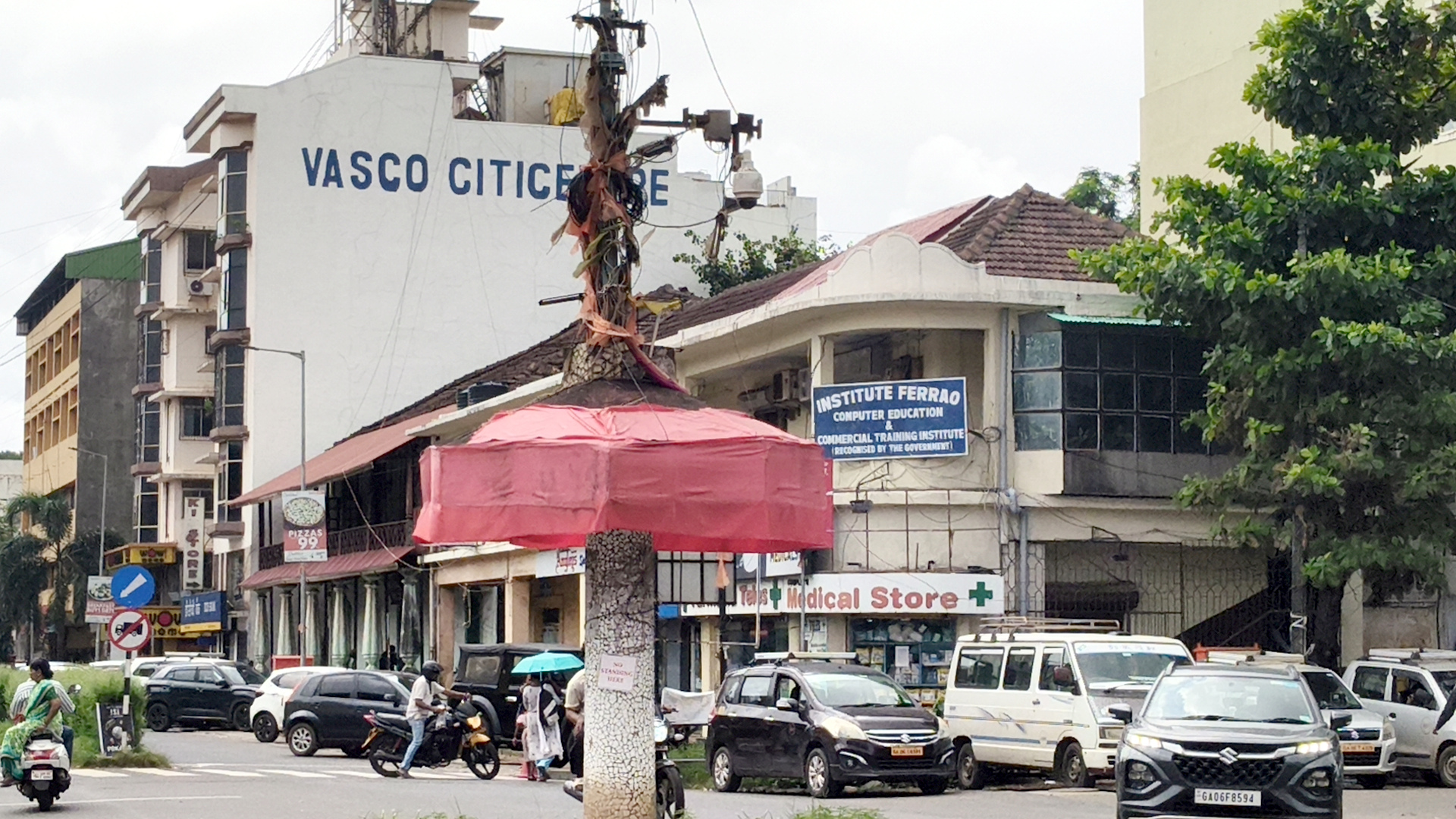
Mounted high on electric poles across Vasco's busiest junctions, the cameras were once projected as the city's silent watchdogs—a modern surveillance system meant to strengthen security, monitor encroachments and assist police in solving crimes.
Today, most of those CCTV cameras stand as rusting reminders of a project that never truly delivered.
More than a decade after 52 CCTV cameras were installed across Vasco under the MPLAD funds of then South Goa MP Francisco Sardinha at a cost of nearly Rs 50 lakh, the ambitious project remains virtually defunct, with several cameras damaged, missing or hanging lifeless over city roads.
Ironically, some of the very cameras installed to prevent crime were themselves stolen over the years, exposing the shocking collapse of what was once projected as a major step towards making Vasco a safer city.
The cameras were installed in 2011 at strategic locations to help the Mormugao Municipal Council monitor encroachments while also assisting Vasco Police in crime detection.
However, the system reportedly stopped functioning soon after installation, triggering years of blame, confusion and political assurances without any concrete revival.
The issue has survived multiple political tenures. Francisco Sardinha, during whose tenure the project was sanctioned, lost the 2014 Lok Sabha election to Narendra Sawaikar. Yet the cameras remained defunct throughout Sawaikar's term.
Sardinha returned as MP in 2019, but the CCTV network continued to gather dust.
Over the years, several Mormugao Municipal Council chairpersons publicly acknowledged the failure of the CCTV system and promised corrective measures.
Former Chairperson Nandadeep Raut had admitted that maintenance issues, lack of funds and confusion over responsibility crippled the project. Annual maintenance itself was estimated at around Rs 5 lakh, while MMC had sought financial assistance and even explored CSR funding, but the project never took off again.
Even former Vasco MLA Carlos Almeida had repeatedly stressed the need to revive the surveillance network, but little progress followed.
Recognising the increasing importance of CCTV footage in modern policing, Vasco Police had also urged business establishments to install cameras facing public roads to assist investigations. Plans to involve philanthropists and corporate houses in funding a modern surveillance system, however, failed to materialise.
In September 2022, Vasco MLA Krishna Salkar again highlighted the issue, pointing out that Vasco—home to vital defence establishments, key industrial infrastructure and one of Goa's busiest railway stations—cannot afford to function without an effective surveillance system. Police subsequently proposed CCTV coverage at nearly 100 strategic locations, but the plan reportedly stalled due to lack of funds. A revised proposal with fewer locations was later submitted through the SDPO office, but it too failed to make progress.
As Goa now moves towards deploying advanced AI-powered surveillance cameras to improve road safety and traffic enforcement, residents say the immediate priority for Vasco should be restoring a basic functional CCTV network.
Until then, the city's broken cameras will continue to overlook its streets—not as guardians of public safety, but as enduring symbols of neglected infrastructure, administrative delays and promises that never translated into action.


