 The writer is professor at Columbia University in the USA who hails from Cortalim
What should our government of Goa fear losing? The faith into which one of its citizens was born? Or the trust with which a voter elected a representative? A hillside that took centuries to form? A young person who leaves because opportunity could not be found at home?
These are very different losses. Yet in Goa today they converge around an unexpectedly useful word: CONVERSION.
The Goa government has stepped back, for now, from introducing its proposed “anti-religious conversion Bill.” It should use that pause not to revisit, study and refine the legislation, but to lay it to eternal rest.
Why bring it back at all? No reasonable person defends religious conversion through force or coercion. If someone is compelled to change faith, investigate the complaint, protect the victim and prosecute the offender.
But sweeping legislation requires evidence. If forced religious conversion has become a serious problem in Goa, place the facts before Goans: the complaints, investigations, prosecutions and convictions. A law should respond to a demonstrated problem, not manufacture the perception of one.
UNUSUAL EASE WITH FAITH
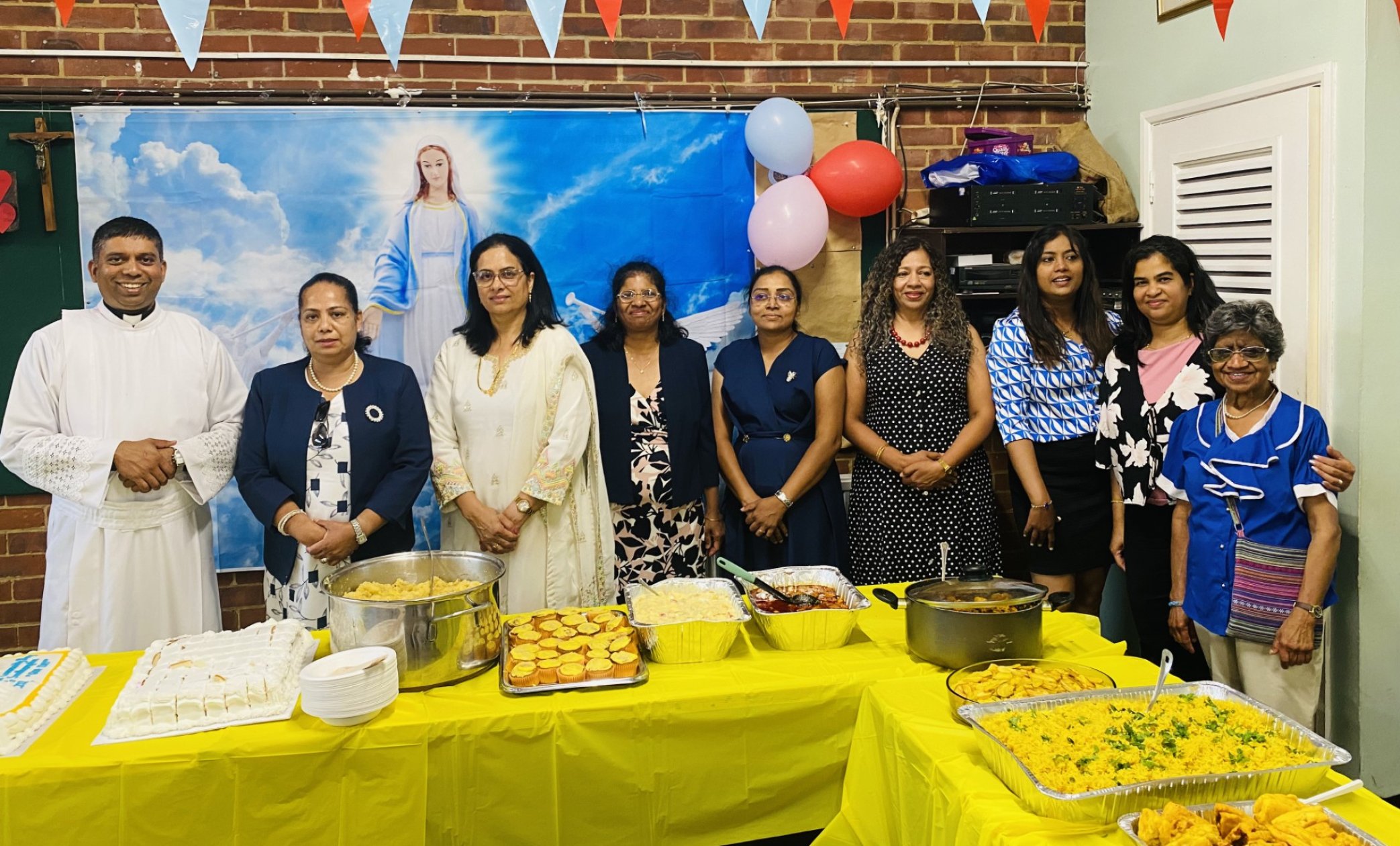
For all the complications of our history, Goa developed an unusual ease with faith. Church bells and temple bells have long occupied the same soundscape. Crosses, temples, mosques and roadside shrines share the same geography. Hindus place flowers before Christian shrines. Catholics bow while passing temples. People enter one another’s homes, celebrate one another’s festivals and mourn one another’s dead.
No government created this. It grew from something deeper than tolerance: familiarity, and perhaps kinship.
I discovered something of that as a young kid. I accompanied my Catholic neighbour’s family to the Mangeshi Temple in Priol after their new pickup had already been blessed at our Church in Cortalim. Nobody considered it strange that the same vehicle should seek blessings from both traditions.
Early that morning, before the ritual began, the priest paused and asked whether someone from “Kutthali”, the old name for Cortalim, where the sacred Mangeshi idol had once resided, was present. Nobody responded. My neighbours who owned the pickup truck were originally from Siridao.
Born in Kenya, I knew little then of my village’s deeper history. Eventually someone recognised that I was the only one with roots in Cortalim and led me forward. The priest blessed me.
Only much later did I understand what that moment represented. Centuries of history had sent families in different directions. Some remained Hindu; others became Catholic. Some moved away; others stayed. Different faiths had grown from branches of the same family tree.
Goa’s history contains pain. Temples were destroyed under Portuguese rule. Families fled. Conversions occurred under circumstances deserving honest examination. A mature society does not erase uncomfortable history, but neither does it weaponise history against the living. There are no Portuguese rulers left in Goa. There are only Goans, converts and non-converts, all raised and shaped in different ways by that history.
CONVERSATION ABOUT CONVERSION
Perhaps, then, we should broaden our conversation about conversion.
Consider the conversion of political party allegiance. When an elected representative changes parties after receiving thousands of votes under another banner, something belonging to the public has been altered: the voter’s sacred mandate. Whatever the legalities surrounding political defections, the moral question is harder to escape. What happened to the trust of the person who cast that ballot?
Then there is the conversion of land. Across Goa, fields, orchards, hillsides and green spaces are increasingly viewed not for what they contribute to a village, its ecology or its water security, but for what they might become after a change in designation. Section 39A has intensified public anxiety around precisely such land-use changes. The larger question goes beyond any single parcel or project: how much of Goa can we convert before Goa itself becomes something else? A religious conversion changes an individual’s faith. A reckless land conversion can change a village forever.
And then there is perhaps the most poignant conversion of all: the conversion of Goans into emigrants.
Goans have travelled abroad for generations, and there is nothing wrong with seeking opportunity elsewhere. But leaving acquires a different meaning when it becomes less an adventure than an economic necessity.
Young people study in Goa, but many are forced to search elsewhere for salaries, careers and futures. Some eventually change not merely their address, but their nationality.
Why should a government worry that a citizen might voluntarily change religion, yet be less troubled when that same citizen feels compelled to change country?
CONFRONTING DIFFERENT REALITIES
Meanwhile, ordinary Goans confront the daily arithmetic of simply getting by. Electricity and water bills rise. So do the costs of cooking gas, petrol, groceries and housing. Young families wonder whether they will ever afford a home. Parents worry about drugs and crime. Villages struggle with garbage, sewage and unreliable services. Roads deteriorate. These are not manufactured anxieties. They are the things people wake up worrying about.
And they require something considerably harder than legislating about faith. They require governing.
Create meaningful jobs. Make neighbourhoods safer. Protect land and water. Deliver reliable public services. Make housing attainable. Spend public money wisely and not on festivals, car races and political rallies. Give young Goans a reason to believe that their future can still be built in Goa.
Faith, meanwhile, belongs to the human conscience. A Hindu should be free to remain Hindu, a Catholic Catholic, a Muslim Muslim. An adult should equally be free to embrace another faith, marry across religious lines, reject religion altogether or remain uncertain about God. Freedom of religion means little without freedom of conscience.
So let the withdrawal of this Bill be more than a pause for further study. Let it be its end.
Goa has conversions worth worrying about: a voter’s trust converted after an election, green land converted into concrete, and young Goans converted by circumstance into foreigners. These are the conversions changing not simply individual lives, but the place we will leave behind.
A government should worry less about preserving the religion into which a Goan was born, and far more about preserving the Goa in which that Goan still wants to live.