PANAJI: Chief Minister Pramod Sawant on Friday announced that 100 per cent of the production from Goa's handloom centres will soon be linked to markets, assuring artisans that the Department of Handicrafts, Textiles and Coir will facilitate marketing to ensure they receive a sustainable income.
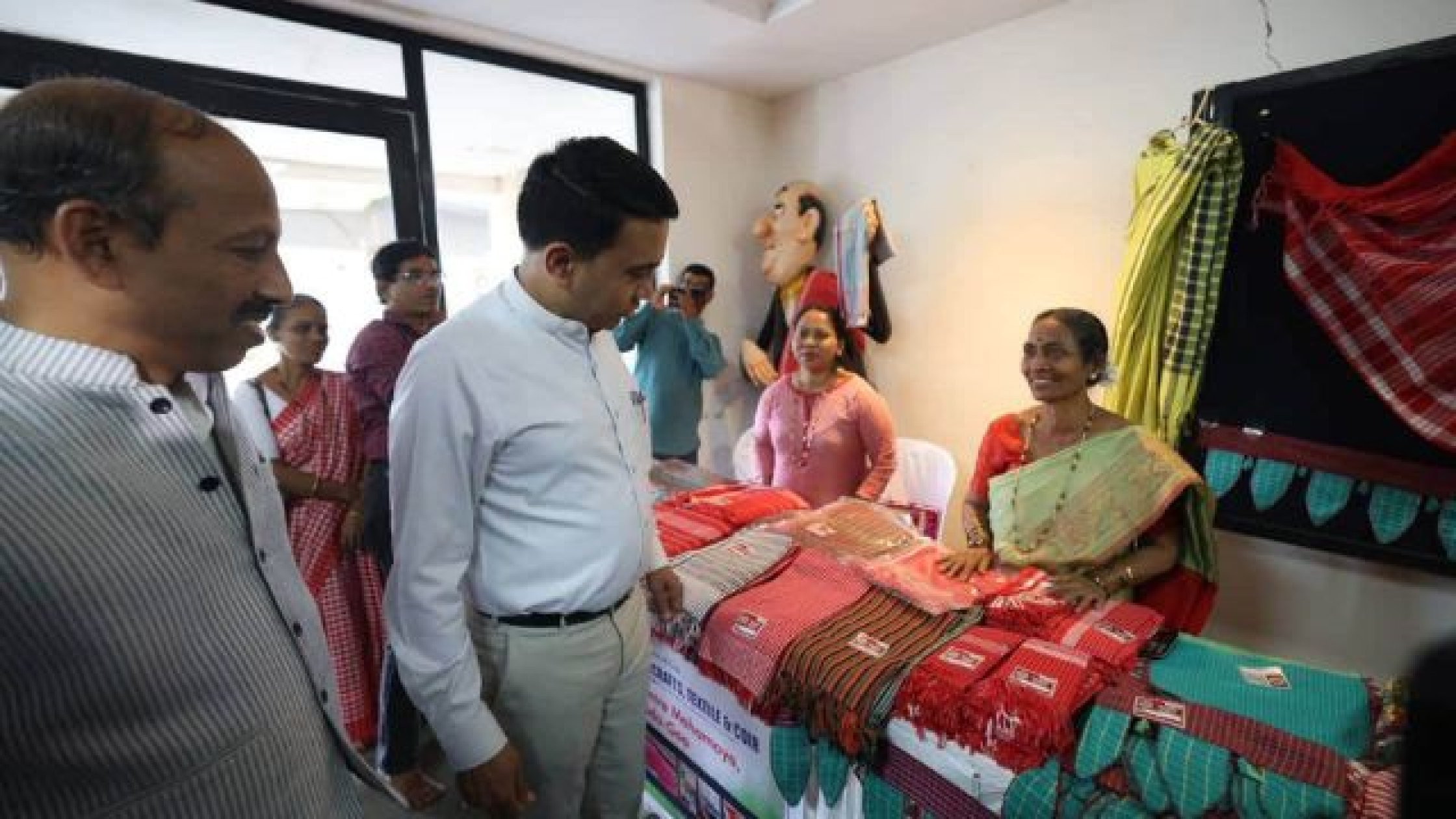
Addressing the National Handloom Day celebrations organised by the Department of Handicrafts, Textiles and Coir at Patto, Panaji, Sawant said the government has built a complete ecosystem for the sector through training, awareness, production and marketing under the Swayampurna Goem campaign launched in 2020.
"Within a few days, 100 per cent of the production from all centres will be linked to markets. Whether you make Kunbi shawls, sarees or other products, the department will ensure they reach the market. Our marketing representatives will visit artisans so that everyone gets a genuine income," Sawant said.
He said women from Pernem, Mandrem, Shiroda, Sanquelim, Sanguem, Quepem and Canacona are now producing Kunbi shawls, sarees, artisan bags, coir products and other handloom items after receiving skill training through government-run centres.
"First we focused on training, then awareness, followed by production, and now marketing. We have created a skilled workforce across Goa, and today our artisans are capable of meeting large orders," he said.
The Chief Minister said the promotion of Kunbi handloom products has received a major boost in recent years, citing the presentation of Kunbi shawls to Prime Minister Narendra Modi as an example of how local products have gained national recognition.
"When the Kunbi shawl woven by our women is presented to the Prime Minister, it becomes a matter of pride for every artisan. That awareness has helped increase the value and recognition of Goa's handloom products," he said.
Sawant also credited NABARD and the department for promoting Goan handloom products at national and international exhibitions and providing artisans with wider market exposure.
He said Goa may not have large industries in the sector, but has developed a decentralised production network capable of fulfilling bulk orders.
"If there is a requirement for 20,000 shawls, we can produce them through different centres across Goa because manufacturing has expanded at the village level," he said.
Appealing to the public to support local artisans, Sawant urged Goans and commercial establishments to choose locally made products over imported alternatives.
"I appeal to all Goans to buy these products directly from our artisans whenever you visit their stalls. Even businesses should wear our local Kunbi shawls instead of expensive Kashmiri shawls. Supporting local products keeps money with our artisans and strengthens Goa's economy," he said.
Highlighting women empowerment, Sawant said rural craft centres have enabled women to become financially independent through handloom and handicraft production.
"I am happy that during my tenure we have been able to empower women to stand on their own feet. Women from villages are running stalls, producing handloom products and earning an income with dignity," he said.
The Chief Minister also announced that the department would soon begin training programmes in coir crafts to create more employment opportunities.
"Coir has tremendous potential. It is no longer used only for mats and ropes. There is growing international demand for coir-based products, and we will soon start specialised training so that more women can benefit," he said.
Calling for environmentally sustainable practices, Sawant urged people to reduce the use of plastic bags and switch to handloom bags made by local artisans.
"If every Goan supports our handloom products under the 'Vocal for Local' and 'Aatmanirbhar Bharat' vision, it will generate significant economic benefits for our women artisans while promoting sustainable living," he added.