PANAJI
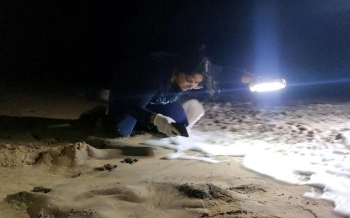
When a sea turtle researcher and her six-member team of women from Goa University and other colleges were abused by shack owners at Morjim in December 2020, it only provoked her to continue working to protect sea turtles in the State.
Sarita Fernandes, who hails from Chinchinim and Taleigao but is currently working in New Delhi, made an online presentation on Goa’s turtle nesting beaches during the public hearing at Margao and presented critical discrepancies, particularly of the draft CZMP maps by NCSCM and Draft Turtle Management Plan by Centre for Environment Education (CEE).
“The core points were the division of beaches, especially Morjim and Agonda, into commercial and conservation zones. I explained how this division doesn’t help local tourism or conservation as tourists are becoming mindful of these issues regarding wildlife,” said Fernandes, a Research Faculty for Climate Change in New Delhi and Director and Managing Trustee of the Sea Turtle Trust in Goa.
Fernandes said she moved to Delhi because she and her team were abused by shack owners in December 2020 during the inauguration of a sea turtle awareness programme with the Goa Forest Department Corporation at Morjim, because of a GCZMA-CZMP issue by the authorities leading to confusion of zones in turtle nesting and beach shack demarcation.
“We filed two complaints at the Pernem police station and are granted police protection to carry out any work on any nesting beach. I moved to ensure protection to my team in Goa of the work we have to continue doing,” said Fernandes.
During her online presentation, Fernandes said she provided details about sea turtles, their journey of travelling over 9,000 kms to return to Goa after 30 years to lay eggs on the same beach they were born as turtles and how much they contribute to Goa’s economy (Rs 1,167 crore as per NSCM report 2019) and the health of all beaches in Goa.
“Other issues I raised included very small zones marked in the report shown as turtle nestings and the wrong scientific fact in the CEE report that turtles are known to nest only on one part of the beach and hence, the beach could be divided.”
“Data and maps that they showed clearly indicated they nest across the entire beach and other beaches surrounding them,” she added.
Fernandes also pointed out that the recent beach seawall on Morjim and how the division of the beach had caused confusion among locals who did not understand the scientific impact of erosion by sea walls. “I also raised the question on why climate change mitigation steps have not been mentioned with regard to tapping mangrove reforestry, seagrass beds farming and so on, to build resilience to climate change,” she said.
She also ended with a daunting question on whether this policy is equitable to a child who doesn’t want to build and run a resort, hotel or beach shack and may want to use the beach for other activities. “Would the policy ensure beaches in Goa are protected and productive,” asked Fernandes.