MARGAO
The very mention of Tolleaband in Benaulim brings back bitter past memories, how the marooned migrants inhabiting the bandh are evacuated to safer places, including the Nehru stadium, Fatorda when the lake is inundated with rain water.
In fact, come every monsoon, and the lush green Tolleaband plays another important role “ a water catchment area during heavy rains when the adjoining river Sal flows to its spate, inundating vast tracts of low-lying areas along the river course.
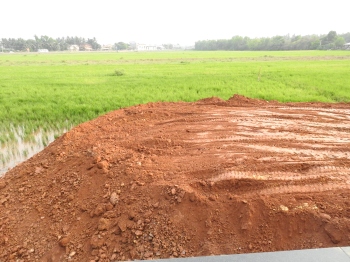
Local Benaulim villagers and farmers now fear for the worst as the PWD, National Highway has erected bamboo poles in the Tolleaband lake to fill up the water body with thousands of tonnes of mud to pave way for the construction of the western bypass.
Just a glance at the Tolleaband lake and the PWD markings inside the water body would reveal a worst scenario “ that the land filling would divide the water body into two portions, only reinforcing the fears in the minds of the local villagers that the western bypass would cut through the water body.
When The Goan team descended at the site on Saturday evening, the contractor with police protection was getting trucks to dump the mud into the field. They were apparently preparing the way for the road, which would meet the bypass near the Zudio shopping mall.
Local residents of Benaulim have been vehemently demanding construction of the bypass on stilts all along the balance 2.75 km stretch, between Benaulim and Seraulim. A couple of locals who were taking a stroll along the footpath on the banks of Tolleaband wondered why the government could not build the bypass on stilts at least along the stretch passing through the Tolleaband water body.
“Building the bypass on stilts to avoid land filling of the Tolleaband lake would not have cost the government a bomb. But, it would have helped to save the ecology and bio-diversity of the picturesque lake,” remarked a local.
Petitioner before the National Green Tribunal (NGT) Royla Fernandes said she had pleaded with the NGT that the balance 2.75 km stretch of the bypass should be put on stilts. She, however, said the NGT-constituted 10-member Expert Committee has given part-relief on the Seraulim-Mungul portion by recommending construction of the bypass on stilts up to a stretch of 980 metres.
She added: “I know the expert committee has granted a partial relief to our plea. But, we know that building the bypass via land-filling along the Benaulim-Mungul section could spell doom and cause destruction of lives and property in times of heavy rainfall.”