PANAJI
The State government has sought Rs 476 crore from NITI Aayog to bring 1,490 ha of traditional khazan land back under cultivation, with a major part of the proposed investment aimed at repairing the ageing network of bunds and sluice gates that protect these low-lying agricultural lands from saline water ingress.
The proposal, prepared by the Agriculture Department was submitted to the Directorate of Planning, Statistics and Evaluation for onward submission to NITI Aayog for funding, sources said adding that the same has been forward to the Aayog.
Of the proposed outlay, Rs 180 crore has been earmarked for strengthening khazan bunds and sluice gates, while another Rs 296 crore is proposed for desilting water bodies, including poiems, and drainage canals.
The proposed intervention covers khazan areas in Tiswadi, Bardez and Salcete, with Carambolim emerging as one of the key areas for bund strengthening. Four bunds -- Naganzo Khedo, Ofla-Caujuo-Kholi, Ofla-Dongzo and Dhado -- have been identified, with the proposed works expected to protect around 750 hectares of khazan land.
In Salcete, strengthening of the Daclem Ordh, Odlem-Ordh, Deorbhat-Tamxell, Nokhazan and Carbot-Cantor-Bebdo bunds has been proposed.
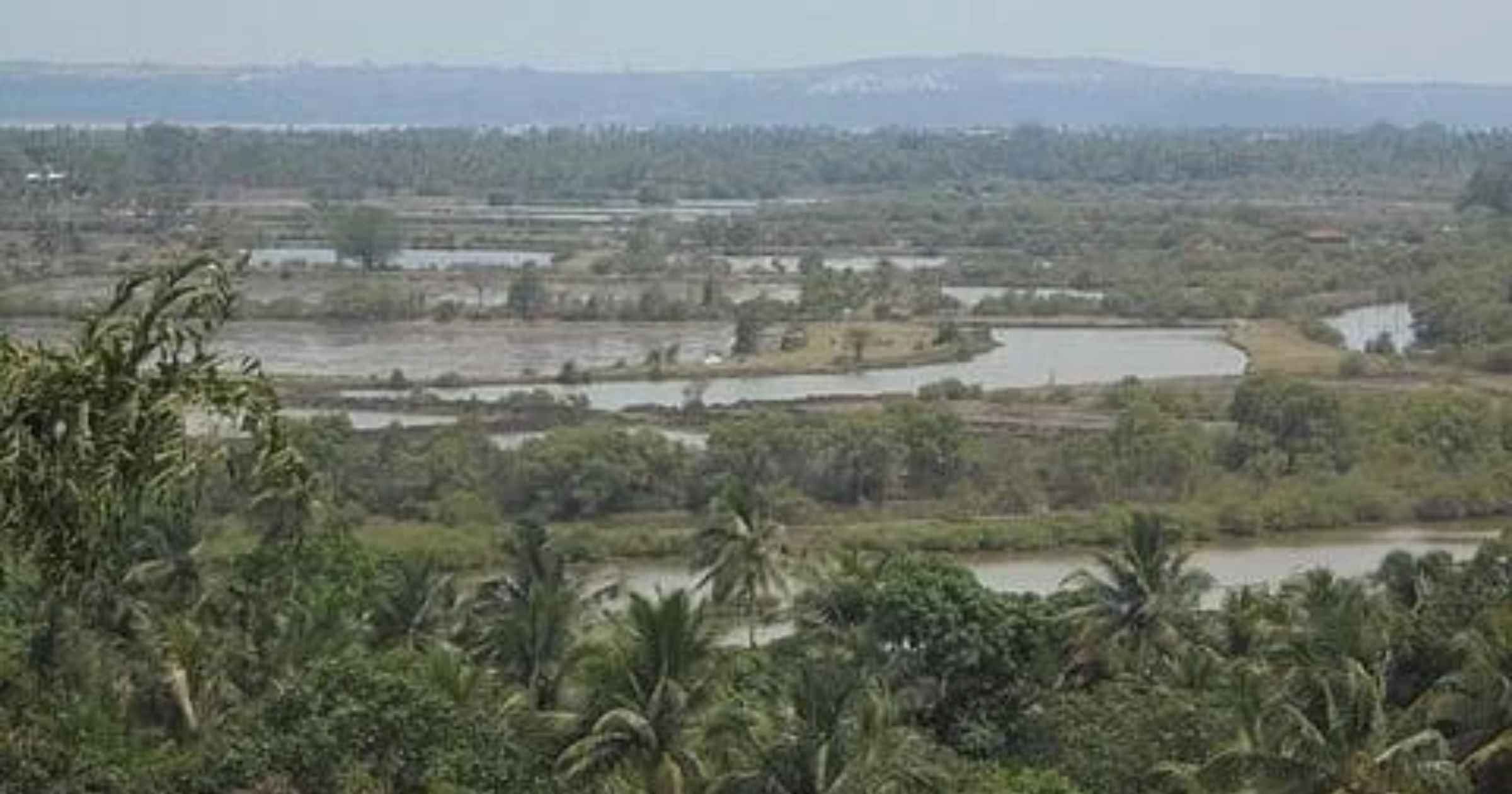
Khazan lands are low-lying estuarine areas reclaimed over centuries and traditionally used for paddy cultivation and aquaculture. Most are located in the floodplains of the Mandovi and Zuari estuaries. While estimates of the total khazan area vary, the National Centre for Sustainable Coastal Management (NCSCM), as part of the CZMP 2011 assessment, has estimated Goa’s khazan land at 13,166 ha.
A preliminary study conducted by TERI in January this year identified Poinguinim, Amona and Virdi as priority sites where science-backed interventions, coupled with community-based resource management, could support sustainable agricultural activity.
According to the study, the upstream khazan fields at Poinguinim retain near-natural freshwater conditions, making them suitable for immediate revitalisation efforts. The khazans at Amona and Virdi in Bicholim taluka, meanwhile, are in a transitional ecological state and have potential for restoration if appropriate hydraulic controls and water-management systems are introduced.
However, the TERI assessment also cautioned against a blanket revival approach. It noted that downstream khazan areas in Batim, Tiswadi, and Poinguinim have undergone ecological conversion into marine-dominated systems, making them unsuitable for revival as freshwater-based khazan agricultural systems.