


PANAJI
The Corporation of the City of Panaji (CCP) has issued strict new guidelines for sewage management in its jurisdiction after last week’s incident in which hundreds of fish were found dead in Mala Lake.
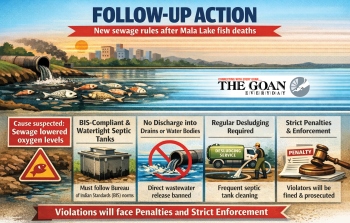
The civic body suspects that the fish deaths were caused by sewage accumulation, which depleted oxygen levels in the water. The CCP said septic tanks within its jurisdiction must now be built according to Bureau of Indian Standards (BIS) norms. Tanks must be proportionate to the number of users, fully watertight, and fitted with proper RCC slab covers, chamber covers, and exhaust pipes with protective nets. A soak pit provision is also mandatory, according to the new norms. The civic body has banned the direct release of wastewater into storm drains, sewers, or natural water sources. It has also ordered that septic tanks be located at safe distances from drinking water sources. Regular desludging by authorised agencies is also made compulsory.
In its circular, the CCP stressed that septic tanks and sewer lines must be cleaned mechanically and not manually. The use of non-standard or illegal septic tanks will attract penalties and legal action, said the circular, which comes after residents of Neuginagar reported mass fish deaths in the saline waters of Mala Lake. “The incident has made us act immediately. Sewage mismanagement cannot be tolerated. These guidelines are now in force,” a CCP official said.
The civic body has also warned that enforcement will be strict, and citizens have been urged to comply. The Mala Lake incident has sparked concern about urban sewage and waste management in the capital city, and environmentalists termed it a symptom of poor sewage infrastructure and monitoring.


