PANAJI: Goa Chief Minister Pramod Sawant on Friday extended Goa's support to the Centre's proposed One Nation, One Election initiative, saying synchronised elections would strengthen governance, ensure policy continuity and reduce the recurring burden of frequent polls.
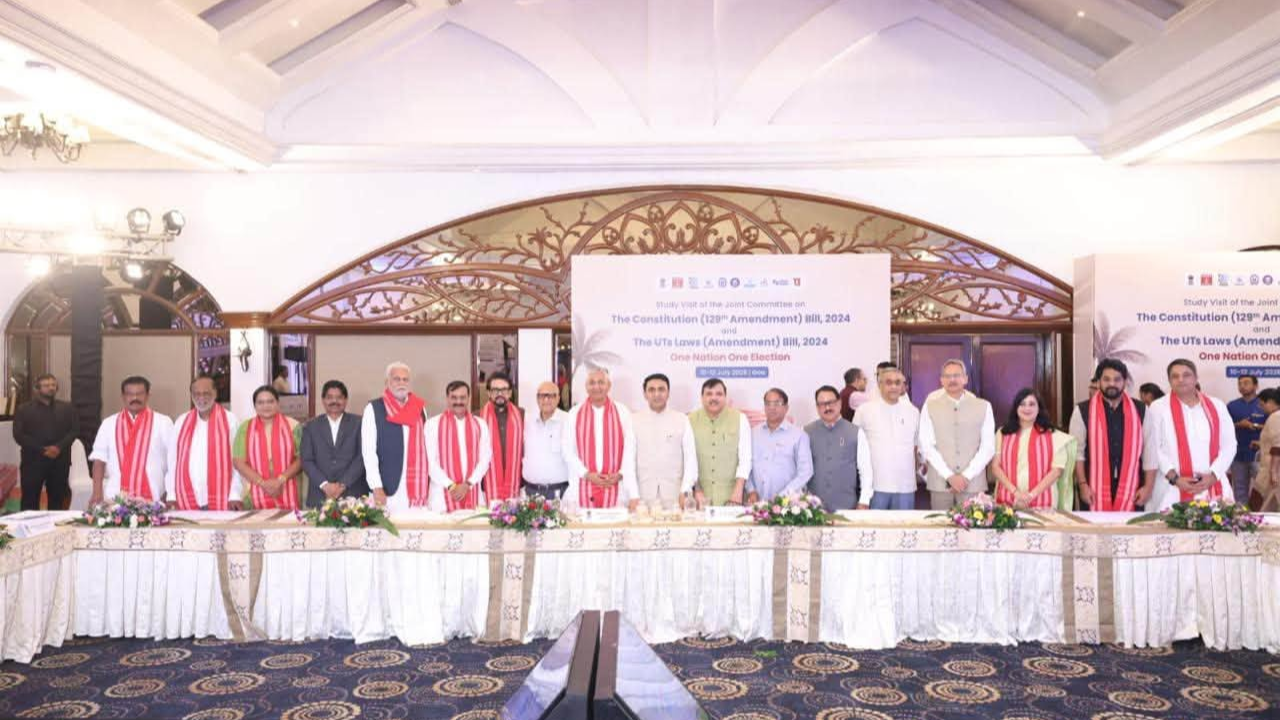
In a post on X after interacting with the Joint Parliamentary Committee (JPC), chaired by MP PP Chaudhary, on the Constitution (One Hundred and Twenty-Ninth Amendment) Bill, 2024, Sawant said Goa fully supports the proposed One Nation, One Election initiative and reaffirmed the state's commitment to contributing constructively towards reforms aimed at making governance more efficient, transparent and people-centric.
The Chief Minister congratulated Prime Minister Narendra Modi for initiating what he described as a "transformative and futuristic reform" aimed at strengthening governance, reducing the recurring burden of elections and accelerating India's journey towards Viksit Bharat @2047.
"While elections are the cornerstone of our democracy, frequent polls impact governance and policy continuity. A synchronised electoral cycle can provide stability, optimise public resources and enable governments to focus on long-term development while upholding constitutional values," Sawant said.
JPC Chairperson PP Chaudhary said Goa's ministers expressed support for the proposed One Nation, One Election initiative during the consultations. He added that some states may voluntarily align their election schedules by 2029, even before the legislation is enacted.
JPC member and BJP MP Anurag Thakur described the proposed initiative as a potential "game changer" for India, saying feedback from states, including Goa, would play a key role in shaping the committee's final report on the proposed legislation.
Speaking to reporters, Thakur said the committee was consulting state governments, political parties, bureaucrats, legal experts, public institutions and other stakeholders to assess the wider impact of simultaneous elections.
"Prime Minister Narendra Modi's government is known for reforms. If you look at One Nation, One Tax, the country has benefited immensely. Now we are examining One Nation, One Election," Thakur said.
He said the committee was studying both the direct and indirect impact of frequent elections on governance and public life.
"The committee wants to understand the benefits of One Nation, One Election. Frequent elections affect governance, state revenues, employment, the justice delivery system, education and healthcare. These are issues that require detailed study," he said.
Referring to the consultations in Goa, Thakur praised the presentation made by the state government.
"Goa gave a very good presentation today. The Chief Minister, Chief Secretary and officials explained how repeated elections impact even a small state like Goa. If the impact is so significant in a small state, one can imagine how much greater it would be in larger states," he said.
Thakur said the study visits were helping the committee gather valuable ground-level inputs that would strengthen its recommendations.
"This is a very important study tour. We are gathering information directly from the ground, and it will greatly benefit the committee while preparing its report," he said.
The BJP leader said the committee would next travel to Uttar Pradesh for similar consultations with the Chief Minister, opposition leaders, political parties, government officials and representatives of public and private sector institutions.
"A valuable learning experience is emerging from these visits. We are identifying several indirect impacts of frequent elections that were not fully understood earlier. When these findings are included in the committee's final report, people will see how much the country can benefit from One Nation, One Election. It could be a game changer for India," Thakur said.
On participation in the consultations, Thakur said the committee had invited representatives from political parties across the spectrum.
"We try to invite all important political parties. Some submit their views in writing, while others appear before the committee and make presentations. In a democracy, everyone has the right to express their views. Discussion, debate, and decision-making are the greatest strength of our democracy," he said.