BICHOLIM
In a major initiative aimed at making waste management in Goa more scientific, efficient, and environmentally sustainable, Chief Minister Pramod Sawant announced that the government will implement the 'Nisargaruna Rapid Composting' project in a phased manner across all municipal councils and village panchayats in the State.
To ensure the successful implementation of the project, the government will provide hands-on demonstrations and specialised training to local self-government bodies.
A statewide awareness campaign will also be launched to encourage proper segregation and collection of wet waste so that it can be converted into high-quality organic manure within just 24-48 hours, instead of being dumped on roadsides or sent to landfill sites.
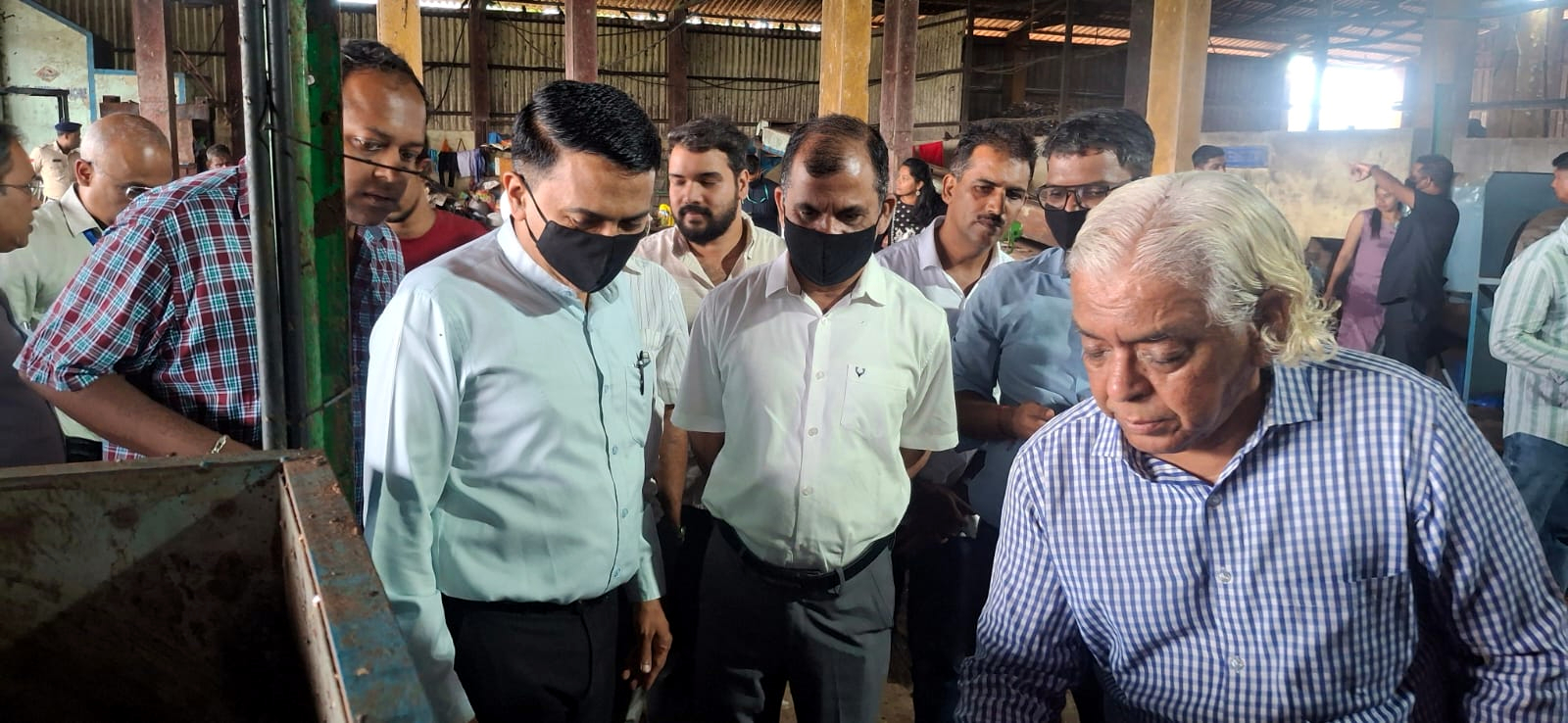
The announcement was made during the chief minister's visit to the Bicholim Waste Management Project, where he inspected the Nisargaruna Rapid Composting Facility established jointly by the State government, Sampurnearth Foundation, and IndiGo Airlines under its Corporate Social Responsibility (CSR) initiative.
During his visit, Sawant reviewed every stage of the composting process in detail and interacted with officials regarding the technology. He also issued necessary directions to ensure the successful expansion of the project across the State.
Among those present included Bicholim MLA Dr Chandrakant Shetye, Chief Minister's Advisor and scientist Dr Sharad Kale, Goa Waste Management Corporation Managing Director Harish Hadkonkar, Dasharath Redkar from the Directorate of Panchayats, Bridgesh Manerikar from the Directorate of Municipal Administration (DMA), Clain Madeira, Commissioner of the Corporation of the City of Panaji (CCP), Deputy Directors from the Directorate of Panchayats, Chief Officers of municipalities, Block Development Officers (BDOs), officials and staff of Sampurnearth Foundation, and representatives of various local self-government institutions.
Speaking on the occasion, Sawant said that rapid urbanisation has made waste management one of the biggest challenges faced by modern cities and towns.
“Instead of merely disposing of waste, it is now essential to convert biodegradable waste into valuable organic compost, thereby creating economic as well as environmental benefits,” said Sawant.
He emphasised that every municipal council and village panchayat should ensure segregation of waste at the source and process wet waste locally, eliminating the need for transporting biodegradable waste over long distances.
“Processing waste where it is generated significantly reduces transportation costs, fuel consumption, greenhouse gas emissions, foul odour, and environmental pollution. It also improves overall cleanliness and provides relief to nearby residents,” he said.
He announced that awareness campaigns, live demonstrations, and training programmes would be organised across municipalities, village panchayats, educational institutions, residential complexes, and commercial establishments to encourage widespread adoption of the technology.
The chief minister also appealed to citizens to stop indiscriminate dumping of waste on roadsides and instead practice proper segregation and responsible disposal of household waste.
Goa Waste Management Corporation Managing Director Harish Hadkonkar said Goa has become the first State in India to implement the Nisargaruna Rapid Composting technology on such a large scale and expressed confidence that the model would serve as an example for other states across the country. Bicholim MLA Dr Chandrakant Shetye also spoke on the occasion.
---
From wet waste to organic compost in 24-48 hours
BICHOLIM: Providing technical details of the project, Chief Minister's Advisor and scientist Dr Sharad Kale said the process begins with segregated wet waste, which is treated using a specially developed microbial culture.
The waste is then shredded into a uniform mixture before being placed in an aerated windrow for approximately 24 hours to regulate moisture.
The partially processed material is subsequently transferred to trays or crates, where the composting process is completed over the next 24 hours. Within 24-48 hours, the system produces odour-free, stable, nutrient-rich organic compost that is highly suitable for agriculture, horticulture, and gardening.
Dr Kale further explained that the technology ensures that recyclable dry waste such as paper, plastic, glass, and metal remains uncontaminated, thereby improving recycling efficiency and increasing its commercial value.
The process also significantly reduces methane emissions from decomposing organic waste, helping mitigate climate change. In the future, such initiatives could also generate opportunities through carbon credits, providing an additional environmental and economic advantage.