Katherine Manuel
The Goan I Panaji
Harvest festivals are celebrated with pomp and fervour across the world. In India, these harvest festivals are a major aspect of culture and contribute significantly to the identity of different states. Onam in Kerala, Pongal in Tamil Nadu, Baisakhi in Punjab — these are festivals that we have heard of and come across often. In this aspect, Goa is not to be left behind.
Our tiny state is the land of many, and the abundance of festivals and feasts across various cultural groups and communities is a testament to this fact. In the month of August, which sits at the peak of the monsoon season, farmers across Goa begin to harvest the crops that their fields have yielded. The culmination of the aspects of feasts and tradition, along with the beginning of the harvest season, results in Goa’s own harvest festival, known as Konsachem Fest.
Across Goa
Konsachem Fest is celebrated in different parishes, like in Raia’s Our Lady of Snows Church and even in Salvador do Mundo. The most prominent celebration of this feast comes from the village of Taleigao, at St Michael’s Church, where the community celebrates with much excitement. Dr Alvarinho Luis, the Gaunkar of the Comunidade of Taleigao, has witnessed the feast for over 55 years: “The feast is not just an annual event but a celebration of the legacy of our ancestors and their kindness in passing on the fertile land to us.”
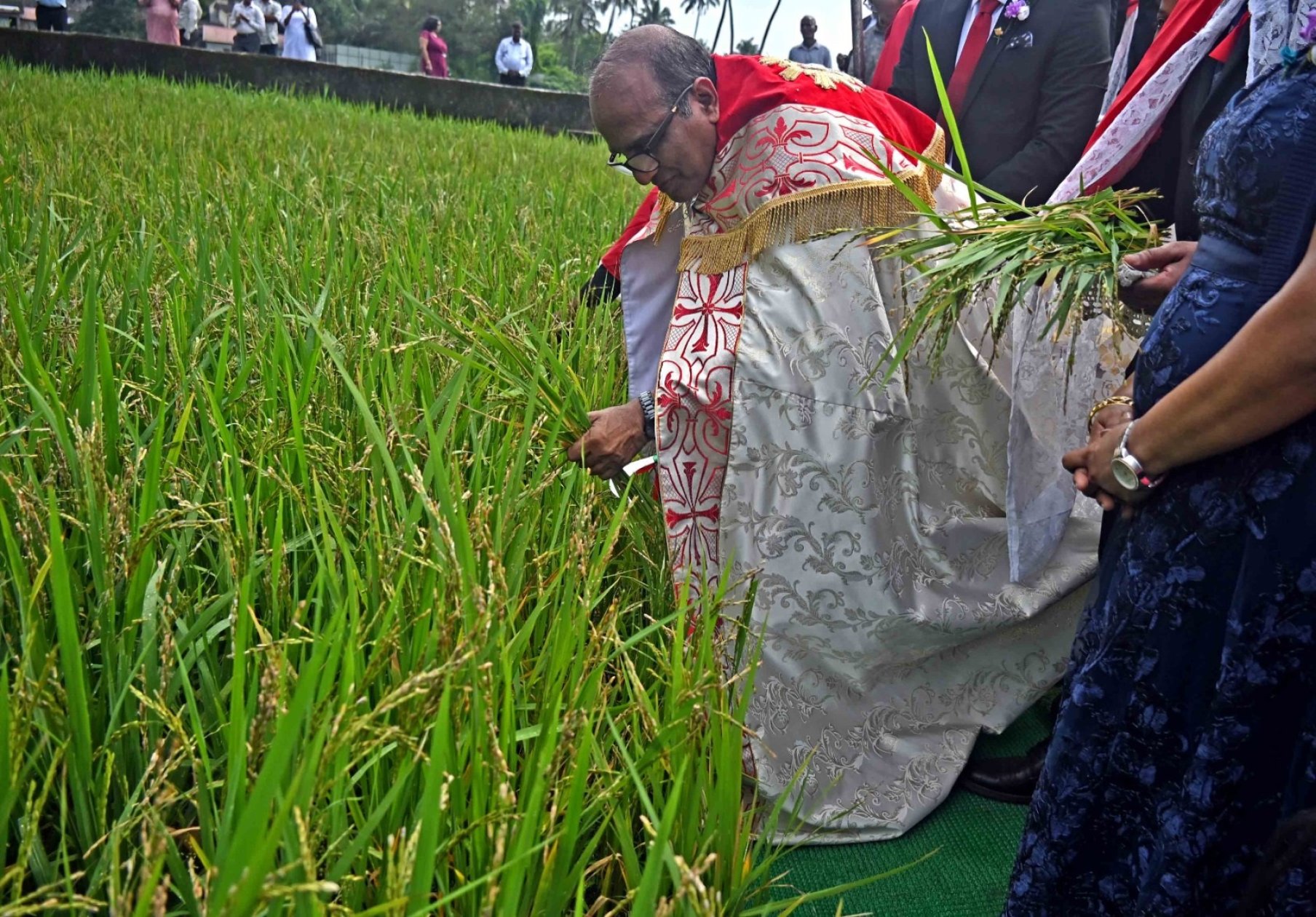
The feast marks the harvesting of the first sheaves of rice, termed ‘konsa’ in Konkani. Rather than directly preparing a meal, the farmers offer up these first sheaves as a thanksgiving to God by placing them on the altar of the church. This is a symbol of the farmers’ toil and is also a sign of gratitude and blessing.
Historic tradition
The tradition dates back almost five centuries, when Afonso de Albuquerque arrived in Goa seeking to conquer it. The Portuguese were met with Goa’s heavy monsoon showers and were forced to take shelter on the edges of the Mandovi River, which at that time were covered in thick forests and had no inhabitants. The fleet eventually ran out of provisions and had to survive on rats. The fishermen from Taleigao learnt of their plight and informed the people of the village. The Gauncars took the initiative and risked their lives against the Muslim troops and provided rations to the Portuguese. Later on, when Albuquerque gained control of the state, he granted the Gauncars of Taleigao the privilege of cutting the first sheaves of rice, as a symbol of gratitude.
Till today, the celebrations are in full swing, with people from different generations coming together to mark this feast of thanksgiving. Valen Fernandes, a member of the St Michael’s Parish Youth, shares how the feast unites the community: “The feast and its traditions bring our people together, which helps us to preserve and pass on our culture and customs to the younger generation. In keeping the spirit of Konsachem Fest alive, the youth organised the ‘Green Finger’ field activity where we went to the fields and experienced firsthand the hard work involved in farming.”
4-day celebration
Traditionally, the celebrations span 4 days from August 21 to 24, beginning with the pealing of the Church bells and ending with the offering of the sheaves, fov and flowers to the Se Cathedral in Old Goa and the Governor of Goa at Raj Bhavan. Konsachem Fest is celebrated in rotation among the Gauncar families, namely Mendonca, Viegas, Martins, Luis, Gomes, Faria, Almeida, Falcao and Abreu. “For my family, this feast is a thanksgiving ritual in anticipation of a bumper harvest,” explains Dr Luis. “The first sheaves and fruits of labour are offered to Almighty God in a religious and ritualistic way, keeping the old Gauncari system at the pivot. It is through this system that the land, generations, and their occupations have evolved and shaped the economy and social fabric of our village.”
Community celebrations
As with any traditional celebration, Konsachem Fest unites the people of Taleigao through numerous cultural activities and events that occur on the day as well as in the following days. One can purchase traditional earthenware and famous sweets like ‘kaadyo-budyo’ just outside the church. Besides that, the Church organises a tiatr, and the football finals of the Sao Miguel Trophy take place on the day at the Dr Alvaro Remigio Pinto ground.
Lenora Vas, a parishioner of St Michael’s Church, talks about the importance of this feast: “Konsachem Fest helps us to keep tradition alive since a lot of our ancestors were farmers. With modernisation, we have forgotten our roots, and this allows us to go back. It also shows the amount of effort it takes to build a livelihood out of farming and is a reminder to be grateful.”
The parish church of Taleigao, along with the Gauncars and villagers, commits a great amount of its time and energy to keeping this unique Goan tradition alive. It’s a vibrant testament to Goa’s cultural synthesis, where agricultural tradition, Catholic faith and the community’s gratitude converge.