


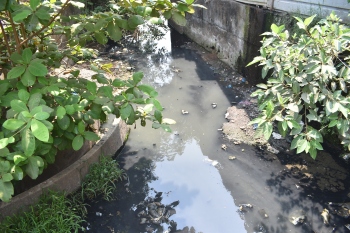
 Sewage continues to flow into the River Sal, highlighting gaps in Margao’s sewerage infrastructure. Captured by : The Goan
MARGAO
As the Goa State Pollution Control Board (GSPCB) prepares for a three-day comprehensive inspection of the River Sal to identify sewage and effluent discharge points from April 15, a critical question looms large: can such inspections truly curb contamination without parallel efforts to strengthen the city’s sewerage infrastructure?
This concern is likely to confront the joint inspection team as it examines key stormwater nullahs, including those near the SGPDA Market Complex and the Kudchadkar nullah. The underlying issue is difficult to ignore.
The backdrop to this situation lies in developments linked to the Salpem Lake Public Interest Litigation (PIL) filed by Navelim-based citizen Prof Antonio Alvares. While disposing of the petition in August last year, the Bombay High Court had set a timeline for the Sewerage Infrastructure Development Corporation of Goa Ltd (SIDCGL) to implement a Vacuum Sewer System to address sewage issues in low-lying areas of Margao, including Malbhat and the Gandhi Market. The court had also directed SIDCGL to install a pumping station at the SGPDA market to connect it to the underground sewerage network.
As far as the vacuum sewer system project was concerned, the High Court had set a 24-week deadline on SIDCGL to implement the project, which expired on January 29, 2026.
However, the project has faced delays. In March, SIDCGL approached the High Court seeking a six-month extension, citing the absence of financial sanction from the government. Although the tendering process had progressed and a contractor was shortlisted, the work order could not be issued until recently due to pending financial approval.
This prompted the High Court to urge the Finance Department to expedite the necessary clearances. The delay raises a fundamental concern: how effective can inspections be in preventing sewage discharge into the river when critical infrastructure projects continue to be held up?
In fact, a glance at the order showed that the High Court expressed concern over the delay as the monsoon is fast approaching. “We expect that immediately upon obtaining financial approval, the work order will be issued and the work of laying the vacuum sewerage system in the low-lying areas of Margao will commence. This is particularly important as the monsoon is fast approaching, and the work must begin before its onset,” the Court observed.
The pumping station work at the SGPDA market, too, was delayed for want of a three-phase connection. These two instances are just the tip of the iceberg, showing the indifference of government agencies in expediting the work on the sewerage project.
====
Missed deadlines, fresh surveys: Pollution unlikely to ease soon
MARGAO: Will the three-day joint inspection by the Goa State Pollution Control Board (GSPCB) or the drone-mapping initiative launched by Benaulim MLA Venzy Viegas immediately halt the discharge of Margao’s sewage into the River Sal?
For now, that appears unlikely. The Sewerage Infrastructure Development Corporation of Goa Ltd (SIDCGL) has sought an additional six months from the High Court to implement vacuum sewer technology aimed at addressing sewage discharge in low-lying areas such as Malbhat and the Gandhi Market.
The High Court had, last year, granted SIDCGL a 24-week deadline to complete the project. That deadline expired on January 29, 2026, without the works being executed. The agency has since obtained a six-month extension to complete the pending infrastructure.
With the monsoon season expected to set in within the next six weeks, sources indicate that implementation of the vacuum sewer system may only begin in earnest later in the year, with completion likely closer to year-end.
In the interim, officials and sources acknowledge that sewage and effluents from Margao’s low-lying areas are expected to continue flowing into the River Sal due to the absence of an effective treatment and diversion mechanism.
====
Sewage diversion hit as SGPDA pumping station awaits power
MARGAO: Has the Sewerage Infrastructure Development Corporation of Goa Ltd (SIDCGL) commissioned the pumping station at the SGPDA market to divert sewage and effluents into the newly laid underground sewer network?
The answer, for now, is no. Despite commitments made before the High Court, the pumping station remains non-operational due to the lack of a three-phase electricity connection.
On March 18, 2026, SIDCGL informed the High Court that the facility could not be commissioned as it was awaiting a three-phase power supply at the SGPDA market. In response, counsel for the South Goa Planning and Development Authority (SGPDA) assured the court that the required connection would be provided within a week.
However, nearly three weeks later, there has been no progress on the ground.
On April 6, SIDCGL addressed a letter to the SGPDA Member Secretary, urging the authority to provide a permanent three-phase connection to the pumping station. In the communication, SIDCGL reminded the planning body of its commitment before the High Court, pointing out that no action had yet been taken to fulfil the assurance.
A senior SIDCGL official confirmed on Monday that while the pumping station infrastructure is complete, it remains idle, awaiting electrification.
====
MLA-led drone mapping begins ahead of Sal inspection drive
MARGAO: In a significant development amid growing concerns over contamination of the River Sal, Aam Aadmi Party (AAP) Benaulim MLA Venzy Viegas on Monday launched “Amghe Sal,” a drone-based intelligence project aimed at identifying sewage discharge points along the river.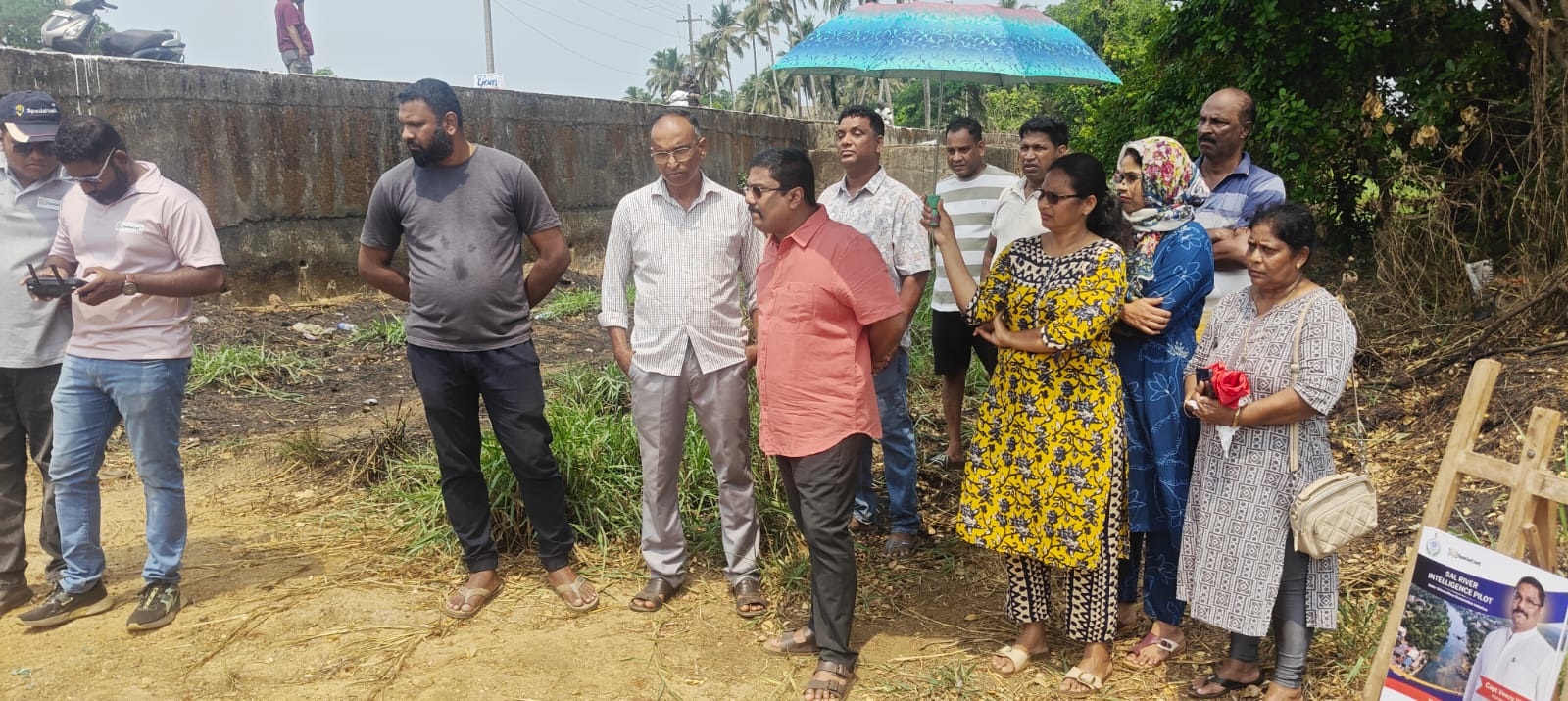
Benaulim MLA Venzy Viegas launching drone mapping of River Sal on Monday. Santosh Mirajkar
The initiative comes just three days ahead of a scheduled three-day comprehensive joint inspection by the Goa State Pollution Control Board (GSPCB), ordered following representations received from the Benaulim Congress Block Committee, Cavelossim Sarpanch Dixon Vaz, and other stakeholders calling for urgent action to clean up the river.
The GSPCB-led inspection will involve officials from multiple departments, including the Pollution Control Board, Sewerage Infrastructure Development Corporation of Goa Ltd, Public Works Department (PWD), Sewerage Department, Margao Urban Health Centre, and the Margao Municipal Council.
Speaking to the media along the banks of the River Sal near the Khareband bridge, Viegas said the drone-mapping exercise is being funded through his MLA funds and is part of his commitment to protect the river.
“Three years ago, I had taken a pledge to safeguard the Sal from pollution. This initiative is a step in that direction. The agency engaged will compile a detailed report, which will be submitted to the government for necessary action,” he said.
The project will map all stormwater nullahs and drainage outlets discharging into the river using drone technology”an exercise the MLA noted has not been undertaken by the government to date. It will also assess damaged bunds and identify areas affected by tidal ingress.
Viegas said the mapping will cover a four-kilometre stretch of the river and document all points of sewage and effluent discharge.


