


PANAJI
The recent death of Dr Ketan Bhatikar following a snake bite has shocked Goa and the medical fraternity, drawing attention to a neglected medical emergency that requires a co-ordinated response to prevent avoidable deaths.
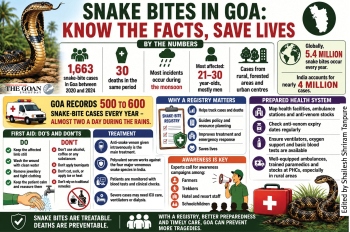
A study by Dr Chetan Karekar and Dr Purvi Mishal of the forensic department at Goa Medical College (GMC), published a year ago in the international journal ‘The Academic’, recorded 1,663 snake-bite cases and 30 deaths between 2020 and 2024. Most incidents occurred during the monsoon season.
The study found that young adults aged 21 to 30 were the most affected, with men accounting for a larger share of cases. While most bites were reported from rural and forested areas, incidents were also recorded in urban centres due to deforestation and construction activity. Globally, around 5.4 million snake bites occur every year, with India accounting for nearly four million cases. According to the study, Goa records between 500 and 600 snake-bite cases annually, averaging almost two cases a day during the rainy season.
CALL FOR STATEWIDE REGISTRY
“We need an all-Goa registry of snake bites and deaths,” said Dr Roque Wiseman Pinto, former professor and head of the pathology department at GMC. He stressed the need to map health facilities, ambulance stations and anti-snake venom stocks across the State.
He also said that anti-venom supplies must be regularly checked for expiry dates, while ventilators, oxygen support and basic blood-clotting tests should be available at treatment centres.
Sources at GMC said Assistant Professor of Medicine Dr Ramnath Nevrenkar had proposed a snake-bite registry project, but administrative and ethics approvals are still pending, delaying the collection of crucial evidence-based data.
Dr Pinto recalled that his 2008 study on causes of death led to the creation of Goa’s diabetes and cancer registries. He said a similar registry for snake bites could help policymakers improve treatment and emergency response.
FIRST AID AND TREATMENT
Snake bites may be neurotoxic, haemotoxic, myotoxic or mixed. Although most snakes are non-venomous, experts say prompt first aid and medical treatment are essential.
People bitten by snakes should keep the affected limb still, wash the wound, remove jewellery or tight clothing and remain calm. Experts warn against using alcohol, coffee, tourniquets, cutting or sucking the wound, applying ice or heat, or relying on traditional remedies, as these can delay proper treatment.
Anti-snake venom, administered intravenously, remains the main treatment. The polyvalent serum used in India is effective against the country’s four major venomous snake species. Patients are monitored through blood tests and clinical assessments, while severe cases may require intensive care, ventilator support or dialysis.
NEED FOR AWARENESS
Experts have also called for awareness campaigns targeting farmers, trekkers, hotel and resort staff, and schoolchildren.
“Health authorities must get their act together,” Dr Pinto said, stressing the need for well-equipped ambulances, trained paramedics and adequate anti-venom stocks at primary health centres, particularly in rural areas where respiratory distress and paralysis must be monitored closely.
Experts say snake bites are treatable and most deaths can be prevented. However, without a registry and a co-ordinated response, Goa risks more tragedies like the death of Dr Bhatikar.


