VIBHA VERMA
PANAJI
Less than two months before the Goa government plans to roll out the Deposit Refund Scheme (DRS) for liquor bottles, the proposal is facing mounting criticism over what industry stakeholders allege is a costly and opaque QR code system that could increase liquor prices while leaving fundamental questions over its financial viability unanswered.
Even as the government has fixed September 1 for the launch of the first phase covering liquor and liquor-related products, government sources and representatives of the liquor industry said there remains little operational clarity on how the scheme will function, who will bear the cost of implementation, and what financial benefit the State stands to gain.
Costly QR code system?
One of the sharpest concerns centres on the mandatory QR code proposed for every bottle. Sources familiar with the plan revealed to The Goan that every liquor bottle would require a unique QR code procured through a private agency, manually affixed by manufacturers, and scanned again at collection centres before consumers receive their refund.
"The government has to purchase the QR code, manufacturers will have to manually affix it on every bottle with additional labour, and every bottle has to be scanned at the vending machine before the refund is issued. The government must explain who bears this cost, what each QR code will cost, and what revenue the State actually earns from the entire exercise," the source said.
Sources claimed that if the refundable deposit is fixed at Rs 10 per bottle, the QR code provider could receive around Rs 5 per bottle, prompting questions if the scheme disproportionately benefits the technology vendor rather than the State or consumers.
“Who ultimately benefits? How much will the government earn? What will be the additional cost on every bottle after introducing the QR code? Will consumers simply end up paying more?” another source asked.
Higher liquor prices, poor response
Industry sources also said the additional compliance costs are expected to push up liquor prices, with manufacturers and wholesalers likely to pass on the expenses arising from the new system to consumers.
Smaller bottlers and manufacturers operating on thin margins are expected to be among the worst affected, while liquor bottles including imported ones would require manual application of QR codes before entering the market.
The practicality of expecting consumers to return empty liquor bottles merely to recover the refundable deposit is also being questioned.
“If a consumer buys a full case containing 12 bottles, will he really carry back empty bottles and cartons, stand in queues and claim the refund?
Many people are uncomfortable being seen returning liquor bottles in public,” the source said hinting, "the consumers and general public will have to bear the brunt of higher costs subsequently."
Questions have also been raised over the government's own preparedness. Sources alleged that awareness/training sessions within the administration have reportedly been conducted only for the Finance and Tourism Departments, while the Excise Department -- which will administer the first phase involving liquor products -- has not been adequately involved.
Distillers flag legal, regulatory gaps
The Goa Feni Distillers and Bottlers Association has flagged serious legal and regulatory gaps.
Association secretary Hansel Vaz said retailers participating in the DRS could face legal exposure under multiple laws governing maximum retail price, Food and Drugs Administration licensing, taxation, accounting treatment of refundable deposits, installation of reverse vending machines and permissions from local bodies.
“None of these areas presently has any written government clarification. Any retailer agreeing to participate in the DRS could simultaneously expose himself to legal risks under tax laws, licensing laws and property regulations without any statutory protection,” he said.
Fernandes said businesses that have spent decades maintaining regulatory compliance could not be expected to operate under a framework that still lacks legal certainty.
“Established businesses cannot risk decades of compliance because of inadequate planning. These issues require written clarification before implementation,” he said.
Under the first phase of the DRS, liquor and liquor-related products packaged in glass, plastic, metal, multilayered packaging and liquid packaging boards will come under the scheme. Producers, importers and brand owners have been directed to register by July 31, failing which they will not be permitted to place their products in the Goa market from September 1.
Liquor traders cry foul, petition CM to defer scheme
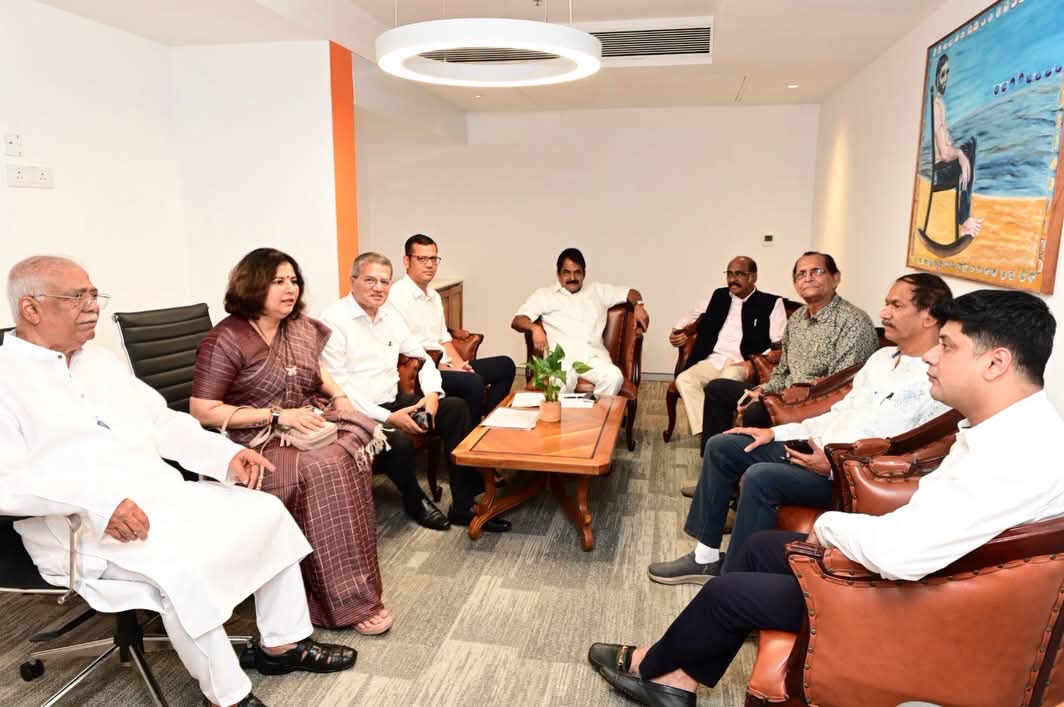
The Goa Liquor Traders Association has sought detailed clarification from the government, warning that the scheme could impose a substantial financial burden on businesses.
Association president Dattaprasad Naik appealed to Chief Minister Pramod Sawant to defer implementation until detailed operational guidelines are issued, while adding, “the association smells a major scam.”
“We appeal to the CM to withdraw the scheme till proper clarity is provided. Wholesale distributors, who form the first link in the supply chain, will have to pay the Rs 10 deposit upfront. This represents a huge financial burden,” he alleged.
Naik also questioned what would happen to deposits linked to bottles that never return to Goa.
“A significant quantity of liquor purchased in Goa is consumed outside the State. Those bottles are unlikely to come back for refunds. We fear there could be huge kickbacks from the amount lying unutilised because bottles taken outside Goa will never be returned. We need complete clarity on this,” he said, adding the stakeholders will hold meetings across both districts to decide the future course of action.