


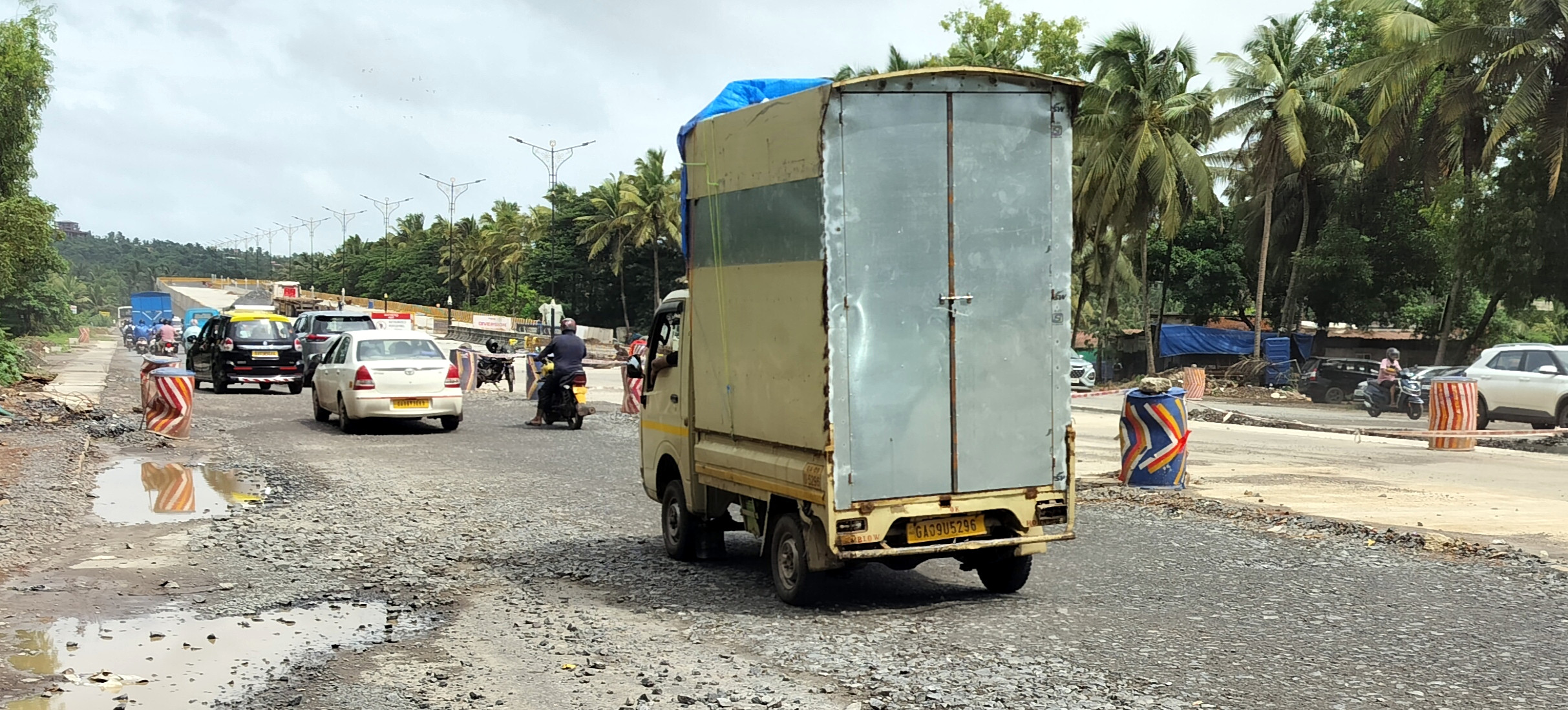
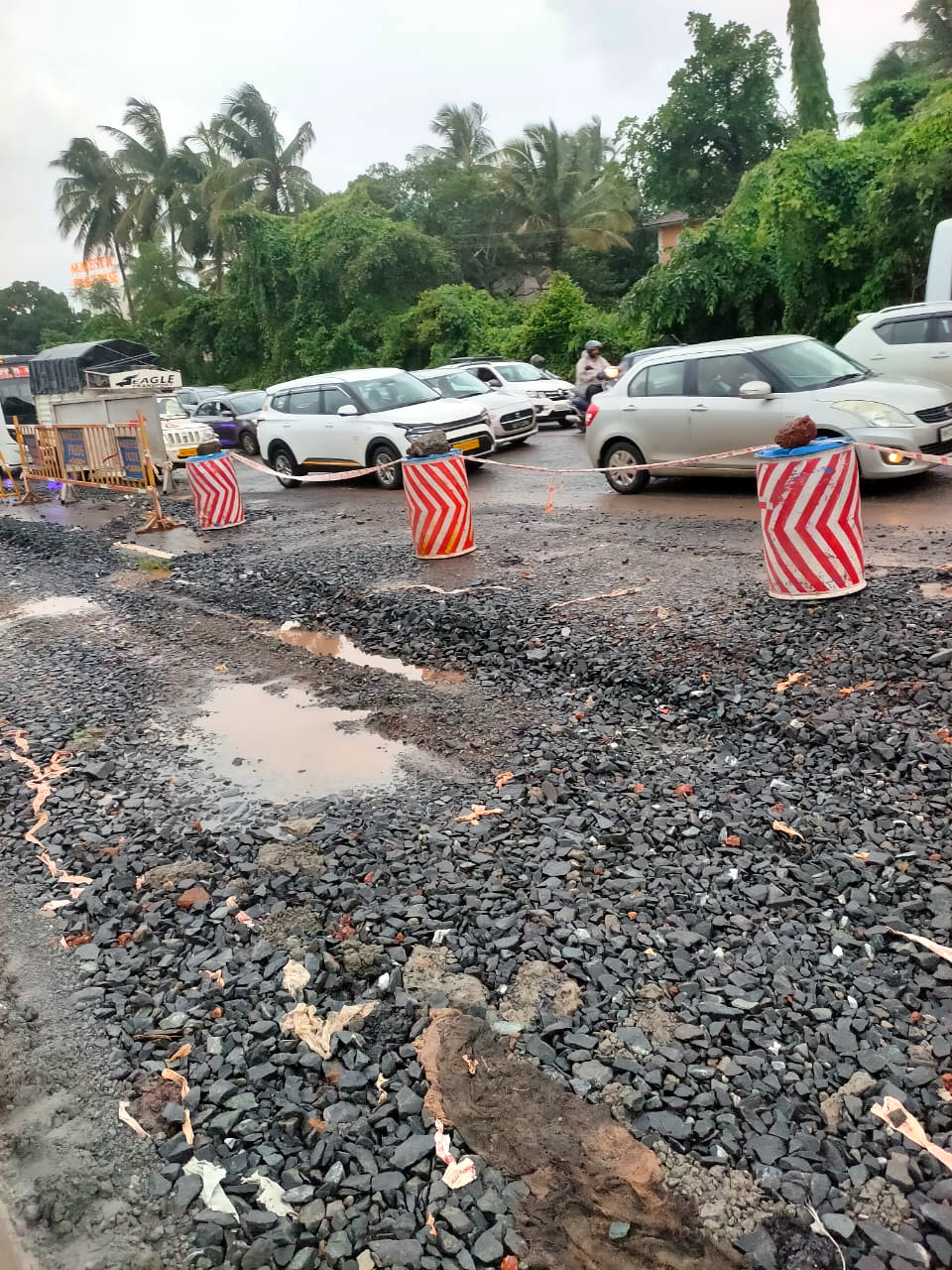
ROUGH RIDE: The pothole-ridden, gravel-strewn service road near Sangolda has become a choke point for traffic, with motorists forced to negotiate the damaged stretch cautiously, leading to frequent congestion during peak hours. TRAFFIC SNARL: Loose gravel on the NH-66 service road near Hotel Majestic forces motorists to slow down, creating bottlenecks and worsening peak-hour traffic congestion.
MAPUSA
As work on the elevated corridor along NH-66 at Porvorim gathers momentum, with the installation of the final superstructure segment expected in the coming days, residents and motorists continue to endure a difficult and often dangerous commute on the existing highway and service roads beneath the project.
The nearly five-kilometre stretch under construction has become a major source of concern, with broken roads, deep potholes, loose gravel, open drains, exposed pipes, protruding iron rods and construction material strewn across several sections, making daily travel hazardous, particularly during the monsoon.
Although the contractor has carried out hot-mix resurfacing on parts of the service roads, several stretches remain in poor condition. Deep gashes, uneven road levels and loose gravel continue to pose a serious risk, especially to two-wheeler riders, who are forced to navigate through narrow and damaged sections while negotiating heavy traffic.
Hazardous roads test motorists’ patience
The situation worsens during rainfall, when potholes fill with water, muddy slush accumulates on the carriageway and slippery road surfaces increase the likelihood of accidents.
The stretch beneath the span where the final segment of the elevated corridor is being installed has emerged as one of the worst-affected areas, with commuters describing it as virtually unsafe during heavy showers.
The approach roads near Sangolda, where the corridor begins, and the section near Hotel Majestic, where it terminates, are also riddled with potholes and loose gravel, making driving both slow and cumbersome.
Adding to the problem is the ongoing excavation for side drains and underground utility works. Deep trenches have been dug alongside the road at several locations, while exposed utility pipes, iron rods, electrical junction boxes and poles occupy parts of the carriageway, leaving motorists with little room to manoeuvre safely.
Poor signage, unsafe work zones under scanner
Another major concern raised by commuters is the near absence of proper traffic management measures. Despite extensive construction work, several sections reportedly lack adequate warning signs, reflective markers, barricades, speed limit boards or directional signage to guide motorists safely through the work zone.
With heavy trucks, buses, cars and two-wheelers sharing constricted lanes, residents say the absence of traffic-calming measures has made the stretch increasingly risky.
Social activist and Porvorim resident Oswald Pinto said authorities must ensure that construction progresses without compromising public safety.
“Haste is waste. Trying to complete the project in a hurry to meet deadlines should not come at the cost of public safety. Proper planning, systematic execution, adequate signages and traffic management are essential to prevent accidents and ensure quality infrastructure,” Pinto said.
He urged agencies associated with the project to work in close coordination to ensure the highway is constructed to high standards without creating avoidable hardship for the public.
“In the dry season, we can still see the potholes and broken stretches and drive cautiously. But during the monsoon, the roads get submerged, making it difficult to assess the damage underneath. Every commute becomes risky, particularly for two-wheeler riders,” said Milind Naik, a daily commuter from Assonora to Panaji.


