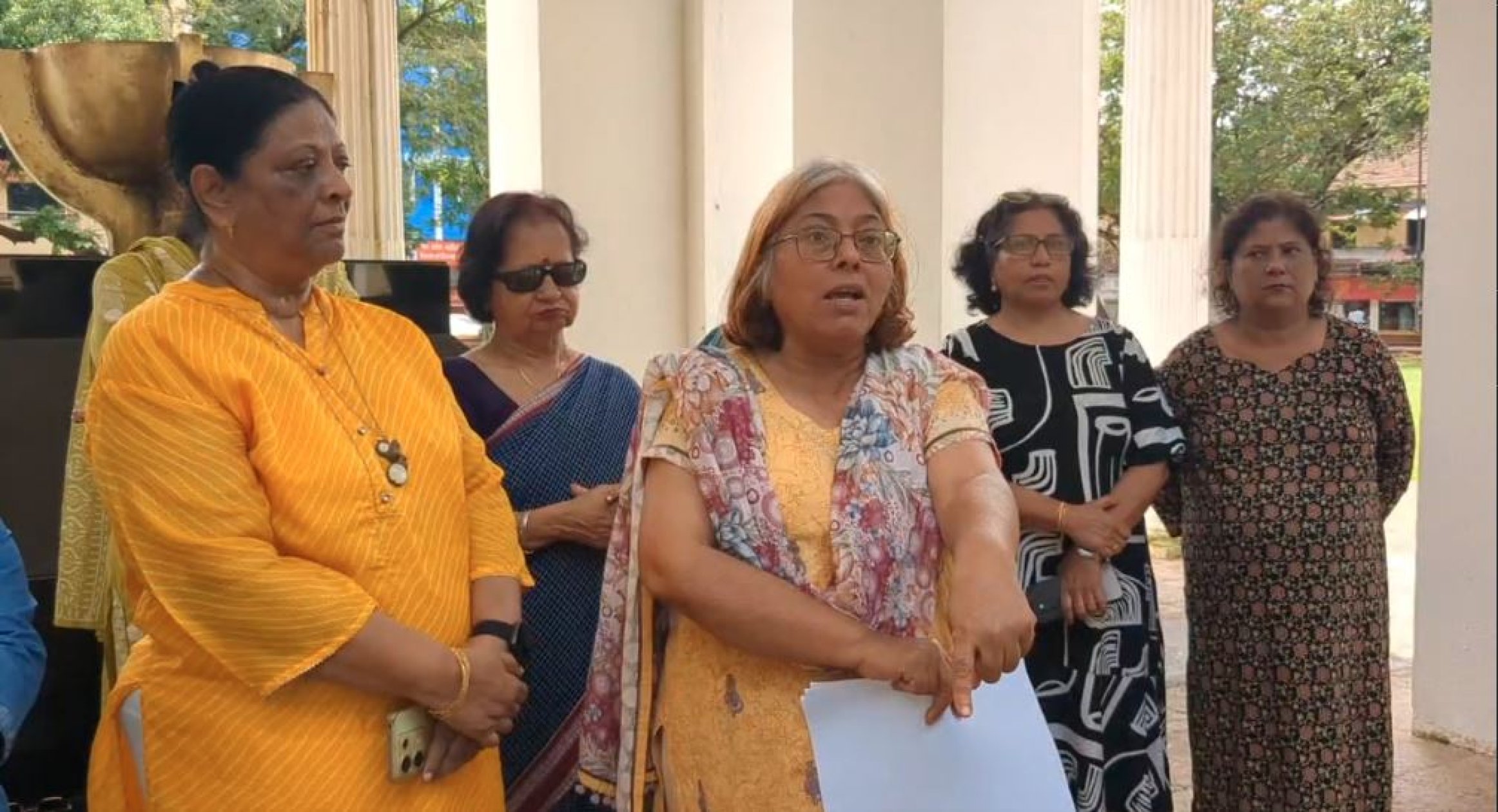
PANAJI: The Coalition for Women’s Reservation with Inclusion and Federalism has urged the Goa government to move a resolution during the upcoming Assembly session seeking immediate implementation of 33% reservation for women in the state Legislative Assembly.
Addressing the press at Azad Maidan in Panaji on Sunday, coalition members said the resolution should urge the Centre to introduce a Constitutional Amendment to de-link women’s reservation from seat expansion, census, and delimitation. The Assembly session is scheduled from August 31 to September 2.
The coalition, comprising women’s groups, activists, academics, professionals and women who have contested elections at the Panchayat, Zilla Parishad and Assembly levels, said reservation should be implemented within the existing 40-member House. They said this would allow Goan women to benefit immediately and could make Goa the first state to implement one-third reservation for women in its Assembly.
Activist Auda Viegas, who has contested municipal, Assembly and parliamentary elections, said women faced significant structural barriers in electoral politics. “Unless we are part of the electoral process, nothing will change,” Viegas said, stressing the need for reservation and financial support.
“My experience was that unless you have a reserved seat where you are supported, you cannot break through,” she said, describing election funding as “an absolute, essential power”. Viegas also said women candidates faced character assassination and personal attacks during campaigns. “If you stand for elections as a woman, you face character assassination. Irrelevant personal matters that have nothing to do with your political life are brought up to make you feel small so that you back out,” she said. “We want proper funds for women candidates. We want to be encouraged to raise our voices as equals to men,” she added.
Angela D’Souza, representing marginalised OBC communities and the fishing community, said vulnerable women needed greater representation in policymaking. She highlighted the disruption of traditional fishing livelihoods due to changes in rivers, development activities near ports and encroachment by large businesses. “Our livelihood from fishing is getting heavily disrupted,” D’Souza said. The coalition has sought a 33% sub-reservation within the OBC quota for OBC fisherwomen, particularly Kharvi and boat-owning fishing women. It also wants the concerns of single women, women from Hindu and Muslim communities, and transgender persons represented.
Dr Radhika Desai said women needed to be physically present in decision-making institutions for their concerns to be addressed. “Unless women are physically represented in places where decision-making and policy-making happen, we do not get to address women’s issues,” she said. Desai also raised concerns over future delimitation and its impact on Goa’s parliamentary representation. “Goa is a small state. If we have delimitation based strictly on population and expand the seats accordingly, we will be at a massive disadvantage,” she said.
She opposed decisions on reserved constituencies being made solely at the Centre and called for a state-level mechanism involving marginalised women. “The Centre cannot make blanket decisions on who does what and dictate the delimitation of reserved constituencies from New Delhi. We strongly believe that this right should rest at the state level,” Desai said.
Advocate Caroline Colaco said the coalition had met almost all Goa MLAs and circulated a draft resolution seeking a Constitutional Amendment to de-link women’s reservation from seat expansion, census and delimitation. “This de-linking is crucial for the sole purpose of implementing the women’s reservation immediately, without further delay,” Colaco said.
The coalition has also sought sub-quotas within the 33% reservation for vulnerable groups, including OBCs, nomadic tribes, women with disabilities, single women and queer women. It has proposed a state-level commission involving ruling and opposition representatives, election officials and women’s groups to determine constituencies to be reserved. The coalition is also seeking state-backed election funding for women candidates from vulnerable and marginalised communities. “Without such financial support, it is virtually impossible for women from these backgrounds to genuinely participate and be represented,” Colaco said.
Advocate Albertina Almeida said the coalition had approached ministers and MLAs across party lines and that legislators broadly agreed on the need for women’s reservation, though some ruling party MLAs had raised concerns about pursuing it immediately. “Everybody, whether from the ruling party or the opposition—agrees that women’s reservation is required, and they agree it is required right now,” Almeida said.
The coalition was also informed that the short Assembly session has no scheduled Private Members’ Day, creating a procedural hurdle for introducing the resolution through that route. Almeida said the coalition had approached the State Commission for Women, which had agreed to discuss its draft resolution.
Despite the hurdles, the coalition said it remained hopeful that the government would find a legislative mechanism to bring the issue before the House. “It has been far too long; we cannot afford to wait another five years,” Almeida said. She also opposed expanding the Goa Assembly from 40 to 60 seats as a condition for implementing the reservation. “The 33% reservation can easily and efficiently be implemented within our existing 40-seat Assembly structure,” she said.