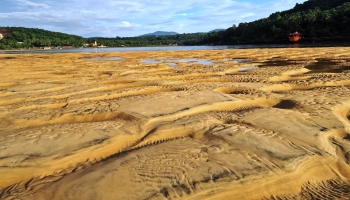
 The Mobor beach in Cavelossim village. Captured by : The Goan
MARGAO
With Mobor Beach considered a showcase for other beaches in the analysis of the functioning of Goa’s beaches, a preliminary evaluation of relevant coastal processes shows that it is possible to use nature-based solutions (e.g. sand nourishment) to strengthen the resilience of the coast at Mobor.
The preliminary report by the Netherlands-based agency Deltares pointed out that any sediment deficits (even small ones) in the sediment budget can lead to long-term erosion, and may be mitigated by replenishing sand.
The report has cautioned that the use of only structures, without any replenishment of sediment, should probably (and preferably) be avoided because coastal structures often lead to the degradation of adjacent beaches in environments with large seasonal variations in sediment transport. “Hybrid solutions, with combinations of sand nourishment and coastal structures, may still be explored. In any case, decisions on the most suitable measure(s) need to be based on a more in-depth insight into the coastal system and an assessment of technical and financial feasibility,” the preliminary evaluation report stated.
Based on the analysis of the system, an overview has been made of relevant data/knowledge gaps, which in turn point towards the next steps for a better understanding of the coastal system and assessment of appropriate beach protection measures. The recommended next steps are the collection of additional data and analyses, mainly related to long-term trends in shoreline change; sediment supply from the Sal River; local land subsidence/sea level rise; and sand mining (both past and present); detailed analysis of satellite images; detailed wave and sediment transport computations; analysis of extreme events (and possible future changes); bathymetric surveys (mainly to provide a basis for detailed wave modelling); surveying of offshore sand sources; and preparation of legal frameworks for the exploration of these sand sources.