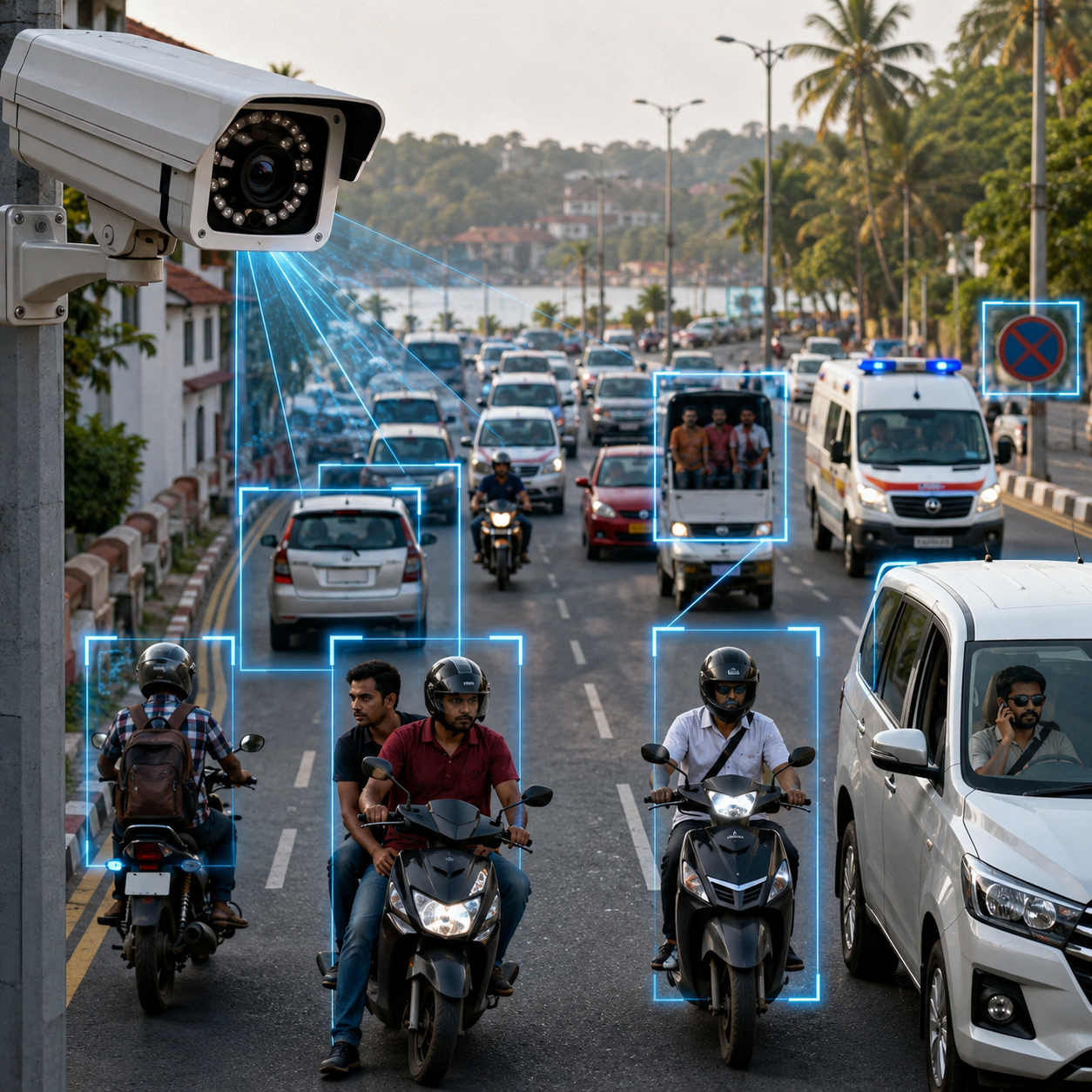
Goa’s ambitious artificial intelligence-powered traffic surveillance system is scheduled to go live from July 15, marking a significant step towards technology-driven enforcement of traffic laws. The system promises to identify offences such as using mobile phones while driving, riding without helmets or seat belts, over-speeding, dangerous overtaking, wrong-side driving, illegal parking and stopping, failure to give way to ambulances and fire service vehicles, carrying excess pillion riders, transporting passengers in goods vehicles, and displaying fancy or illegal number plates. Once detected, violations will be electronically recorded, leaving little room for offenders to escape penalties. However, an important question remains unanswered. Will the AI surveillance system actually reduce road accidents, or will it primarily become an efficient mechanism for collecting fines? Many of the most dangerous offences responsible for serious and fatal accidents probably cannot be detected by cameras alone. Drunken driving remains one of the leading causes of road deaths, particularly during late-night hours. Similarly, minors driving vehicles, motorists operating without a valid driving licence, and stolen vehicles on the road pose grave threats to public safety. These violations and others require physical policing, verification of documents and sobriety testing.
In an accident that took place at Goa Velha on Thursday, a two-wheeler rider lost his life after being struck by a rent-a-car allegedly driven by an inebriated minor. The AI surveillance cameras may have detected speeding or other traffic violations, but probably not the underlying offences that allegedly contributed to the fatal crash. AI can identify visible traffic offences with remarkable efficiency, but it cannot replace police patrols, random breathalyser checks, licence verification drives, or prompt intervention against dangerous drivers. The government must therefore ensure that data generated by the AI system is used intelligently. AI should complement broader road safety strategies instead of becoming an end in itself.
If AI merely catches motorists without addressing the root causes of dangerous driving, it risks becoming an efficient revenue-generating tool rather than the life-saving innovation it is intended to be.
ADELMO FERNANDES, VASCO