Plastic is choking our environment. About 400 million tons of plastic waste is thrown out every year with between 75 to 199 million tons floating in oceans and endangering aquatic ecosystems, according to the UN. The problem is so dire that there are five literal garbage patches strewn across the world’s oceans. The largest, in the Pacific Ocean, is twice the size of Texas and affects the health of millions of birds and marine animals every year.
Cleaning up plastic waste is a doable but extremely difficult task. The fundamental issue is that plastic isn’t biodegradable. It takes an ungodly amount of time to break down”and when it does, it releases microplastics that can find its way into our bodies through drinking water and food.
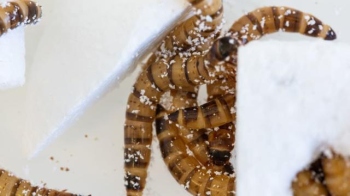
However, in recent years, worms and other insects have emerged as unlikely heroes in our fight against plastic waste. Scientists have discovered that these little creepy crawlers contain microbes in their gut that can digest polyethylene”the kind of plastic used in shopping bags, shampoo bottles, and containers. And now, in a study published in the journal Microbial Genomics, researchers at the University of Queensland in Australia have discovered that larva of the darkling beetle”commonly called superworms”have the ability to dine on polystyrene, a plastic used in styrofoam, plastic plates, cups, and elsewhere.
“There are few reports out there that insect larvae are actually pretty good at damaging plastic and eating it,” Chris Rinke, a microbiologist at the University of Queensland and co-author of the study, told reporters. “That’s why we started with superworms because they are quite larger than other insect larvae and we thought they would be more efficient in breaking down plastics.”
To test this idea out, Rinke and his team fed three groups of superworms either polystyrene, bran, or nothing over a three-week period. Within 24 hours, the polystyrene-fed superworms were going to town on the plastic; by the end of the experiment, much to the researchers' surprise, these nearly two-inch long larvae were positively thriving and even gained some weight.
Much like a human gut, insects have their own unique microbiome that plays a critical role in nutrition, physiology, and even behaviour. When the superworms break down the polystyrene, bacteria in their gut digest the small chunks even further with specialised plastic-degrading enzymes, Rinke explained.
The team is still in the process of trying to figure out exactly which enzymes are facilitating the plastic lunch session. That information, Rinke said, could revolutionise the way we dispose of certain types of plastics, incentivising recycling efforts, and reducing the presence of plastics in landfills.
“You could have a big bioreactor, have the enzymes in there,” said Rinke. “So you would first shred the polystyrene and the enzymes could chemically break [it] down. That scale is way better than having large batches of superworms.”
Microplastics found in fresh Antarctic snow for first time
Scientists have found microplastics -- plastic pieces much smaller than a grain of rice - in freshly fallen Antarctic snow for the first time, which they said has the potential to influence the climate by accelerating melting of ice.
The findings, published recently in The Cryosphere journal, bring to light a serious threat to the Antarctic region.
In late 2019, Alex Aves, a PHD student at the University of Canterbury in New Zealand collected snow samples from the Ross Ice Shelf in Antarctica.
At the time, there had been few studies investigating the presence of microplastics in the air, and it was unknown how widespread this problem was, the researchers said.
“When Alex travelled to Antarctica in 2019, we were optimistic that she wouldn't find any microplastics in such a pristine and remote location,” said Laura Revell, Associate Professor at the University of Canterbury.
Once back in the lab, the researchers found that there were plastic particles in every sample from the remote sites on the Ross Ice Shelf too, and that the findings would be of global significance.
“It is incredibly sad but finding microplastics in fresh Antarctic snow highlights the extent of plastic pollution into even the most remote regions of the world,” Aves said.
“We collected snow samples from 19 sites across the Ross Island region of Antarctica and found microplastics in all of these,” she added.
On a wider scale, the presence of microplastic particles in the air has the potential to influence the climate by accelerating melting of snow and ice, the researchers said.
Aves analysed snow samples using a chemical analysis technique to identify the type of plastic particles present.
The plastic particles were also looked at under a microscope to identify their colour, size and shape.
The researchers found an average of 29 microplastic particles per litre of melted snow, which is higher than marine concentrations reported previously from the surrounding Ross Sea and in Antarctic sea ice.