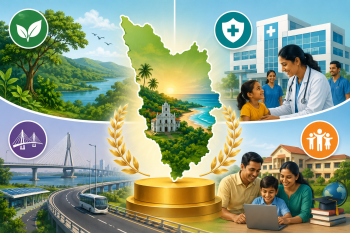
“Sobit Sundor Goem,” a phrase that echoes through countless Konkani melodies. Generations of Goans have sung about the State’s rivers, seas, greenery, and natural beauty, celebrating Goa as a land blessed by nature. Yet, for a State so often praised for its beauty, the question remains: how long can Goa remain “sobit” and “sundor”? Goa, celebrated worldwide for its sun-drenched coastlines, verdant Western Ghats, and vibrant culture, currently stands at an ecological crossroads.
While development stands on one side, the people fighting to protect the Goa they grew up in stand on the other. The last few months have been a turbulent time for the people of Goa. While various projects received clearance from the Government, the people of Goa had enough. Furthermore, the cry of “Enough is Enough” grew louder as the movement protested rampant environmental degradation and real estate conversions driven by the Town and Country Planning (TCP).
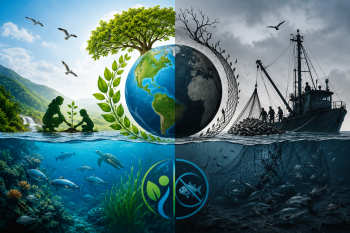
June 5 holds special significance, as the world observes World Environment Day and the International Day for the Fight against Illegal, Unreported, and Unregulated Fishing. The coincidence is particularly striking in Goa, where both the environment and the sea are woven into everyday life. The State’s forests, rivers, wetlands, coastline, and fish are more than just cultural elements. They support entire communities dependent on the sea. While both are often discussed as separate subjects, they are really two chapters of the same story. Polluted rivers affect fish populations. Destroyed mangroves reduce breeding grounds. When one part of the ecosystem suffers, the effects ripple outward.
Threat of Unregulated Fishing
These ripple effects are felt most acutely at sea, where marine life faces a direct and serious threat from unregulated fishing. As the world marks the fight against illegal fishing, it is important to take note of the regulations and advisories put in place locally. Fishing in breeding grounds or during spawning seasons severely threatens the recovery of fish populations.
A major concern in Goa is LED fishing, where powerful lights attract large schools of fish, including juveniles and breeding species, making them easier to catch and disrupting their natural behavior. While the practice has been banned in Goa due to concerns over overfishing and its impact on marine biodiversity, violations continue to be reported.
The June-July period is considered a crucial breeding season for many fish species, which is why the annual fishing ban is enforced during these months. The ban is intended to allow fish populations time to reproduce and replenish. However, with declining fish stocks, the Government is considering extending the ban to offer the ecosystem a better chance at recovery.
Development, Deforestation, and Habitat Loss
The damage happening at sea is mirrored by rampant destruction on land. With new megaprojects being announced every other month, Goa’s hills, mangroves, and forests are often the first victims. Hill cutting destabilizes slopes, increases soil erosion, and sends large amounts of silt directly into rivers and estuaries, further choking the marine environments just discussed.
The Betqui Kandola project is one such issue that received resistance from the locals. While the court cautioned the developer that they must strictly adhere to all permissions, specifically prohibiting construction on steep slopes with a gradient exceeding 25%, the project remains strongly opposed.
Furthermore, mangroves, which act as vital natural fish nurseries, are being destroyed to make way for construction and infrastructure, directly damaging the habitats of the fish. Goa seems to have taken the wake-up call, as hundreds stood protesting against the Bondvoll Lake project, fearing that development could irreparably damage the ecosystem.
Pollution
Pollution remains another major challenge that bridges the gap between land and sea. Goa’s pollution problem extends from its solid ground to its rivers, estuaries, and coastal waters. Poor waste segregation, littering, and the improper disposal of sewage and garbage continue to contaminate natural ecosystems.
Recent events at Mala Lake in Panaji highlight the severity of the issue. Hundreds of dead fish were found floating in the lake, with investigations pointing to untreated sewage discharge into the water body.
A similar incident was later reported in Campal, where a large number of dead fish were found floating in a lake at Campal Lakeview Colony. The incident once again drew attention to concerns over water pollution and environmental degradation. It raised questions not only about the impact on aquatic life but also about the overall health of the water body. Such incidents serve as a stark reminder of the deteriorating water quality and growing pollution levels affecting Goa’s ecosystems.
Casino Expansion
The Mandovi River is not only a tourist attraction but also a lifeline for fishing communities and aquatic species. Environmentalists and fishermen have long expressed concerns over the impact of offshore casinos on the river ecosystem, citing issues such as increased river traffic, noise, artificial lighting, and pollution. Bright lights and constant activity can disturb aquatic life, while added pressure on the river raises concerns about water quality and the long-term sustainability of fisheries that many Goans depend on.
As Goa marks both of these ecologically important days, the message is clear: the future of its environment and fisheries cannot be separated. All form one interconnected ecosystem. When these natural systems are damaged, fish stocks decline, biodiversity suffers, and livelihoods are put at risk. Preserving Goa’s natural beauty requires more than celebrating it in songs and memories. It demands responsible development, stronger environmental protection, and collective action to ensure that future generations can still call Goa “Sobit Sundor Goem.”