Arya Dnyanesh Karpe
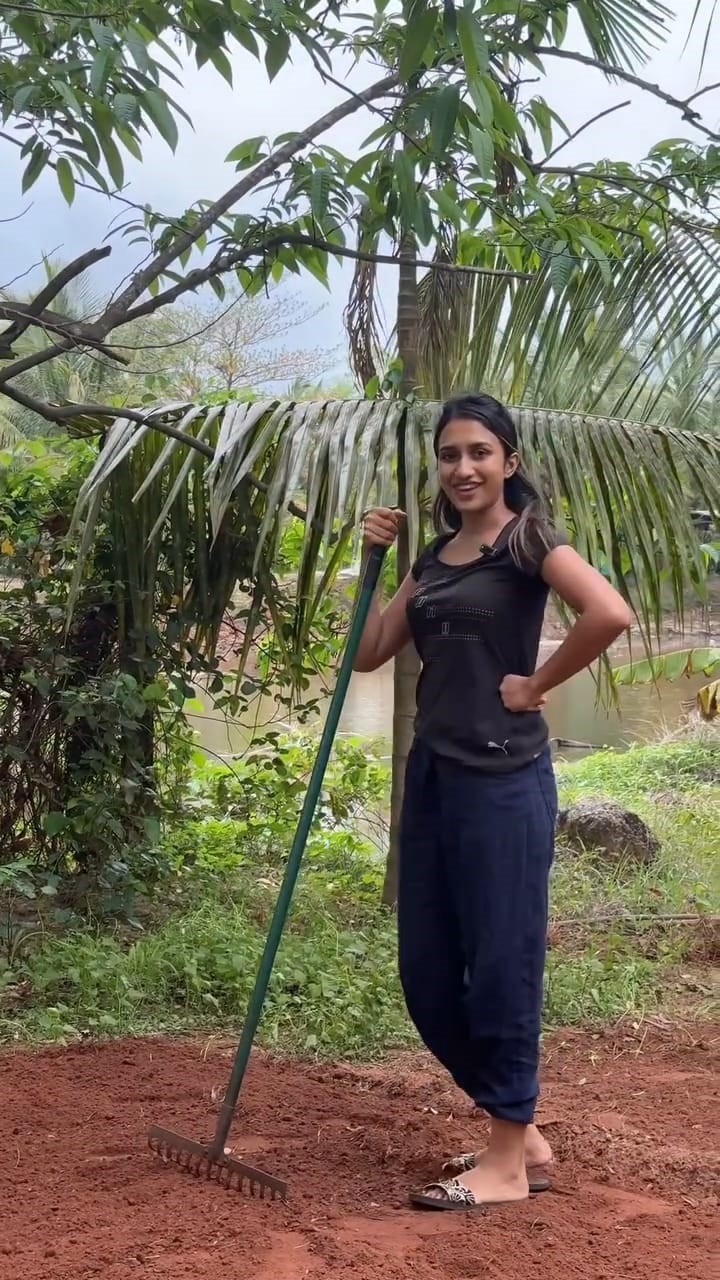
In a time when Goa’s agricultural roots are often overlooked for city life, Narusha D’Souza is redefining what it means to be a modern change-maker. Based in Calangute, she refuses to be boxed into a single identity. Masterfully balancing life as a progressive farmer, entrepreneur, and youth leader, she is also an award-winning model who holds major titles like Miss Goa and Rubaru Miss India Elite. While this spotlight would demand a permanent move to a fashion hub like Mumbai, Narusha stays grounded, literally, proving that high fashion and a deep love for the earth can go hand in hand.
Rooted in tradition
For generations, Narusha’s family has grown rice, vegetables, mangoes, and cashews. Aware of the stigma that farming is an outdated, low-income trap, she intentionally uses her platform to prove that tradition can merge with modern innovation. "With modern technology, we don't have to work 24/7 physically in the field as our forefathers did," she explains. "What used to take days of manual labour to plant rice now takes half a day. If done right with current technology, farming is highly profitable."
Speaking up
Narusha also brings this energy to local activism. At a recent Gram Sabha, she directly confronted the Calangute Panchayat over tractor rental rates for local farmers. In a room dominated by older generations, her voice cut through the bureaucratic noise. "I was heard right away because youth are not a common factor in Gram Sabhas," Narusha says.
This confrontation highlighted a much larger, systemic failure in agricultural policy. Narusha points out that while the government offers plenty of schemes, they lack ground-level practicality. Most subsidies require hectares of land to qualify, completely ignoring Goan farmers who typically own small plots of just a few hundred or thousand square meters.
Land under threat
Worse still is the environmental destruction squeezing out local agriculture. Narusha is currently fighting a legal battle against illegal mud dumping on farmlands, having approached multiple authorities, including the BDO, Talathi, Panchayat, and TCP department. "The help is only seen through papers and talks. Nothing is happening in reality. So how do you expect people to carry on farming?" questions Narusha.
At the heart of her frustration is the clash between traditional landscapes and commercial real estate. While Narusha advocates for sustainable development, she draws a hard line against lawless encroachment into agricultural lands, viewing it as a direct threat to Goan identity and survival.
Changing Calangute
Nowhere is this crisis more visible than in her own backyard. "Calangute was once known for the flourishing farms and fisheries back in the '90s," Narusha reflects passionately. "Now, the image has completely changed to things like prostitution, drugs, and dance bars”. However, she insists that the blame does not lie solely with elected officials: "Our locals are equally to be blamed because we have sold our lands with our own hands and we are continuing to do so, electing the same corrupt politicians again and again."
Hope ahead
Despite systemic roadblocks and a generation blind to the crisis, Narusha remains optimistic. For inexperienced landowners, her advice is driven by passion and dedication: “You will figure out your way…with today's technology and information, nothing is impossible.”
Narusha does not distance herself from her roots due to her success. She openly acknowledges her family's journey from humble roots to financial privilege through business diversification. She notes, "I want people to know that I come from a comfortable background, from a glamorous industry, and I can still do all of these things. It shouldn't surprise anybody that - Oh! She’s a farmer!”
Community vision
This unique position fuels her next move: launching a community farming initiative to revive barren, neglected farmlands across Calangute. By bringing locals together and managing the financial and systemic roadblocks, she aims to prove that community farming works.
Ultimately, her goals extend far beyond the fashion runway. "I want to help, make a difference, and perhaps enter the system to make the change," Narusha says. "I want to prove that if we work together, we can definitely make Goa great again and glorify it the way it was back in the day." For Narusha, saving Goa’s fields is no longer up for debate; it is an urgent necessity, and she is forcing everyone to pay attention.