


THE GOAN NETWORK
As the sun shines on the State of Goa year-round (well, almost!), its people have decided to make the best use of it. It is something people have always lived with, often complained about during summer, but is now beginning to be seen differently. What was once simply a part of the weather is increasingly being looked at as a source of power. Global Energy Independence Day, observed every year on July 10 and founded in 2006, the day advocates a future powered by renewable sources rather than coal, petroleum and natural gas.
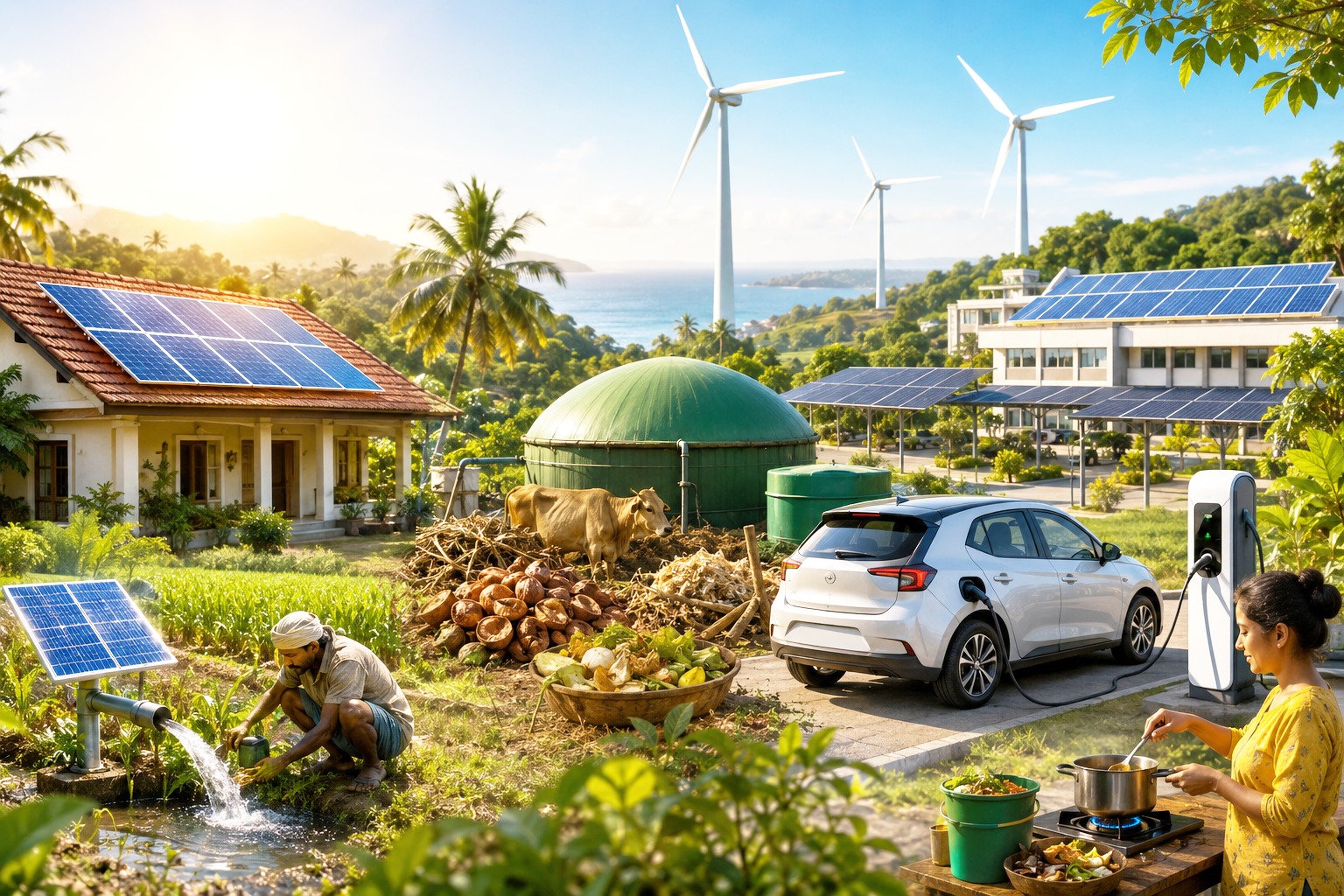
Goa, too, has been taking small but steady steps in that direction. Solar projects have expanded over the years, biomass is finding its place, electric vehicles are slowly becoming more common, and there are discussions around hybrid renewable systems. The Government too is trying to set up alternative and sustainable sources of energy in the state.
Solar power gains ground
To encourage this shift, the Government has introduced various schemes as well, such as the PM Surya Ghar: Muft Bijli Yojana, etc. Such schemes offer financial assistance for rooftop solar systems in residential homes. Goa has also been promoting rooftop solar installations on government buildings and public institutions, although there is still considerable scope for more homes and businesses to come on board.
Yet, the benefits are not limited just to cities. Agriculture can gain just as much from solar energy. While Diesel-powered irrigation pumps are expensive to operate, and power supply in some areas is still inconsistent, solar pumps offer the perfect alternative. Once installed, they require little maintenance and reduce the running cost significantly.
Biomass a sustainable
rural energy solution
Biomass is another renewable source that has often gone unnoticed despite being all around us. Coconut husks, arecanut waste, crop residue, cattle dung and even kitchen waste can all be converted into useful energy. Instead of ending up in landfills or being burnt in the open, this organic waste can be turned into biogas for cooking or electricity generation. The leftover slurry can then be used as organic manure, thus making the process useful from start to finish. For rural households, it is a practical solution that addresses both waste management and energy needs.
Hybrid energy systems
Then there are also hybrid renewable systems, which combine more than one source of energy. A solar and wind combination, for example, can continue generating electricity even when one source becomes less effective. Goa has also explored the idea of offshore hybrid renewable energy platforms that could make use of both sunlight and sea winds along the coastline. The concept holds promise, although such projects are still some distance away from becoming a regular feature of the state's energy landscape.
Transport is changing too. Electric vehicles, once considered a novelty, are becoming a more familiar sight on Goan roads. Rising fuel prices have certainly played a part, but so have lower maintenance costs and growing environmental awareness.
Challenges remain
While the advantages are many, renewable energy doesn’t come without challenges. Installing solar panels still requires a sizeable initial investment despite subsidies. Cloudy weather during the monsoon naturally affects electricity generation. Biomass plants depend on a steady supply of organic waste, which requires proper collection and management. Wind energy also has its limitations in Goa, where conditions are not as favourable as in some other coastal states. Hybrid projects, meanwhile, involve substantial investment and technical expertise before they can operate on a large scale. Even so, building a cleaner future is not just the Government's responsibility. It begins with everyday choices.
Not everyone needs to install a rooftop solar plant to make a difference. Small changes count too. Choosing a solar water heater, switching to LED lighting, reducing unnecessary electricity consumption, separating biodegradable waste, using energy-efficient appliances or considering an electric vehicle in the future are all practical decisions that add up over time. Goa may still be at the beginning of its renewable energy journey, but the direction is becoming clearer. The state has the sunshine, the natural resources, and the opportunity. What remains is wider public participation, continued investment from both the authorities and the public, and the willingness to make clean energy a part of everyday life.


