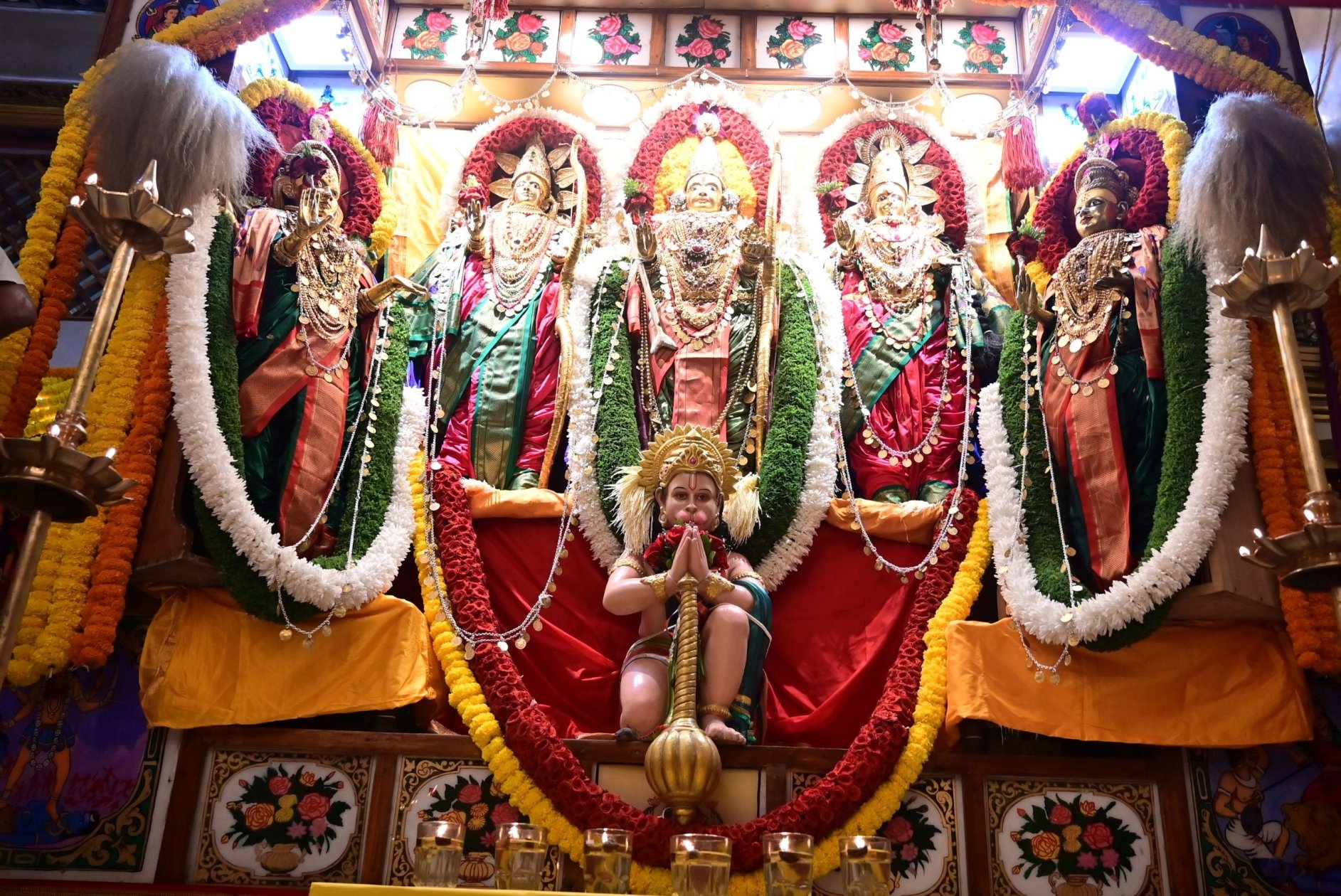
Makharotsav brings a distinctive charm to Goa’s Navratri celebrations. Observed across several temples, particularly at Antruz Mahal and in the surrounding areas, the tradition is not limited to Ponda or temples dedicated to goddesses. The makhar, an elaborately decorated ceremonial swing on which the deity is placed, moves to the rhythm of traditional temple music, with the style of swinging, instruments, and beats varying from one temple to another. For those familiar with the tunes, the changing rhythm can even reveal what is happening inside the temple.
Temple traditions
The tradition is also associated with the history of Goan temples and the relocation of deities during the 16th century, when communities moved their gods from their original shrines to safer locations and re-established their worship in new villages. Several temples in the Ponda region trace their histories to this period. While the makhar is commonly associated with goddesses during Navratri, the celebrations at several temples dedicated to male deities show that the tradition extends beyond them. “It is nothing like only goddesses celebrate makar, or gods don’t,” explains a local associated with Shree Lakshmi Narsinha Temple in Veling. “There are several other temples that are dedicated to the lords who celebrate makar, such as Mangeshi, Nageshi, Ramnath, Vimleshwar, Chandreshwar, Kapileshwar. All these are temples dedicated to Gods, and they are also celebrating Makharutsav!”
Unique customs
At Shree Ramnath Devasthan in Ramnathi, the celebration follows its own distinctive practice. “Here, on all nine days Goddess Kamakshi sits; however, only on the 10th day Lord Ramnath sits,” remarks an official from Shree Ramnath Devasthan. “This is the only temple where Makar happens for 11 days,” he adds. Since Navaratri is a festival that celebrates the feminine energy, he explains that even though the temple is of the lord, it is the goddess who sits in the makhar for all nine nights. The tradition reflects how individual temples follow their own customs even while celebrating the same festival.
Music and rituals
The music, too, plays an important role in shaping the experience. At Shri Mangueshi Temple in Mangeshi, the beats build gradually, with the pace of the makhar changing along with them. “In Mangeshi Temple, we don’t have ‘Ghatasthapana,’ which is generally there in many temples dedicated to a goddess,” explains Purohit Shailesh Abhisheki from Mangeshi Temple. “The music and the beats start slow and then move on to fast; played usually by tashe, dhol and shehnai,” he adds. “On the last day, bhasma is smeared on the idol and the god is turned into what many people call ‘Janto Mangesh ’; it is not exactly ‘janto’ (old), but it is in the Jatadhari form of his,” Abhisheki explains. A similar ritual is followed at Shri Nagesh Maharudra Temple in Nageshi. “Bhasma is applied to the idol, and he is worshipped in the form of ‘Janto Nagesh’ on the 9th day. The bhasma is later applied to everyone’s forehead, and it is considered to be a blessing,” remarks the official associated with the temple.
Beyond Antruz Mahal
Beyond Antruz Mahal, Makharotsav also has distinctive expressions in several other parts of Goa. At Shri Vimleshwar Temple in Rivona, the Navami celebrations include a ritual involving the temple’s tarangas. “While mostly you see the Devis sitting in the makhar since it is a celebration of the goddesses, here it is the god,” mentions Purohit Aniruddh Dev. What is even more intriguing, he mentions, is the ritual of ‘Taranga.’ “There are 4 Taranga dedicated to 4 deities: Vimleshwar, Mahalakshmi, Kapleshwar and Ravalnath. And on this day ‘Tarang ubhe rhata,’ on its own,” he remarks. Meanwhile, at Shri Kapileshwar Temple in Kapileshwari, the makhar is not occupied by Lord Kapileshwar alone. “It is not just the idol of Lord Kapileshwar, though; along with him, lord ganapati also sits in the makhar,” explains the bhat.
Distinctive expressions
Thus, from the changing tempo of the music to the rituals observed on specific days, Makharotsav carries a different expression in every temple. While the celebration during Navratri places the divine feminine in focus, the participation of male deities at temples across Goa shows how the tradition extends beyond a single form of worship. It is this variety of customs, music, and devotion that gives Goa’s Makharotsav its distinctive character, with each temple preserving its own way of celebrating the festival.