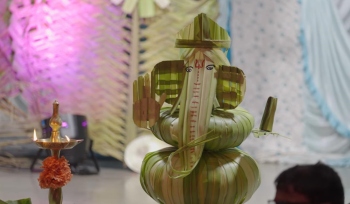
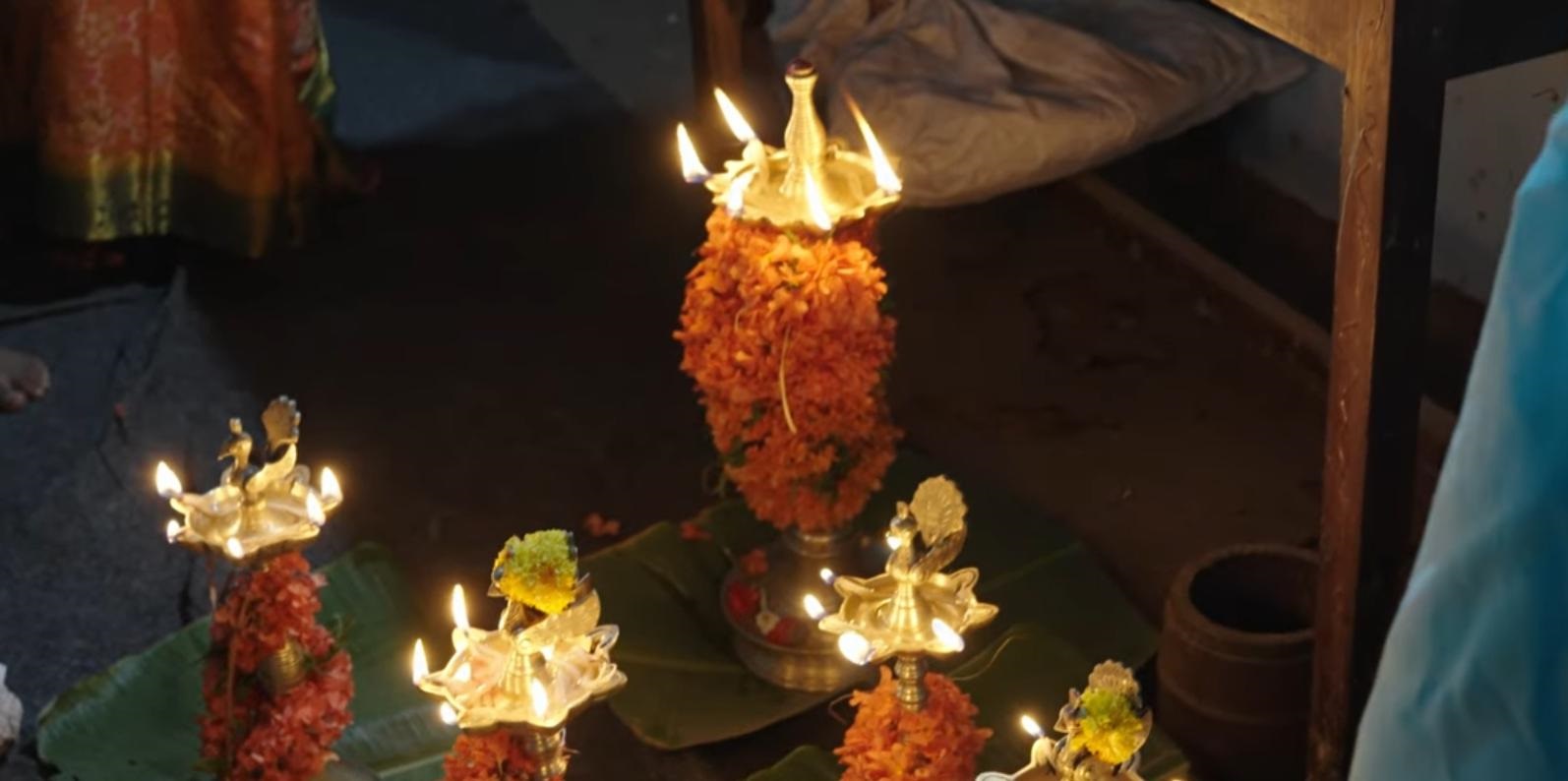
The village 'maand' is decorated, and the villagers have gathered around. Characters dress in bright clothes, with colourful makeup, jewellery and other accessories. As the beats of the drum and the Ghumott fill the village, the night is set to witness a living tradition whose origin remains unknown. While the main festival shall follow later, the preceding ritual awaits. As a deevli, (the lamp) is lit; the Naman or the namaskar takes place.
Unknown origins
While no written records of this tradition of Naman exist, it has been a part of the Goan folklore for time immemorial. While Jaagor brings together a range of characters and performances, Naman precedes it and marks the beginning of the proceedings. “Lok Parampara starts with Naman. The tradition continues even today. Nobody knows about the origin,” mentions Pandurang Phaldesai, folklore researcher and Director of TSKK. Drawing comparison to the Loka Geet (folk songs), he says, “No one knows how even that started. When a man’s basic needs are fulfilled, he seeks art and other forms of entertainment, and that is how these traditions may have emerged.” Jayanti Naik, a well-known Goan Folklore researcher, shares her knowledge, "Naman means namaskar, invocation. The origin is probably as old as the Konkani culture. It is the first salute to the forces of the universe as well as the god which is worshipped,” she notes. The Maankari of the place usually has the honour of performing the Naman.
Naman and Nandi
While the prayers performed before folk festivities are known as Naman, the invocation that precedes a natak is called a Nandi. “Nandi and Naman are completely different. Loka kala has existed since ancient times, whereas structured nataks have been around only for the last few centuries,” explains Phaldesai. He describes Naman as an act of surrender to a force greater than oneself and a gesture of gratitude towards the land and the five elements of nature. Naik notes that Naman is not merely a prayer in its earliest forms. “It is accompanied by musical instruments and dancing,” she says. Today, Naman continues to precede folk performances such as Jaagor, Rannmale, Bonvod, Kaalo and Dhaalo, most often taking the form of a song.
Invocation through song
The Pernicho Jaagor offers one such invocation. Believed to be among the oldest forms of Jaagor, its Naman begins with the words, ‘Pahile Naman karu Sharade, Saraswati Sharade.’ Saraswati is regarded as the goddess of knowledge. “The invocation seeks her presence and blessings, asking her to guide the tongue so that the knowledge and songs shared during the performance flow without error,” he explains. Phaldesai notes that the Naman in the Gauda Jaagor similarly invokes various deities and revered forces, including the creator, Mother Earth, the sacred lamp, Ganpati and Saraswati. Once these divine forces are called upon, the performers also pay their respects to the ‘sabha’, or audience, expressing gratitude for their presence and acceptance of the performance.
Shared traditions
There is yet another interesting aspect of Naman that portrays the mixture of the cultures of both the Hindus and the Christians. The Jaagor of Siolim has a Naman that invokes the deities of both religions. “The Naman has elements of both the faiths and goes as follows: Majhe Pahile Naman Devbappa, dusre Naman Dev suta, tisre Naman Ispiri Santaa,’ and it ends with ‘Sarve devo ekatree. Jai Naman Salvadora, Naman Mariechya kuvara, krupa nidhi karuna kara, Eju Christ raya re,” he shares. It continues even further with a Naman dedicated even to the Mother, ‘Aarga dita tukaa Saibini, Devache maaie swargini. Haangchi Vadyechi tu ge raani, Akvaar maaie iswar jhala Deva swargicho badios ala. Tujha mukhaar Marios aayla, sukh aani santoosh sangu lagla.’ “First, the Hindus and the Christians used to perform it together, so their prayers have also been included,” he adds.
A living legacy
Perhaps it also reflects the wisdom of our ancestors, who found ways to celebrate shared traditions and coexistence long before such ideas became subjects of modern discussion. For generations, Naman has remained much more than a ritual opening to a performance. It is an act of gratitude, humility and reverence that connects performers to the divine, the natural world and the community gathered before them. Whether invoking Saraswati, honouring the earth, thanking the audience or reflecting Goa's shared Hindu and Christian traditions, Naman embodies the spirit of Goa's folk culture. Its origins may be lost to time, but its purpose remains unchanged. Before the music begins and before the stories unfold, Naman reminds us that every performance starts with respect.