MANOJ PANDEY
THE GOAN I PANAJI
The maritime industry is entering a period of transformation that is changing not only the ships we operate, but also the professionals we need to operate them. Technology is reshaping vessel operations, automation is taking over increasingly routine tasks, and connectivity is changing life at sea. At the same time, the human element remains central to safety, decision-making and effective operations.
The seafarer of the future, therefore, cannot be defined by technical competence alone. The industry will increasingly need professionals who can combine maritime expertise with communication, problem-solving, adaptability and the ability to work effectively across cultures.
One significant change has been the greater recognition of seafarers’ rights and welfare. The Maritime Labour Convention (MLC), adopted in 2006 and entering into force in 2013, established minimum requirements covering areas such as age, medical fitness, training, wages, working hours and repatriation. It has helped ensure that seafarers are better informed about their rights and are treated with greater dignity and respect.
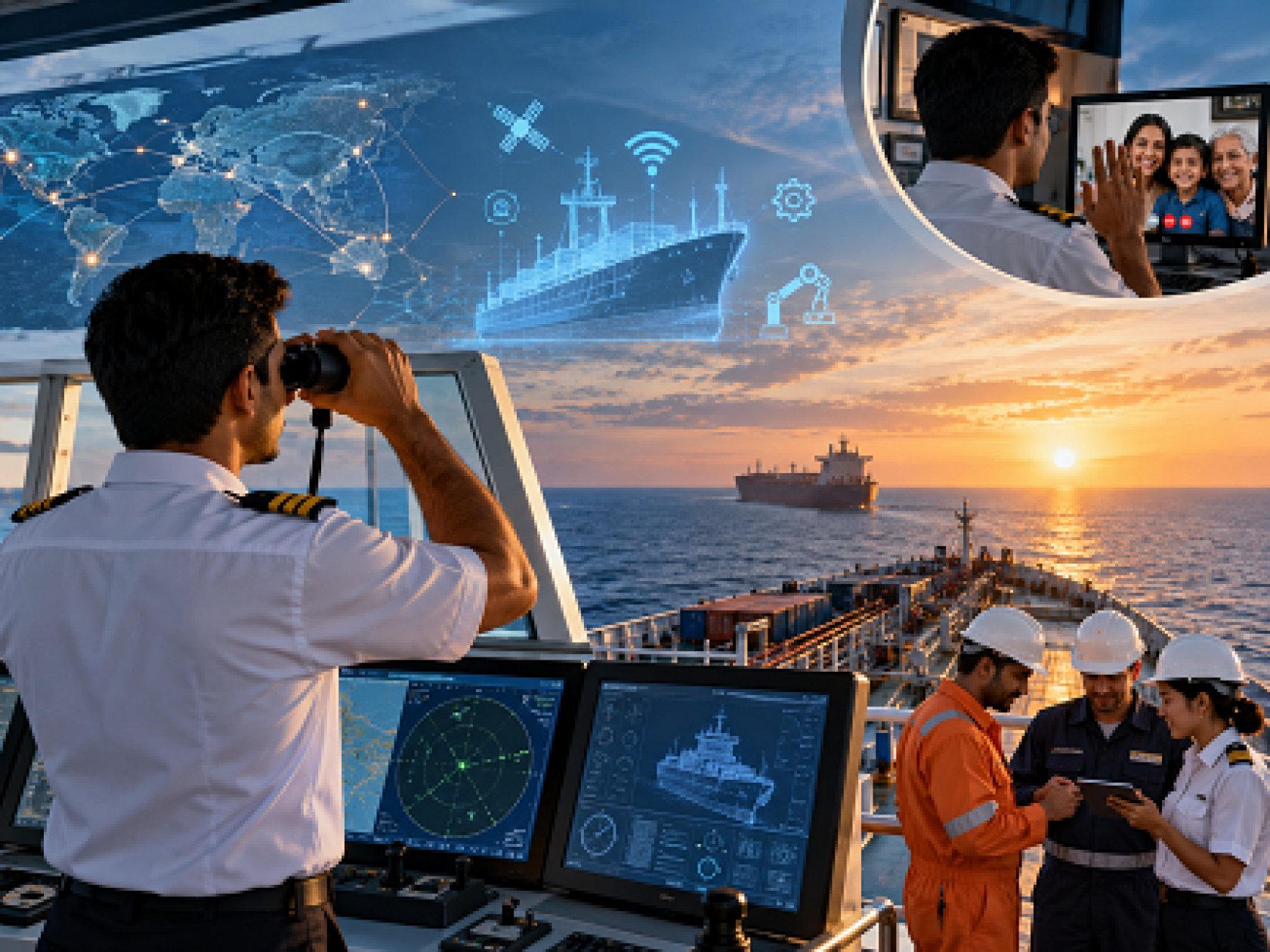
Technology has also transformed the experience of working at sea. For earlier generations, isolation was an inherent part of the profession. Communication with family could depend on letters that took weeks to arrive, while access to news and information was limited. Today, internet connectivity and video calling have significantly reduced that isolation, helping seafarers remain connected to their families and the world beyond the vessel.
But technology is also changing the skills required on board. Robotics, artificial intelligence and automation are increasingly capable of handling routine and mechanical tasks. Autonomous vessels could further change how navigation and technical operations are managed, with some functions potentially monitored or controlled remotely.
This does not make human expertise less relevant. Instead, it changes where that expertise is needed. As routine tasks become automated, professionals will increasingly need to troubleshoot systems, identify problems, make decisions and take corrective action. The role is evolving from simply operating equipment to understanding increasingly complex systems and knowing how to respond when those systems do not perform as expected.
This is where the multi-skilled maritime professional becomes particularly important. Technical knowledge will remain fundamental, but it must be complemented by strong human skills. Seafarers work alongside colleagues from different nationalities and cultures, often spending six to eight months together on board. English may be the standard working language, but effective communication requires more than speaking the same language. It requires patience, adaptability and the ability to understand different ways of communicating and working.
Traditional maritime skills are evolving too. Celestial navigation, once central to determining a vessel’s position, is now used far less because of satellite-based navigation. Similarly, improvements in equipment quality, preventive maintenance and redundancy have reduced the need for extensive repairs and the manufacture of spare parts on board. The profession is moving towards understanding systems, maintaining reliability and responding effectively when something goes wrong.
The importance of multi-skilled professionals becomes even clearer in today’s complex global environment. Seafarers must navigate not only technological and operational changes, but also heightened security risks in some maritime corridors. Recent events have reinforced that safety at sea depends not only on regulations, but on how effectively standards are understood, implemented and acted upon in real-world situations. This is closely aligned with the International Maritime Organization’s World Maritime Day theme for 2026–27, “From Policy to Practice: Powering Maritime Excellence,” which emphasises turning global maritime standards into tangible outcomes.
The future of maritime will therefore belong to professionals who combine technical competence with resilience, focus and adaptability. Young maritime professionals must be prepared to keep learning, embrace new technologies, communicate effectively and take responsibility in complex situations. They must also recognise that a long-term maritime career will require continuous development rather than reliance on a single qualification or skill set.
As we mark World Maritime Day, preparing for the future of maritime ultimately means preparing its people. The ships of tomorrow may be more connected and automated, but they will still depend on professionals who can think critically, communicate clearly, adapt continuously and know when human judgement matters most.