DR UBALDINA NORONHA
Goa has always had a special relationship with football. From village fields to school grounds, the FIFA World Cup fever in living rooms across Goa is reflected in the discussions that follow every game.
The local Goan football tournaments have always carried with it a sense of public pride. Football in Goa is a shared social language. However, Japan has got the attention of people across the globe for something more than football.
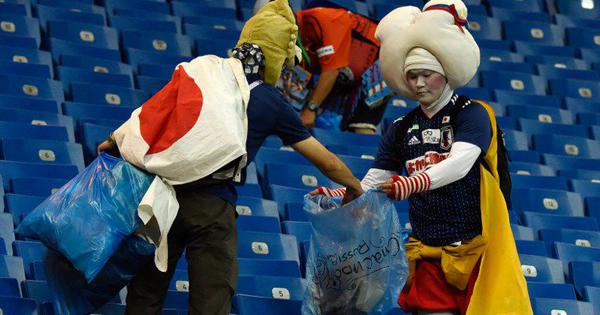
At World Cups from 1998 onwards, Japanese supporters have repeatedly stayed back to collect litter, and the team itself has been known to leave dressing rooms spotless, sometimes even leaving notes of thanks. This has won admiration because it is so consistent and appears to come from habit. It is not an act performed for applause. This particular habit displayed is one of the most revealing signs of culture within that country.
The Japanese society is one with strong norms of order, restraint and consideration for others. Civic behaviour is rarely accidental. It grows when culture, education and public expectation support it. When people believe that littering is not just untidy but socially inappropriate, they are more likely to behave differently. In a sense, cleanliness is not simply learning about not littering; it is about shared social responsibility.
Psychology helps us understand this better through the social learning theory. The theory states that we learn a great deal by observing what is modelled, repeated and rewarded around us. In Japan, cleanliness is socially referenced behaviour practised in schools, homes, and workplaces as well as at public events. Children grow up watching adults tidy classrooms, sort waste and show consideration for others.
Over time, cleanliness then becomes a norm-referenced behaviour; that is something that is internalised as a benchmark to follow. To understand it simply, it means cleanliness is first learned through social modelling until it is so deeply ingrained that it becomes second nature. These habits are then strengthened through reinforcement of social approval and social belonging.
Within our own country, the North East of India offers an encouraging example. The village of Mawlynnong in Meghalaya has been described as the cleanest village in India and also reported as being one of the cleanest in Asia. Reports from these regions show that cleanliness there is not just the result of government rules but of habits learned at home and reinforced by local culture. Residents often describe cleanliness as something taught from childhood and maintained by community participation.
This is where Goa can draw inspiration. Like many places that receive heavy tourism and growing urban pressure, Goa also faces the daily challenge of keeping public spaces clean and dignified. Civic behaviour cannot depend only on municipal workers. Citizens must see cleanliness as part of identity. A clean place is a statement about how a community sees itself. The lesson for Goa is not to copy any one place mechanically but to build a culture where cleanliness is linked with dignity, belonging and public pride.
Schools, local clubs, panchayats, housing societies and other civic and corporate institutions are doing their bit. But can a sporting event, especially football, be used as a powerful moment of civic modelling? If fans can learn to celebrate with joy and still leave the ground cleaner than they found it, this habit can spread far beyond the stadium into movie theatres, aeroplanes and large fairs and festivals. Cleanliness campaigns can create awareness, but cultures create permanence.
Goa, with its football passion and a strong sense of pride, is well positioned to do this. Imagine if every village football ground and game carried the same message: leave the space better than you found it. That simple ethic can spill into other public gatherings and transform civic life. This can become a game changer for Goa.
(The writer is Associate Professor, Department of Psychology, St Xavier’s College, Mapusa)