DR UBALDINA NORONHA
When we speak of intelligence, we often think of IQ tests, academic grades or the ability to solve complex mathematical problems. But intelligence is far richer, more layered and more dynamic than these narrow definitions suggest.
At the deepest root of human intelligence lies survival intelligence, that is the ability to detect danger, find food and adapt to environmental challenges. Early humans relied on instinct, pattern recognition and trial-and-error learning. This was practical and immediate cognition. Simple questions that facilitated one’s chances of survival. This form of intelligence is still present in us today. When you step into a swimming pool and instinctively adjust your breath or when you sense a situation is turning tense and change the tone of communication, you are tapping into survival-based intelligence. It is fast, automatic, and essential.
As human societies grew complex, they needed to build tools, navigate seas, track seasons and organise communities. This led to the development of logical or scientific intelligence. This is the conventional idea we tend to have about intelligence, measured by traditional IQ tests and emphasised in schools worldwide. This intelligence is powerful, as it tells us how to analyse and solve problems.
By the late 20th century, psychologists like Daniel Goleman recognised that logical intelligence alone did not predict success in life. People with high IQs could struggle in relationships, fail to lead teams or misinterpret social cues. This led to the concept of emotional intelligence. Emotional intelligence is the ability to recognise, regulate and manage emotions to build healthy, empathetic relationships. In fact, research indicates that emotional intelligence can be developed through practice.
The balcão of typical Goan houses, which encouraged interactions with our neighbours, reflects that as a community we Goans are quite emotionally intelligent.
While logical intelligence helps us solve known problems, creative intelligence allows us to imagine problems that may not yet exist and invent solutions no one has seen before. This includes reframing old problems in new ways and generating original ideas or artistic expressions. In Goa, creative intelligence can be seen in the blending of Portuguese, Indian and local influences in our festivals, cuisine and music.
As humans, we live in groups while thriving through cooperation, communication and shared meaning. This led to social intelligence, the ability to understand social dynamics, navigate groups and build networks. Cultural intelligence extends this further, as it is the capacity to understand, respect and adapt to cultures across contexts.
Practical intelligence is the ability to apply knowledge to real-world situations. It is what distinguishes between talking and actually doing. Situational intelligence, on the other hand, is the ability to read a specific context and adapt accordingly. In one situation, you might require being assertive, and yet in another, gentle.
As societies grew more complex, moral intelligence became relevant. The ability to imbibe values, debate right from wrong and take responsibility for one’s actions reflects not just moral clarity but also society’s benchmarks for human rights and equality. However, some psychologists, including Howard Gardner, have proposed existential intelligence, which is the capacity to ask and reflect on questions such as the purpose of life, life after death and why we suffer.
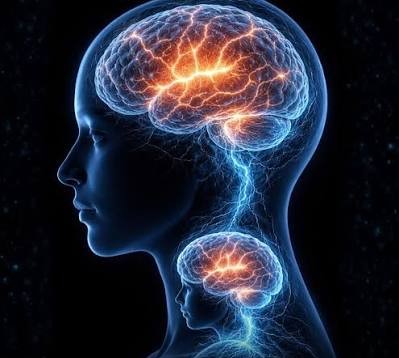
All these forms of intelligence have now culminated in what is known as ‘metacognition’, the highest known form of human intelligence. Metacognition does not replace other intelligences; it integrates them. It is the mind's ability to observe, regulate and improve itself.
The evolution of intelligence, from survival instinct to metacognition, shows that intelligence is a spectrum. It grows, adapts, and integrates. We're not just born intelligent; we grow more intelligent through reflection, practice and awareness. It is the key to unlocking wiser living, which may enhance our sussegado way of life.
(The writer is Associate Professor and Head of Department of Psychology at St Xavier’s College, Mapusa)