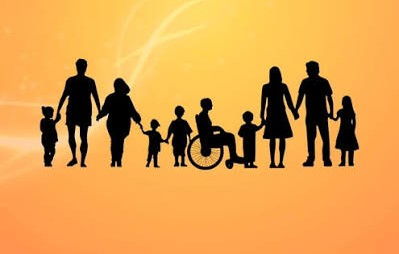
The intervention of the Bombay High Court at Goa on July 8 with regard to disability access in Goa is important. The petition began as a challenge about accessibility for the visually challenged on the Kadamba Transport Corporation, with a request for oral announcements to be made at bus stops.
The court, in its observations, has widened the scope to examine broader state policy, public infrastructure standards and the legal duties of both the Goa government and the Union of India. It also linked the case with wider questions of disability rights and public accountability.
This is not merely a legal issue, but a larger story is about social attitude. The issue in Goa, therefore, is not whether buses have proper facilities but whether society is willing to build habits of inclusion in offices, in transport, in schools and in ordinary public behaviour.
When access is poor, disabled persons do not just face inconvenience; they experience fatigue, dependency, embarrassment and withdrawal. When institutions become genuinely accessible, the emotional message is you belong here; you do not have to fight to belong here. That is why disability access is also a matter of dignity, well-being and public empathy.
Real empathy is the ability to imaginatively enter another person’s experience and recognise what makes ordinary life difficult for them. It asks us to see the world from another angle. The most important shift is to understand disability as a relationship between the person and the environment. Many barriers are created not only by the body but also by environmental design. A building without a ramp becomes inaccessible. A bus without safe boarding becomes exclusionary. The message received by the disabled person is this space was not designed with you in mind.
This is why the language of inclusion matters. When people imply that access is provided, they often mean they have installed a physical feature and the matter is closed. A staircase can be rebuilt, but an indifferent attitude takes much longer to change. A ramp can be added in a day; respect must be cultivated over time. Many able-bodied people are not hostile; they are simply unaccustomed to noticing. Assistance is offered only when someone is visibly struggling. Inclusion should be ingrained as a basic human value.
The psychology of inclusion also matters for families living with disabilities every day. When a parent has to plan every journey in advance, scan every staircase, and assess every crowd, the emotional burden is immense. Over time, families may begin to withdraw from public life because the effort of participation becomes too high. That withdrawal is often the result of repeated exclusion. It shrinks the social life of entire families.
When a disabled person meets a genuinely accommodating environment, the psychological effect is powerful. It communicates belonging. That message is deeply healing. Inclusive environments enhance mental health, as respectful access reduces stress and supports the confidence, independence and participation of disabled persons.
A more empathetic public culture also helps us move beyond tokenism. Many societies celebrate disability awareness days. There are encouraging signs of a slow change. More people are beginning to speak seriously about neurodiversity, inclusion, mental health and the rights of persons with disabilities.
In the end, disability access is a mirror. It shows us what kind of society we are. If we see only compliance, we are still thinking too narrowly. The goal is to build a community where fewer barriers are created in the first place, because people have learned to think with care. It is one of the clearest signs that a society has evolved enough to include everyone in its reality. A truly inclusive society is one that develops the emotional intelligence to notice who is being left out and the moral willingness to change that reality, without a petition filed in court.
( The writer is Associate Professor, Department of Psychology, St Xavier’s College, Mapusa)