THE GOAN
PNAJI
Every festival brings with it a set of rituals and traditions, some lesser-known, such as Dhillo, and others, such as Narkasur vadh, observed in almost every vaddo across Goa. Goan festivals are closely linked to culture, tradition and, above all, gratitude. Diwali, too, is a time to give thanks, particularly for the harvest, with traditions such as preparing poha (flattened rice) and other festive offerings marking the occasion.
A quiet ritual
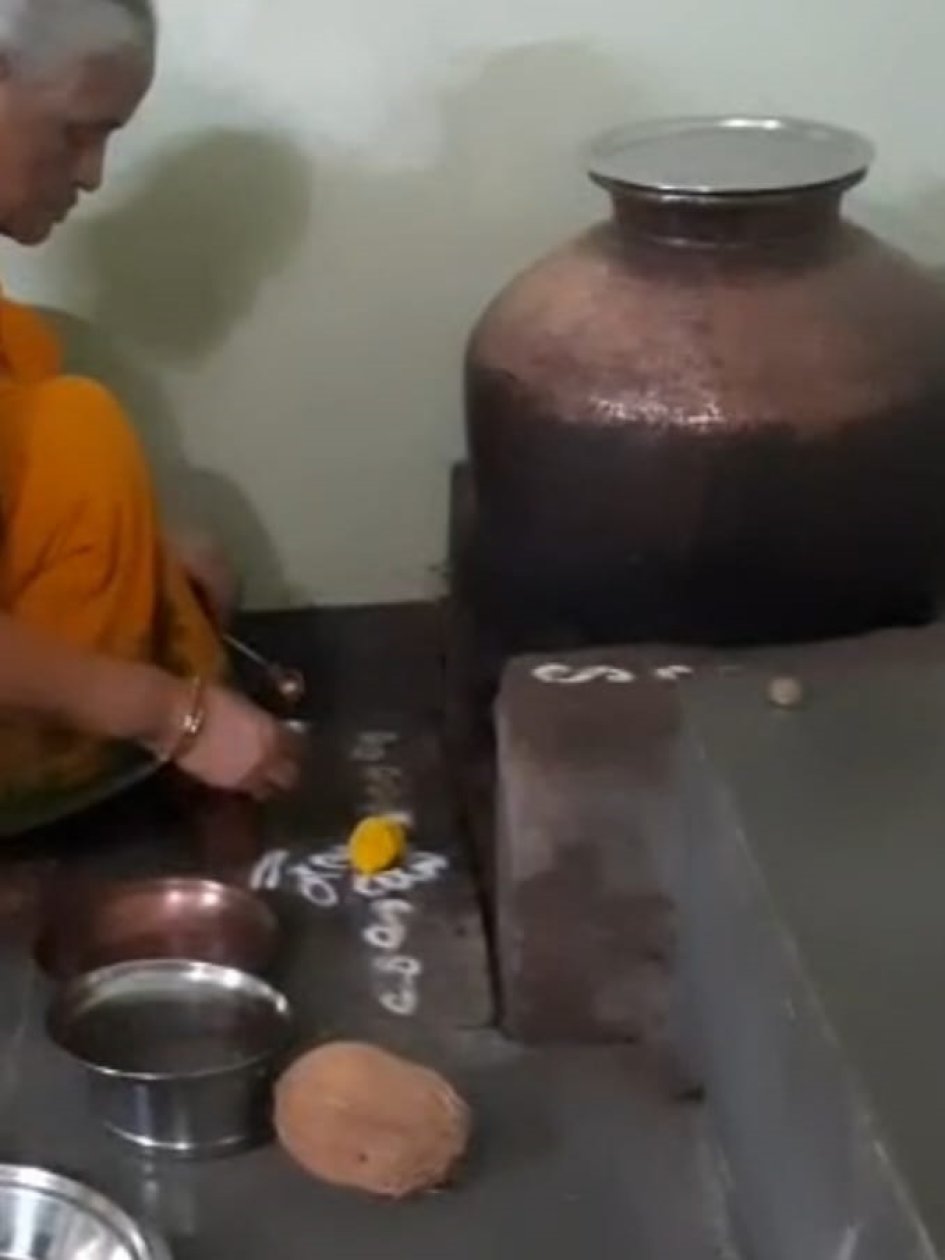
On the eve of Diwali, the night of Narak Chaturdashi, while much of the state is busy watching Narkasur competitions or taking part in celebrations that continue through the night, another, quieter tradition unfolds in Goa’s villages. As the sun sets, family members gather around the bhaan, a traditional vessel, usually made of mud or brass, used to heat water. The vessel is cleaned, decorated and worshipped in a ritual that recognises its importance in everyday household life. Though it may seem like a simple act, the practice carries a deeper message of gratitude for an object that has served generations.
The ritual's origins may not be clearly documented, but its continuation reflects the wisdom passed down by ancestors. For many families, there is no written account explaining when or why the practice began. Instead, it survives through oral traditions and the example set by older generations. The reason for continuing it is often simple: “My mother or mother-in-law did it, so I follow it too.”
Passed generations
Madhavi Ganoba Desai from Gaodongri has been observing the tradition for at least 45 years. “We do not know its origin. The way my mai did it, I just followed her,” she says. She recalls that village homes once had large chuls (traditional hearths) that were used regularly. On the day before Diwali, families would clean the hearth and the bhaan, then spread cow dung around the chul in the traditional manner before beginning the rituals. The area was decorated with rangoli, while flowers were used to adorn the vessel. “Ghosali vaal and Kattyachi vaal were also placed around the neck of the bhaan, and some families would draw the auspicious swastika symbol on it with kumkum,” she explains.
In Kumidini Kamlakar Desai’s home, the practice continues in much the same way. “We worship the bhaan and chul on the eve of Diwali. It has to be done in the evening. Just as Lakshmi Pujan is performed, this too is a symbol of prosperity in the house,” she says. In some households, the ritual also includes an offering of gulache fov (poha prepared with jaggery) after the puja and aarti. “Once the vessel is cleaned and the puja is performed, we offer it naivedya of gulache fov. This is then distributed among family members,” she adds. The following morning, after Narkasur vadh at dawn, family members use the water heated in the bhaan for their abhyanga snaan, the traditional Diwali bath.
Traditionally made of baked clay or copper, they were once essential for heating water for daily bathing. On Bali Pratipada, the vessel is cleaned and decorated with lime paste, garlands of seasonal flowers, mango leaves and the wild bitter melon known as karit. A sweet preparation made of rice, jaggery and copra is placed on a banana leaf and offered to it, along with a lit lamp and incense sticks. “During Diwali, this vessel is remembered and honoured just like other objects of daily use, acknowledging its importance in our lives over generations,” says Rajendra Kerkar.
Changing times
However, as household practices change, so do the objects around which these rituals are performed. Madhavi points out that traditional hearths and water-heating vessels have become rare in many homes. “Hardly anybody has a chul, forget a bhaan. Now we have geysers. You tell me, should we do puja of the geyser?” she quips.
Her question captures the change taking place in Goan homes, where modern conveniences have replaced many objects that were once part of daily life. Yet the ritual of worshipping the bhaan reminds us that Diwali is also about acknowledging what sustains a household. Even as the vessel itself becomes less common, families continue to pass down the gratitude and memories attached to it.