Over and over at the U.N. climate summit in Glasgow, world leaders have stressed the need to limit global warming to 1.5 degrees Celsius.
The 2015 Paris Agreement commits countries to limit the global average temperature rise to well below 2°C above pre-industrial levels, and to aim for 1.5°C.
Scientists have said crossing the 1.5°C threshold risks unleashing far more severe climate change effects on people, wildlife and ecosystems.
Preventing it requires almost halving global CO2 emissions by 2030 from 2010 levels and cutting them to net-zero by 2050 -- an ambitious task that scientists, financiers, negotiators and activists at COP26 are debating how to achieve and pay for.
But what is the difference between 1.5°C and 2°C of warming? We asked several scientists to explain:
WHERE ARE WE NOW?
Already, the world has heated to around 1.1°C above pre-industrial levels. Each of the last four decades was hotter than any decade since 1850.
"We never had such a global warming in only a few decades", said climate scientist Daniela Jacob at the Climate Service Center Germany. "Half a degree means much more extreme weather, and it can be more often, more intense, or extended in duration."
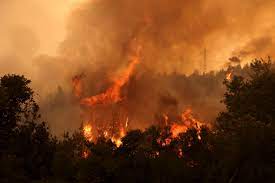
Just this year, torrential rains flooded China and Western Europe, killing hundreds of people. Hundreds more died when temperatures in the Pacific Northwest hit record highs. Greenland saw massive melting events, wildfires ravaged the Mediterranean and Siberia, and record drought hit parts of Brazil.
"Climate change is already affecting every inhabited region across the globe," said climate scientist Rachel Warren at the University of East Anglia.
HEAT, RAIN, DROUGHT
More warming to 1.5°C and beyond will worsen such impacts.
"For every increment of global warming, changes in extremes become larger," said climate scientist Sonia Seneviratne at ETH Zurich.
For example, heatwaves would become both more frequent and more severe.
An extreme heat event that occurred once per decade in a climate without human influence, would happen 4.1 times a decade at 1.5°C of warming, and 5.6 times at 2°C, according to the U.N. climate science panel (IPCC).
Let warming spiral to 4°C, and such an event could occur 9.4 times per decade.
A warmer atmosphere can also hold more moisture, resulting in more extreme rainfall that raises flood risks. It also increases evaporation, leading to more intense droughts.