As I browse the posts on Twitter which show clippings of newborns and toddlers being pulled out the rubble from under the earthquake debris in Turkey, the first question which comes up in my mind is whether the parents have also survived.
Because otherwise the child who has been miraculously rescued becomes an orphan. However, these are the scenes related to a natural disaster i.e. an earthquake.
Now think about the scenario on Wednesday where a one-year-old boy became orphaned after a road crash wherein both his parents lost their life under the rear wheel of a truck.
The anecdote of the child surviving the road crash at Harvalem in Sanquelim while both the parents were killed under the wheel of a truck may inspire stories of survival but how is the orphan child expected to be brought up without the presence of his parents in his growing years.
The discerning factor between the child who survived the earthquake and the child who survived the road crash is that the latter was entirely avoidable.
The avoidance of road crashes being a desire of every road safety regulation authority and yet the statistics demonstrate a growing trend of fatalities year after year.
According to the 2017 report prepared by UNCTAD in respect of the progress of implementing road safety targets in the context of the 2030 Agenda for Sustainable Development:
Every day more than 3,500 road deaths occur worldwide. Each year over 12 lakh people die, and an additional 50 lakh are injured or permanently disabled in road accidents.
Of the total number of road deaths, about 90 per cent of road traffic deaths occur in low and middle-income countries, although these countries have only 54 per cent of the world’s vehicles.
The large number of annual deaths from road traffic accidents, has been listed as one of the main challenges caused by unsustainable transport, along with the generation of almost a quarter of the greenhouse gas emissions by the transport sector.
Are statistics really useful
in predicting road crashes? (subhead)
A recent key trend particularly worth noting with respect to road safety, is the increased awareness on the need for better road statistics and timely information and data on road fatalities and injuries.
Such data needs to contain sufficient information to identify the main causes of crashes or incidents.
Obtaining more data and statistics, including through use of new technologies, and their analysis, has the potential to provide previously unavailable depth of insight on a wide range of issues related to road safety, and should be prioritized.
New and existing data technology and associated knowledge and expertise could help among others through improved risk assessment, as vulnerabilities and possible negative events and incidents are better identified, responsible stakeholders would be more able to prioritize their actions and responses to reduce such risk as much as possible.
Through better identifying risks and vulnerable areas, gaps in training and training needs could be identified as well. For such training to be effective, customized courses adapted to the stakeholders’ needs, policies and practices, could be very useful and is recommended.
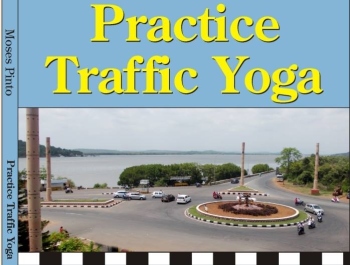
From my 2014 Book entitled: “Practice Traffic Yoga”, the “practical suggestions learnt from other countries” have been enunciated since they are relevant even during the current era:
1. Provide exclusive lanes for public transport
Exclusive public transport lanes mean the lane on which the bus or streetcar runs is not open to private vehicle traffic. Exclusive lanes enable buses and trams to avoid congestion helping increase their speed, reliability and attractiveness.
2. Using regulations and traffic engineering to control traffic
Parking restrictions “ one main cause of delays to transit vehicles is waiting while private vehicles manoeuvre in and out of parking spaces. Parking restrictions and controls can be implemented to reduce the impact of parking movements on transit vehicles.
Turning Restrictions “ turning vehicles are another significant source of delay for transit vehicles. Implementing turn restrictions carefully can significantly reduce these delays.
Relatedly, in my book “Practice Traffic Yoga” in the section on “Traffic Do’s and Don’ts as per Rules of the Road Regulations, 1989”, the following rules would be relevant:
“Rule 23. Distance from vehicles in front:
The driver of a motor vehicle moving behind another vehicle shall keep at a sufficient distance from that other vehicle to avoid collision if the vehicle in front should suddenly slow down or stop.”
“Rule 24. Abrupt brake:
No driver of a vehicle shall apply brake abruptly unless it is necessary to do so for safety reasons.”
From a historical perspective, a similar Case Law relating to negligence of the driver of a commercial automobile and the duty of care has been reported by the Accident Claims Journal in:
NIRMAL BHUTANI VS HARYANA STATE [1983] A.C.J. 640.
In this case, the road roller was parked on the road without any sign or indication with regard to its standing there.
The Court held that if it be assumed that the car was travelling at a speed of, say 60kms per hour, which the driver would be justified driving at, considering it was a main highway and the road was clear, the distance available to the car driver to stop the car or to avoid the road roller must clearly be inadequate for either purpose.
In a situation as likely to have arisen in this case there can be no escape from the conclusion that the road roller standing in the road in such a manner was a grave and unexpected hazard for road user and it constituted a breach of duty of care which was owed by the driver of the road roller to the road users.