Ever since the demonetisation exercise of 2016, the assumption that the nation was at the cusp of an economic reform with sincere attempts being made to combat tax evasion via ‘black money’ held outside the formal economic system did bring about some cheers.
However, with innovations to hoodwink authorities, the generation of black money in the country continues with a vehemence that is unbelievable.
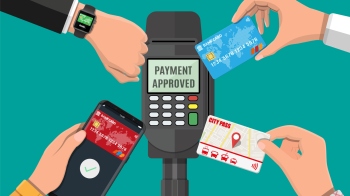
Meanwhile, the government is encouraging payments through banking channels, debit or credit cards, and other electronic modes.
In order to bring the facts before the reader, I have had to borrow heavily from various sources.
It is claimed that the country’s transition to a cashless economy has been fairly successful with a growing number of digital transactions and the widespread use of Unified Payments Interface (UPI).
But transforming a cash-dependent country into a cashless economy is a great challenge that India will have to contend with given the size of the informal sector within the Indian economy.
It is argued that the country cannot become cashless unless this mammoth sector which employs a staggering percentage of the workforce adjusts to digital transactions. But there will always be differences of opinion on this matter.
It is the working class which has shown more adaptability to various modes of cashless transactions while professionals from diverse fields and many of those engaged in different business activities continue to exhibit a fondness for having their bills settled in cash.
The distinct ‘aversion’ shown for accepting credit cards for payments is a ‘dilemma’ I have faced quite often. Either it is an outright refusal or at times some vague excuse given by shopkeepers for not accepting credit cards which defies all perceptions about going cashless.
For instance, I happened to be at a pharmacy in Margao buying some medicines the other day. As a senior citizen, I was informed that I stood to gain a decent discount on the bill, provided I settled it in cash.
For that matter, there are so many business establishments which continue to insist on cash payments for purchases made. This ‘peculiar’ situation is not confined to Goa alone.
Last year, while at Varanasi, my better-half embarked on a shopping spree before returning from there. I was pleasantly surprised to note that most of the shopkeepers there accepted only money.
This is the sort of seriousness the nation attaches to embracing a cashless economy which is undoubtedly a significant step towards achieving economic growth, transparency, and convenience.
There are several challenges that the country might face while transferring to the cashless economy. But without the active participation of members from every segment of the society, it would certainly be an uphill task.
An article on the subject states that digital literacy is crucial to educating the community and fostering it. Public trust is also important in shaping the generation that adopts digital finance.
It is equally essential that the role of the government and financial institutions in highlighting the issue is emphasized upon. The writer of the piece is of the opinion that the implementation and development of digital literacy needs to be effected in society, starting from schools.
But having said that, the world of digital scams is expanding its base in India. No sooner is a foolproof method introduced, scammers have already devised a way to compromise it. Apparently conmen are always a step ahead.
As the popularity of cashless payments grows, so does the potential for cybercrime. Cybercrime is a major concern in the cashless economy because the systems that enable cashless transactions are attractive targets for hackers.
Besides, scammers are taking advantage of a cashless economy by exploiting vulnerabilities in digital systems to steal personal information and commit fraud.
While admitting that cashless payments are actually safer than carrying physical cash, we however need to realize that as more people use digital payments, the risk of cybercrimes increases. With cashless payments, more financial information is stored online, so there is a higher chance that information can be stolen by cybercriminals.
The ‘Cyber Magazine’ carried a write-up which dwelt at length on malicious apps and fraud within a cashless society giving sleepless nights to customers. Online shopping has become a modern craze, frauds are on the rise, with phoney websites, mobile apps, and social media accounts running rife, tricking customers into authorizing money transfers, giving away sensitive information, or revealing log in credentials.
These days one has just to dial a number on one’s mobile to be bombarded by a series of warnings against the latest spate of cybercrimes that one needs to be on the alert against. More than the ease of digital payments, it is the threats emanating from these modes of transaction which often leaves one in a quandary.
One has never heard anyone discussing the merits of cashless payments, but, yes, the apprehensions against the emerging trends in cybercrime are debated with a seriousness that borders on that element of fear which disallows many the liberties of experimenting with digital transactions.
The ‘C’ word continues to garner headlines in the country despite determined efforts by the government to do away with it. However, the Government is committed to expand digital transactions in the Indian economy and thereby enhance the quality and strength of the financial sector.
With UPI being used at all levels from street vendors to large shopping malls, it is asserted that Digital India is a global success story. However, there is absolutely no guarantee whatsoever that we can be completely secure against cyber threats. Moreover, with quite many people still preferring cash transactions over digital payments, living in a cashless society is still a distant dream for us.