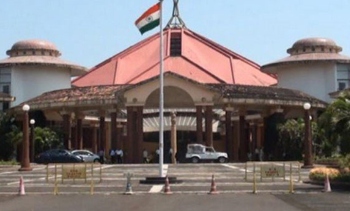
It may be excusable for the Minister of Town and Country Planning to move a motion of withdrawal in consonance with Rule 166 of “The Rules of Procedure and Conduct of Business of the Goa Legislative Assembly, 1992”.
The deliberate subversion of the Constitutional Principles by the ruling Government in the State through the introduction of “The Goa Town and Country Planning (Amendment and Validation) Bill, 2024” stimulates a greater introspection into the intentions of the TCP Ministry in initially tabling such a grossly ultra vires Bill in the House in the first place.
According to the Business for the day -16 (05 Aug 2024), in the The List of Business of the Goa Legislative Assembly, at 11:30 AM,
“Pertaining to government bills “ Consideration and passing, the following had been listed:
1.Shri Vishwajit Rane, Hon. Minister for Town and Country Planning to move that The Goa Town and Country Planning (Amendment and Validation) Bill, 2024 be taken into consideration. Also to move that the Bill be passed”
Thereafter, the Revised List of Business at 10:03 PM on the same day i.e. on 05 Aug 2024, mentions:
“8. Government bill “ Withdrawn
1.Shri Vishwajit Rane, Hon. Minister for Town and Country Planning, moved for leave to withdraw The Goa Town and Country Planning (Amendment and Validation) Bill, 2024, under Rule 166. The leave was granted. Shri Vishwajit Rane, Hon. Minister for Town and Country Planning, moved the Motion that the Bill be withdrawn. The Motion for withdrawal of the Bill was put to the vote of the House and-The Goa Town and Country Planning (Amendment and Validation) Bill, 2024, was withdrawn.”
Interestingly, the Website of the Goa Legislative Assembly, which lists all the Bills mentions that the Bill No. 25 of 2024 (Government Bill) Introduced by Shri. Vishwajit Rane pertaining to ‘The Goa Town and Country Planning (Amendment and Validation) Bill, 2024’ shows the status as: “The Bill is withdrawn by the Minister with leave of the House.”
Here, it would befit to empower public knowledge of the Rules of Procedure which pertain to the Withdrawal of a Bill:
“166. Withdrawal of Bill”
The member in charge of a Bill may at any stage of the Bill move for leave to withdraw the Bill on the ground that”
(a) the Legislative proposal contained in the Bill is to be dropped; or
(b) the Bill is to be replaced subsequently by a new Bill which substantially alters the provisions contained therein; or
(c) the Bill is to be replaced subsequently by another Bill which includes all or any of its provisions in addition to other provisions and if such leave is granted, no further motion shall be made with reference to the Bill, which shall automatically stand withdrawn.”
Now, leaving aside the procedural compliance seeking the withdrawal of “The Goa Town and Country Planning (Amendment and Validation) Bill, 2024”, the disturbing aspect remains about the content of the Bill which had proposed to restrict judicial scrutiny of land conversion permissions to be granted by the TCP.
The objectionable part of the Bill was as follows:
"to protect the TCP against judicial scrutiny of land conversions under the ODPs and take powers of planning and development authorities (PDAs) in case the ODPs are withdrawn".
This is obviously an affront to the Doctrine of Basic Structure of the Constitution of India and this abrupt move by the present ruling government is reminiscent of the high handedness of Prime Minister Indira Gandhi when she declared State of Emergency in order to retain her government’s power indefinitely.
Moreover, according to Adebola Rafiu Bakare (2021) in his book Chapter entitled: Evaluating the Nigerian National Assembly’s Lawmaking Output and the Implications for Legislative Effectiveness:
“Withdrawing bills can be seen as a failure of the legislative process, impacting the perceived effectiveness of the legislature. This might undermine public trust in the institution’s ability to address pressing issues. Moreover, the ability of a legislature to pass laws is crucial for maintaining its authority and relevance in governance​” (Bakare, 2021).
But in asking oneself’s heightened prudence as to what the State Government was really attempting to conceal with the abrupt withdrawal of the “The Goa Town and Country Planning (Amendment and Validation) Bill, 2024”, a recent legal precedent of the honourable Supreme Court of India comes to light:
In Namit Sharma vs. Union of India (2013) 1 SCC 745:
“In other words, the jurisdiction of the Court has been ousted by express language. Nevertheless, it is a settled principle of law that despite such excluding provision, the extraordinary jurisdiction of the High Court and the Supreme Court, in terms of Articles 226 and 32 of the Constitution respectively, cannot be divested. It is a jurisdiction incapable of being eroded or taken away by exercise of legislative power, being an important facet of the basic structure of the Constitution.” (page 70).
“...Thus, all decisions of the Tribunals were held to be subject to scrutiny before the High Court under Article 226/227 of the Constitution.”
“...it is clear that the orders of the Commissions are subject to judicial review before the High Court and then before the Supreme Court of India. In terms of Article 141 of the Constitution, the judgments of the Supreme Court are law of the land and are binding on all courts and tribunals.”
“…In order to maintain judicial discipline and consistency in the functioning of the Commission, we direct that the Commission shall give appropriate attention to the doctrine of precedence and shall not overlook the judgments of the courts dealing with the subject and principles applicable, in a given case.” (page 100).
Therefore, in realisation of the government’s tendency for capriciousness, the action of withdrawal has been swift, but the public’s confidence may have already been marred irreparably.