Sainandan Sridhar Iyer
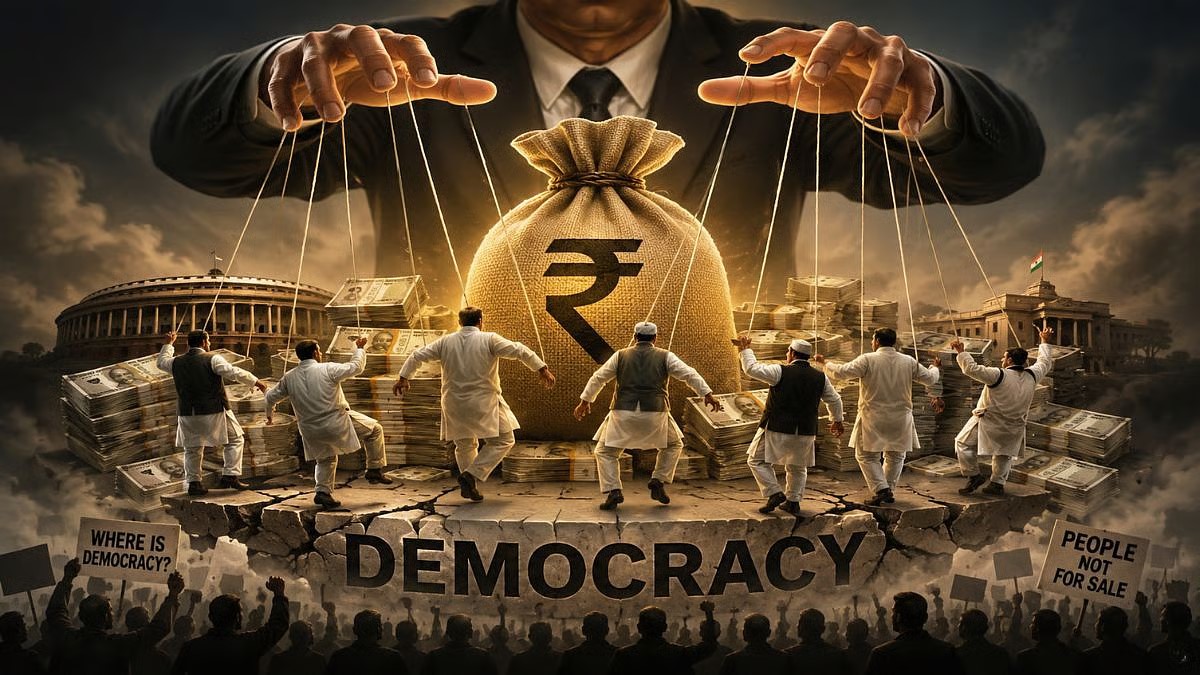
Goa’s contemporary political landscape is defined by an unprecedented degree of executive consolidation. Over the last decade, the state has transitioned from a highly volatile, fracture-prone coalition ecosystem into a highly centralized model dominated by the Bharatiya Janata Party (BJP). This stability, however, has been achieved largely through tactical legislative engineering, most notably the wholesale absorption of opposition lawmakers in 2019 and 2022. While this structural shift has minimized the mid-term collapses characteristic of Goa's politics of the 1990s, it has simultaneously hollowed out institutional opposition, creating a democratic vacuum where regional grievances are frequently subsumed by national party directives.
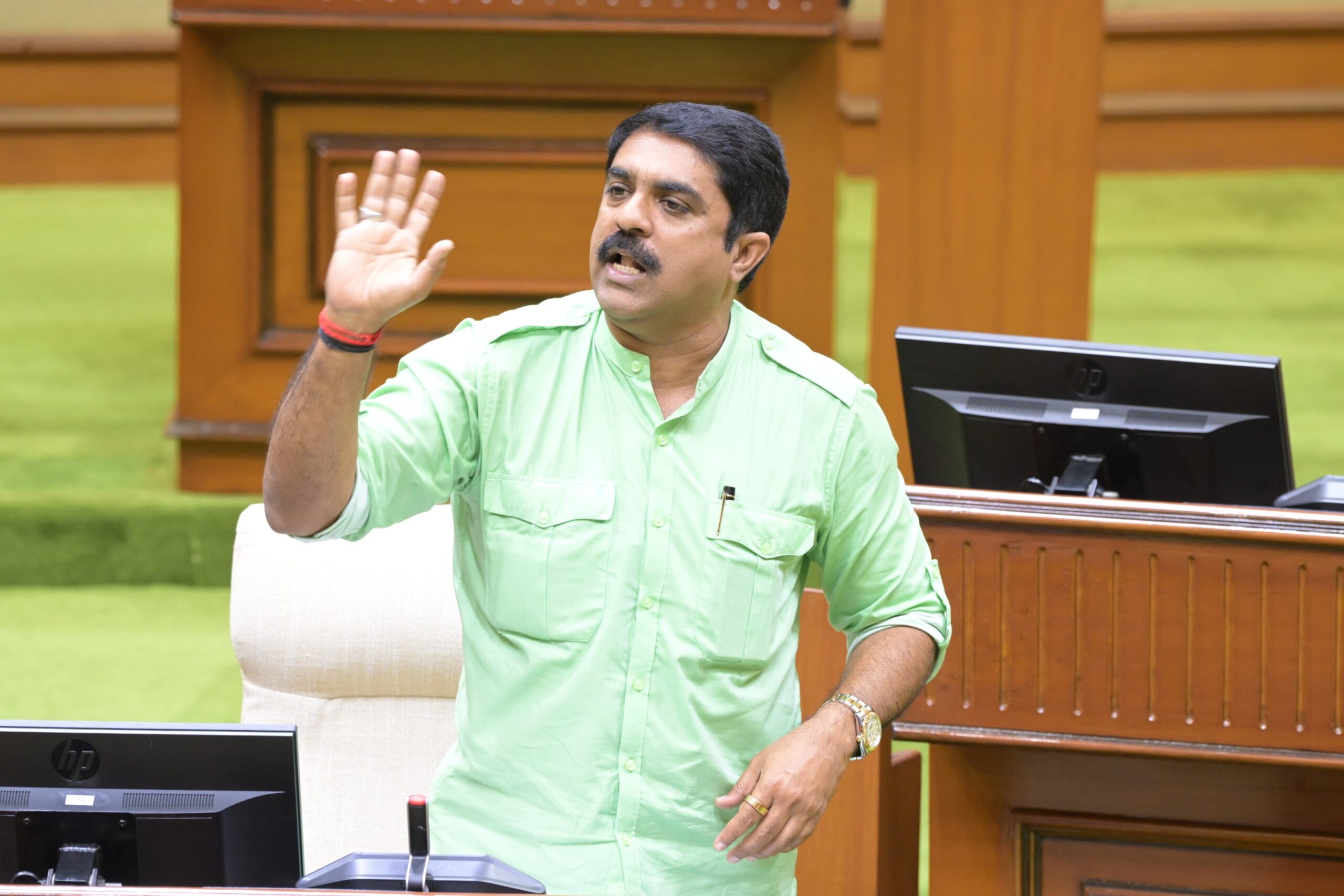
In this highly asymmetric environment, the quest for a viable counter-weight to the ruling dispensation remains a critical question for regional political stability. While national alternatives like the Indian National Congress suffer from persistent structural vulnerabilities, newer entrants like the Aam Aadmi Party (AAP) struggle with a perceived "outsider" status, while the Revolutionary Goans Party (RGP) is seemingly imploding. In this melee, the Goa Forward Party (GFP), led by Vijai Sardesai, offers a compelling case study in localized resistance. However, evaluating Sardesai as a viable alternative requires moving past partisan rhetoric and critically examining the structural contradictions of Goan regionalism, alongside the pragmatic electoral strategies required to build a sustainable opposition framework.
Decentralized grievances
vs centralized mandates
The structural argument for a robust regional alternative in Goa is rooted in the diverging priorities between central party high commands and localized socio-economic realities. Under the current highly consolidated governance model, critical state-centric policy deadlocks, such as the prolonged legal and environmental paralysis surrounding sustainable iron ore mining and the interstate conflict over the diversion of the Mhadei river water, are frequently managed through the lens of national political alignment rather than regional preservation.
Furthermore, Goa’s consumption-led, tourism-dependent economy is facing severe strains. The rapid conversion of communally held village lands for speculative real estate and large-scale infrastructure projects has triggered growing anxieties regarding demographic shifts and ecological degradation. So, when national parties dominate the local assembly, their representatives are structurally constrained from taking hardline, adversarial stances against their own central leaderships on these vital issues. Consequently, a distinct regional entity is theoretically necessary to convert these localized anxieties into formal legislative leverage.
Evaluating Vijai's
tactical flexibility
To assess whether Vijai Sardesai can transition from a localized sub-regional leader to a state-wide alternative, one must weigh his political capital against past strategic miscalculations. Sardesai’s core strength lies in his ideological flexibility and his acute understanding of Goa’s unique multi-religious social fabric, particularly in the socio-politically influential Salcete sub-region. Unlike national players, his political apparatus is nimble, hyper-local, and deeply embedded within coastal economic networks. He possesses the necessary rhetorical sharpness and legislative experience to effectively challenge the treasury benches on complex policy matters like land-use zoning and local employment protections.
However, Sardesai’s viability is structurally limited by his historical legacy. His decision in 2017 to back the BJP in a hung assembly to form a government under Manohar Parrikar alienated a significant portion of his anti-establishment, minority voting base. This tactical shift created a persistent perception of volatility, leaving the GFP vulnerable to the critique that it operates more as a transactional power-broker than a principled ideological alternative. For Sardesai to achieve state-wide credibility, he must overcome this trust deficit and prove that his regionalism is a durable institutional alternative rather than a vehicle for localized leverage. Yet, he has signalled a shift toward long-term resilience by anchoring his alliance with the Congress, and refusing to cross the floor to the BJP, even when a massive exodus of Congress legislators repeatedly fractured the opposition benches in 2019 and 2022.
Cadre
institutionalization
If a regional alternative is to successfully challenge a heavily institutionalized incumbent, it cannot rely merely on anti-incumbent sentiment; it must engineer a rigorous structural transformation. A useful comparative framework can be drawn from the recent electoral dynamics in Tamil Nadu, where the political entry of Thalapathy Vijay’s Tamilaga Vettri Kazhagam (TVK) demonstrated how a disciplined, self-reliant regional force can disrupt an entrenched Dravidian duopoly. To translate this model into Goa's unique political economy, a regional alternative must execute a three-part structural strategy.
a) The primary pitfall of Goan regionalism has been its reliance on fragile pre-poll understandings or post-poll opportunistic alliances that fragment opposition votes. A viable regional movement must consciously build a standalone presence across the 3 districts. By systematically fielding clean, locally rooted candidates in constituencies outside its traditional stronghold, the party can position itself as a comprehensive state-wide choice rather than a sub-regional pressure group.
b) The ruling dispensation's primary advantage is its highly disciplined, booth-level organizational network. An alternative movement must replace loose networks of local supporters with an institutionalized youth cadre. This involves deploying systematic, village-by-village enrollment drives focused on younger generations of Goans who face underemployment and housing unaffordability.
c) The political rhetoric must shift away from abstract cultural populism toward a highly precise, technocratic policy blueprint. This includes proposing legally enforceable legislative protections for local land ownership, structured ecological caps on mega-infrastructure developments, and a transparent framework for community-led tourism. By offering concrete policy alternatives rather than purely emotional appeals, a regional force can gain critical legitimacy among urban, educated, and professional demographics.
Such an alternative, however, cannot be built only after the poll bugle is sounded. It requires sustained groundwork well in advance through a clear manifesto oft-repeated to voters, candidates with a visible and continuous presence among their constituencies, relentless public outreach through rallies, street-corner meetings, and digital platforms that both articulate a vision for Goa and expose the shortcomings of the present dispensation.
Ultimately, Goa's political trajectory demonstrates that stability without strong opposition often leads to institutional stagnation. Whether Vijai Sardesai can successfully navigate his past political baggage to fill this void remains an open question.
(The writer is Assistant Professor, Political Science, DCT’s Dhempe College (Autonomous), Miramar-Panaji, Goa)