
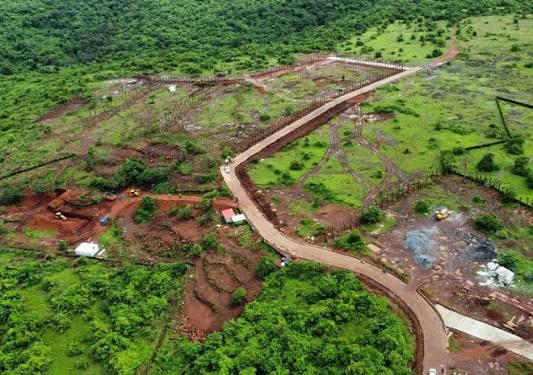
Recent developments in Albania have brought to the forefront an important lesson in democratic and constitutional resistance. A relatively small sovereign nation has found itself confronting a proposed luxury resort project backed by globally influential capital linked to Ivanka Trump and Jared Kushner. The controversy has generated intense public resistance on the grounds of ecological destruction, territorial commodification, and the dilution of national sovereignty in favour of strategic private development.
What makes the Albanian response noteworthy is not the scale of the investment, nor the prominence of the personalities involved. Rather, it is the willingness of ordinary citizens, environmental groups, and civil society organisations to collectively challenge the entry of powerful external capital into ecologically sensitive and strategically significant territory. The resistance has been rooted not in disorder or violence, but in public mobilisation, constitutional consciousness, and a clear assertion that territorial sovereignty must remain subordinate to the long term interests of the people.
That development raises an uncomfortable but necessary question for Goa.
If the people of Albania can challenge globally connected capital in defence of their ecology, sovereignty, and identity, why has a similar level of cohesive public resistance not emerged in Goa?
Defining constitutional
moment
Goa presently stands at one of the most vulnerable stages in its post Liberation history. The threat confronting Goa does not arise from one isolated project, one notification, or one controversial administrative decision. It arises from a cumulative pattern of transformation that has steadily accelerated over the last decade.
This transformation has not occurred dramatically. It has occurred incrementally and often quietly. Village landscapes have gradually yielded to commercial activity. Ecologically sensitive areas have come under mounting developmental pressure. Hills, forests, coastal belts, and agricultural lands have increasingly become objects of commercial interest.
Each project, when viewed in isolation, may appear justifiable. Each notification may be presented as an administrative necessity. Each reclassification may be defended in the name of economic growth, infrastructure development, employment generation, or public welfare.
Yet when these developments are viewed collectively, a larger pattern becomes difficult to ignore.
Development or
commodification
It has become increasingly necessary to ask whether Goa is being planned primarily for the long term welfare of Goans or whether it is being redesigned to accommodate external capital, luxury tourism, speculative investment, and rapid commercial expansion.
The growing commercialisation of villages such as Anjuna, Vagator, Assagao, and surrounding localities cannot be viewed in isolation. These changes form part of a wider developmental pattern in which culturally significant and ecologically fragile spaces are gradually being repurposed for maximum economic extraction.
Modern governance frequently employs the language of development, strategic growth, tourism promotion, infrastructure expansion, and investment facilitation. Such language often carries positive economic appeal. However, difficult questions must still be asked.
The troubling aspect of Goa’s present condition lies not in the absence of legal remedies. On the contrary, India possesses one of the strongest constitutional frameworks in the world for resisting arbitrary state action and ecologically destructive governance.
Article 21 of the Constitution has been interpreted to protect not merely life in a narrow sense, but also environmental dignity, clean air, clean water, and healthy ecological balance.
Indian constitutional jurisprudence has further developed robust doctrines of sustainable development, public trust, precautionary principle, and intergenerational equity.
Public Interest Litigation remains available. Judicial review under Article 13 remains available. Administrative decisions remain open to constitutional scrutiny.
The legal machinery exists. What increasingly appears absent is sustained collective civic will.
Subversion by
executive instrument
Perhaps the most significant concern in Goa today does not arise solely from legislative amendment. It increasingly arises from executive manoeuvring.
Transformative changes are often introduced not through major statutory reforms openly debated before the Legislative Assembly, but through notifications, circulars, administrative approvals, reclassifications, and subordinate regulatory instruments. This method deserves careful attention.
Instead of openly amending substantive law and inviting direct constitutional challenge, policy outcomes may be achieved through executive instruments that gradually alter the practical use of land, ecological zones, planning norms, and commercial permissions.
Such a process creates a serious democratic deficit.
Major territorial transformation may occur without corresponding public deliberation or legislative transparency.
Goa’s greatest risk
The greatest danger confronting Goa today may not lie solely in external capital or aggressive development. It may lie in growing public passivity.Goa has resisted existential transformation before. The 1967 Opinion Poll remains one of the most extraordinary constitutional moments in India’s democratic history. At a time of intense political pressure and strong support for merger, the people of Goa chose constitutional resistance and preserved Goa’s distinct identity.
That victory was not secured through violence. It was secured through clarity, constitutional faith, and collective resolve. This historical memory remains significant.
It demonstrates that Goans have previously shown the capacity to unite when identity, sovereignty, and territorial integrity were at stake.
The question today is not whether Goans possess that capacity.
The question is whether the present generation recognises the seriousness of the transformation now underway.
Defining question
of this generation
Will Goa continue as a living civilisation with ecological balance, cultural continuity, and distinct territorial identity? Or will it gradually become a commercially optimised territorial commodity shaped primarily by external economic demand and political convenience?
This is not an argument against development. Goa requires economic growth, opportunity, infrastructure, and modernisation.
However, not every investment deserves approval. Not every project advances public welfare. Not every economic opportunity justifies irreversible transformation.
Albania has demonstrated that ordinary citizens may challenge extraordinary power when sovereignty and ecological integrity are perceived to be under threat.
Goa has previously demonstrated similar constitutional courage.
The future of Goa will ultimately not be determined solely by politicians, bureaucrats, investors, or developers. It will be determined by whether Goans choose to remain passive observers or active custodians of their land, ecology, identity, and destiny.