With the recent FIFA World Cup in Qatar and the ongoing ISL Cup tournament in Goa, football has always been a sport that brings people together to garner support for their favourite teams.
Despite the fan-fare and the rudimentary fraternization generated during a football tournament, an often under-exposed milieu of realities which generate the thirst for victory can be palpated from the localized endeavours and aspirations of the player’s dreams, their families’ expectations and the struggle within the community. All of these factors create a socio-economic deficit which can only be sufficiently addressed when football materializes from being just a mere sport into an impetus for growth and welfare of all of its interconnected participants.
Indeed, football has gone beyond being a mere sport to become a social phenomenon as reflected in the large amount of attention devoted to it in the media.
First and foremost, participating in sport at a professional level needs comprehensive state subsidies and a promise of continued funding to the players who are expected to dedicate two thirds of their productive life in practicing and perfecting their skill in any given sport.
Studies on the economic impact of sport have traditionally been surrounded by controversy since economic arguments have never been put forward for the basic reason that the real contribution of football to regional economies was unknown.
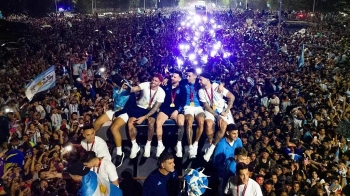
Take for instance, the recent nail-biting victory of Argentina against France in the final of the World Cup which help cement Lionel Messi’s legacy. This victory provided the South American nation with hope and vigour for a new dawn amidst the record inflation and political instability which it has currently been seeing.
Argentina’s world cup win has helped at least momentarily to lift the economic gloom and despair that’s cast over the country as it grapples with a crippling political crisis and uncertainty.
Historically speaking, a prolonged economic crisis had eviscerated the value of the Argentinian peso and sent the annual inflation rate soaring to 88 percent in October, 2022. While Argentina’s economy has been experiencing double-figure inflation for decades, the inflation has rapidly wiped out people’s savings and dreams, especially among the middle class. With the nearing of the FIFA World Cup, Argentinians were seen praying for reprieve, even if temporary, in the form of football glory.
Lucrecia Presdiger, a 38-year-old hospital worker from Argentina, was quoted as telling AFP in Spanish, “People are well aware of the problems but football and the economic situation are on parallel paths, they don’t meet. Many people really need this joy and are making the most of it. But they don’t take it literally, they know it’s only football, they are perfectly aware of the problems.”
Argentinian designer Tony Molfese was quoted as telling AFP that the Argentina triumph was a “relief, a breath of fresh air, a joy, even momentary ” and we deserve it.”
What is unlikely is that the victory will have any tangible impact on the economic and political situation of the country, but it does offer a beacon of hope and pride ” which would only help the nation to grow.
In the words of a perceptive football fan: Guillermo Alberto in Buenos Aires subsequent to Argentina’s World Cup Victory, was quoted as telling the Politico (Europe): “Perhaps, with a bit of luck, today’s victory could be a precursor for a political and economic renovation that our country needs so badly.”
From an academic perspective, Holt (2009) has identified that it is not sport per se but rather interactions with peers, parents and coaches which help to develop the life skills of young people.
Sherry and Strybosch (2012) have reviewed the improvements in bonding and linking social capital arising from participation in a community street soccer programme - including the influence of coaches and peers, social support from this network, communications skills, self-confidence, self-esteem, motivation for personal and social development, cross-cultural exchange, self and group identity, reductions in drug and alcohol abuse, and health improvements.
Spaaij (2012) has suggested that a sports programme in Brazil not only helped facilitate a network of people from similar socio-economic backgrounds, but also helps create and maintain linkages with institutional agents who can offer information and resources which would not otherwise be available. The latter is potentially critical in compensating for social and economic disadvantage, but their sustainability without external support mechanisms would be doubtful.
Goa on the other hand enjoys a vast community of support when it comes to the promotion of Football among its participants. The reason for this collaborative ecology of change can be observed in the number of sponsors and funding programmess available to Goans in training the next Messi and Maradona from the coastal State.
FC Goa being a prime example of Goan talent in football being trained and nurtured by some of the best coaches and sports managers while giving Goan fans an opportunity to cheer for their local team against teams from other states in the ISL tournament.
However, a note of prudence also needs to be expressed towards prospective players wanting to chase behind a football well in their 40’s as Team Managers trying to impart their football skills to the next generation of football aficionados. Because, being attracted to football could lead to neglect of life’s other customary desires which have to be foregone in exchange for football glory.