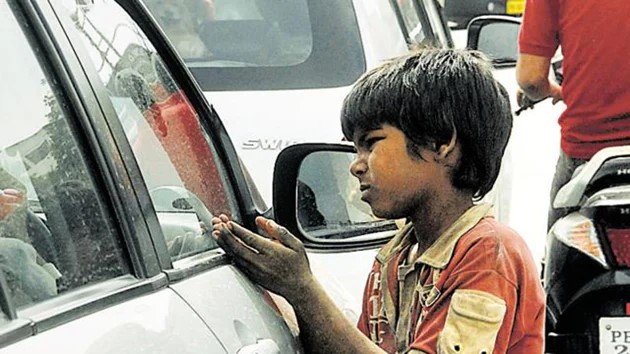
The Bombay High Court's recent intervention on children found begging and living on Goa's streets deserves appreciation. For far too long, these children have remained invisible in public policy, surfacing only when they appear at traffic signals, outside places of worship, tourist destinations, beaches, markets or festivals. The Court has rightly brought this uncomfortable reality back into focus. But if these proceedings end with a few rescue drives, periodic affidavits and temporary compliance measures, Goa will once again miss an opportunity to address the real problem. The issue before us is not begging. It is the near-collapse of the child protection system that was created precisely to prevent children from ending up on the streets.
Every child found begging or living on the streets is already recognised in law as a Child in need of care and protection under the Juvenile Justice (Care and Protection of Children) Act, 2015. The National Commission for Protection of Child Rights' Standard Operating Procedure for Children in Street Situations further lays down detailed mechanisms for rescue, production before the Child Welfare Committee, social investigation, family assessment, rehabilitation, restoration and convergence of multiple government departments.
Unfortunately, the public conversation continues to revolve around removing children from public view rather than asking why they continue to be there year after year. Every child seen begging represents the failure of several systems simultaneously—social protection, education, health, labour enforcement, migration support and child protection. Rescue is only the first step. The real work begins after the child is rescued. Who is the child? Is the accompanying adult the biological parent? Is the child being neglected, trafficked or commercially exploited? Is organised begging involved? Is the family eligible for rehabilitation schemes? Has the child been enrolled in school? Has an Individual Care Plan been prepared? These are not optional questions. They are statutory responsibilities.
There are children who migrate with seasonal labourers. There are children who accompany families surviving through begging. There are children subjected to neglect and abuse. There are children vulnerable to trafficking and organised criminal networks. The NCPCR SOP itself recognises these different categories and requires authorities to investigate each case separately rather than treating every child as merely "a beggar."
This is where Goa's child protection machinery appears to be falling short. Mission Vatsalya envisages the District Child Protection Unit as the operational backbone of the entire child protection system. It is expected to identify vulnerable children, coordinate rescue, conduct social investigations, prepare rehabilitation plans, facilitate restoration, converge departments and monitor outcomes. It requires dedicated professionals who are present where vulnerable children actually are.
Equally concerning is the functioning of the State Child Protection Society, chaired by the Chief Secretary. This body exists because child protection requires coordination across multiple departments—Women and Child Development, Police, Labour, Education, Health, Panchayats, Municipal Administration, Social Welfare and others. During my tenure as Chairperson of the Goa State Commission for Protection of Child Rights, I witnessed long periods during which this crucial body remained virtually inactive.
The High Court's concern should therefore not be limited to the number of children rescued. It should also ask whether Goa possesses the infrastructure necessary to rehabilitate them. Suppose an infant is rescued along with the mother from a begging situation. Does Goa have a dedicated mother-and-child facility where both can safely remain together while inquiries are conducted? If not, what is the State's operational plan? Similarly, the Juvenile Justice Act provides for Open Shelters specifically designed for children in street situations. Where permanent facilities do not exist, the SOP recommends identifying suitable temporary fit facilities until proper infrastructure is established. These are not innovative ideas. They already exist in policy. The question is whether Goa has chosen to implement them.
Another neglected dimension concerns the State's understanding of migration and public gatherings. Goa hosts hundreds of religious feasts, jatras, temple festivals, church fairs, melas, cultural events, exhibitions, carnivals and tourist festivals every year. These events attract thousands of visitors and create environments where children selling goods, begging, performing or accompanying adults often go unnoticed amidst large crowds. Permissions for such events routinely examine traffic management, fire safety, sanitation and crowd control. Yet almost no attention is paid to child protection. Every organiser seeking permission for a major public event should be required to undertake a child protection risk assessment. Event permissions should include mandatory safeguards against child labour, child begging, trafficking, exploitation and neglect, with designated reporting mechanisms involving the District Child Protection Unit, Child Welfare Police Officers and Childline. Child protection should become as essential to public event permissions as fire safety and emergency exits.
Many well-intentioned citizens hand over money to children at traffic junctions or outside places of worship believing they are performing an act of kindness. Compassion must not end with charity at a traffic signal. It must translate into rehabilitation, education, social protection and family strengthening so that children are no longer compelled to return to the streets.
The High Court has presented Goa with an opportunity that extends far beyond the present proceedings. This is the time to undertake a statewide mapping of children in street situations, strengthen District Child Protection Units with adequate manpower and specialised outreach teams, operationalise functional Open Shelters, establish facilities for mothers rescued with infants, revitalise the State Child Protection Society through regular and accountable meetings, integrate child protection into permissions for all major public gatherings, and publish measurable rehabilitation outcomes rather than merely reporting rescue statistics.
Children do not suddenly appear at traffic signals. They arrive there after multiple systems have already failed them. Every child living or begging on the streets is not simply a reminder of poverty but a reflection of institutional neglect. The High Court has seen these children. It is now time for the State to demonstrate that it can see—and repair—the child protection system that has failed them for far too long.