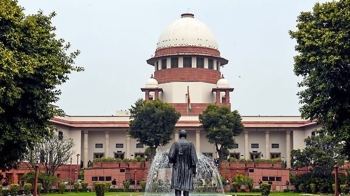
Chief Justice DY Chandrachud led the Supreme Court in rejecting the State Bank of India's (SBI) request to extend the deadline for disclosing information on anonymous purchases and encashment of electoral bonds by political parties until June 30, 2024. The court has instead given SBI until the end of business hours on March 12 to furnish these details to the Election Commission of India (ECI) which the SBI complied with. The ECI has to host the information on its website by March 15. The court said it did not want to initiate contempt proceedings against the SBI as of now. However, the Bench said it was putting the bank on notice, saying it would take action if SBI did not comply with the directions of March 11.
On March 4, the SBI filed a nine-page application before the Court, requesting an extension until June 30 to furnish the ECI with necessary details regarding purchased electoral bonds. The bank cited the scattered nature of this information across its branches, describing the decoding process as time-consuming.
According to the public sector bank, the details regarding the issuance and redemption of the bonds were not centrally maintained but were stored separately to safeguard donor anonymity. Donor details were kept in sealed covers at designated branches and later consolidated at the main branch in Mumbai. Retrieving and matching information from these separate sources was deemed laborious.
The SBI noted that while certain details such as the number of bonds issued were digitally stored, others like purchaser names and Know Your Customer (KYC) documentation were maintained physically across branches to fulfil the scheme's objectives. The bank disclosed a need to decode 22,217 electoral bonds issued between April 12, 2019, and February 15, 2024, involving the compilation and comparison of 44,434 information sets. This was due to the segregation of buyer and recipient details into distinct information silos, necessitating extensive effort to reconcile the data.
Praiseworthy standpoint (SUBHEAD)
The SC's rejection of the SBI's request for additional time to provide information on the purchasers and beneficiaries of electoral bonds since April 2019 has thwarted an imprudent attempt to delay disclosure until after the general election. The outcome of the bank's plea for an extension until June 30 is that it is now evidently obligated to divulge the available data without the necessity of cross-referencing donor names with political parties. It seems that the initial directives of the Constitution Bench, as outlined in its February 15 ruling invalidating the electoral bonds scheme, had been interpreted as mandating the SBI to meticulously match all buyers with recipients. The bank perceived this as a laborious task due to the segmented nature of the details and their lack of digital storage.
By rejecting the bank's request for an extension and maintaining the possibility of contempt proceedings, the Apex Court has made it clear that further delays will not be tolerated. The Apex Court rightfully questioned why the bank remained silent on its compliance efforts until just two days before the March 6 deadline when it filed for an extension.
It's evident now that even manually reconciling the two datasets shouldn't have taken the four months the SBI claimed. There's a legitimate concern about whether simply disclosing the names of bond purchasers and recipients without accurate information on donors and their contributions fulfils voters' right to information, which was the basis for the Apex Court's ruling on the anonymous donation scheme's unconstitutionality.
Despite the narrow 15-day redemption window for the bonds, diligent civil society efforts could still potentially use the disclosed information to connect donors with parties based on purchase and redemption dates. Additionally, this data could shed light on whether corporate entities or individuals benefited from their donations to ruling parties at various levels of government or if these contributions were made in response to potential investigations or prosecutions.
The defence put forth by SBI, claiming that the requested information was spread across two separate systems totalling 44,434 folios of electronic bundles, was promptly dismissed by the Court as weak. The Court made it clear that SBI's attempt to delay disclosure by citing difficulties in matching donors with beneficiary parties was flawed; the Court had merely requested straightforward disclosure of the information already in the bank's possession.
While SBI's predicament is understandable given its constraints, including pressure from a dominant shareholder who may wish to withhold information and the bank's commitment to maintaining confidentiality for bond buyers, it found itself with few viable options in the face of the Court's stern stance.
Adding to the complexities, the affidavit backing the bank's request lacked the signatures of either the Chairman or the Managing Director, instead bearing the name of an Assistant General Manager, a detail not overlooked by the Chief Justice of India. Despite calls from the petitioner to initiate contempt proceedings, the Court refrained and instead put the bank on notice.
The SC's subsequent actions represent a positive stride toward enhancing transparency in electoral bonds. Nevertheless, it's imperative to recognize that comprehensive reforms are needed to address the broader spectrum of issues surrounding political funding, spanning both corporate and political spheres. Simply disclosing the donors and recipients of electoral bonds, while a step in the right direction, is insufficient to bring about substantial change.