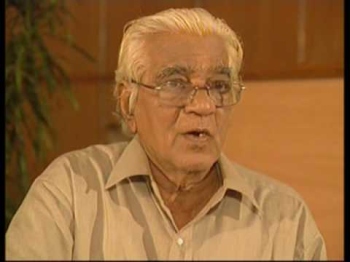
Later this week, Goa will mark the birth centenary of the much-loved and popular poet-writer-critic ManoharRai SarDessai. This follows, by a decade, the centenary celebrations of the late Lambert Mascarenhas, who was blessed with a life long enough to be alive at that time.
As a young Goa University student of the 1980s (in fact, since its very first year of operation in 1985), one got the chance to run into Prof SarDessai. Like other passionate fans of the Konkani language, he worked in a field he had not studied. His doctorate was in French, but that did not hinder him from creating the most charming of Konkani writing. Even a child would probably notice that on reading, say, his tongue-tripping long poem 'Bebeachem Kazar' (The Wedding of the Frogs).
SarDessai (whose name also gets spelt as Manohar Rai or Manoharrai Sardesai) came across as a gentle literary figure. He wore his scholarship lightly. He didn't strike you as arrogant or pompous, notwithstanding his Sorbonne doctorate and literary reputation.
He wore a kind face and had this ability to come across as always encouraging. Perhaps it had something to do with his soft-spoken nature; or maybe that he realised the sheer overall importance of the work he was undertaking. Without him doing it, so much would have been incomplete.
Interestingly enough, the promotion of Konkani in that generation was left largely to scholars from other fields. Equally strangely, in 20th century Portuguese times, languages like Sanskrit and Marathi were given acceptance in academia, but not Konkani.
Even after 1961, the intense Marathi-Konkani controversy (a glance at the Assembly archives of those times gives a hint) only delayed the academic study of Konkani. So, it was left to scholars like Lucio Rodrigues (a professor of English), L.A. Rodrigues (a professor of Portuguese) and Rocky Miranda (who taught Hindi) to take up the Konkani cause.
They did a fine job, and so did SarDessai. To me, he played a crucial role in bridging the lost generation (ours) of the 1960s and 1970s. We were born too late to know the Portuguese language. Plus, diplomatic relationships between New Delhi and Lisbon had completely broken down. By his writings on Konkani literature, often in English, SarDessai helped so many more understand the wider picture.
SarDessai's contribution to Goan literature came in different ways. Firstly, he understood the diverse and multilingual nature of Konkani literature. His 'A history of Konkani literature: from 1500 to 1992' (published in 2000) gives a very insightful overview of the different phases that Konkani went through. It still is compulsory reading for anyone wanting to understand the field.
He sees the past with broad-mindedness, and not with bias or bigotry, as is the fashion today. He gives credit where it is due, even if Amchi Bhas was boosted, at points of its history, by missionaries from distant and remote parts of the European world.
Secondly, as mentioned above, he connected our generation with the past. His multilingual skills -- in Konkani, French, Portuguese, English, among other languages (including Hindi and Marathi) -- gave him unique insights.
His literary creations were no less, and his output has been prodigious. Today, thanks to websites like books.google.com or scholar.google.com, one can get a hint of all the works put out by SarDessai. A collection of his written works (maybe separately for Konkani and other languages) is surely long overdue.
Most importantly, SarDessai was a crucial reason why some of us try our best to focus on Goan writing (in diverse languages). He made people like me aware of the Peter Nazareth anthology, in which he had an concise yet insightful essay. (See Journal of South Asian Literature, Vol. 18, No. 1, 'Goan Literature: A Modern Reader (Winter, Spring 1983), pp. 82-86.)
Once we read that as youngsters in our twenties, it became immediately apparent that 'Goan writing' was very real. It did exist, in so many genres and with so much diversity. It is another story that some still deny its existence, and academia is yet to adequately study and acknowledge this slice of literature.
Of course, credit goes to Professor Peter Nazareth (who recently retired from the University of Iowa) for putting together this work. But you can be fairly certain that SarDessai played a crucial role from the Goa end. Not only did he contribute in meaningful ways to it, but also made sure it got noticed in Goa itself.
(Together with SarDessai and Nazareth, it was others like Prof P. Lal, the founder of the Writers' Workshop, who laid the seeds for more to understand why writers need space to get published. When Lal visited and spoke at the Goa University, circa 1987, he was building his Calcutta-based Writers' Workshop. This venture allowed a number of prominent Indian writers in English, including Vikram Seth, to get first published... and definitely many from Goa too.)
All this was a potent mix -- humility, vast knowledge, a multi-cultural approach, being free from biases, and acting as an effective bridge between Goa and the outside world.
Goa unfortunately recognises its greats only after they have left us. (This is like readers in Goa desperately trying to locate books only once they are out-of-print.) But better late than never.
To pay tribute to someone like Dr SarDessai, as suggested above, we need to make sure that greater importance is given to all forms of Goan writing (in whatever language, and script). That the works of this talented writer are collated and made easily available and accessible. And, that the multi-lingual nature of Goan society is duly acknowledged, and we create the space for all to flourish, get translated and thrive.