


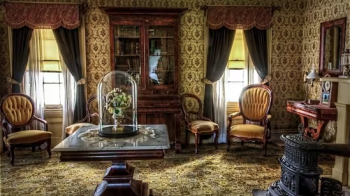
"India Sotheby's. Historic Portuguese Home in Aldona, North Goa. For Outright Purchase." That was the title of an advertisement. It caught quite a few eyes, when it started getting circulated.
You didn't know whether to feel flattered or embarrassed. Or concerned. These days, various parts of Goa are increasingly coming under the auctioneer's gavel. Dealing with it can be complex.
On the one hand, this signals the increasing gentrification of Goa. No longer is it a backwater on the periphery, which few want to visit or stay, as it was till the 1960s. Nor is it the place which more people migrate out of, like it was till the mid-20th century. Especially in times when Portuguese colonialism could not compete with its British Empire rival, or even post-Independent India.
It now isn't anymore the place which only expats came back from, in small or large numbers. That too, mainly when they had a problem in some other part of the globe -- like Burma, Uganda, Malawi or Kuwait.
Thanks to decades of Bollywood stereotyping, and the craze for a holiday home (second or Nth) in Goa, the situation has drastically changed. Speculation has hit the market big time. Some areas and some villages being hit more than others.
Make no mistake. For some this comes as a blessing in disguise.
Years of low-intensity conflict and political hostility (based sometimes on questionable tenancy laws too) has meant that a few involved are only too happy to sell and run.
What's more, they could get the payoff in some remote part of the globe. Thus, leave behind all the hassles that more honest folk have to live with here. Good riddance, plus fast and easy money.
The sharp increase in value has helped a few; but only at a price. Pop star Remo Fernandes has written in his autobiography about how they had to struggle to get back the family home, after it was sold off... at a far higher price and much trouble, at that.
By the law of numbers, those who gain from such "lucrative" deals will always be far fewer than the others who pay the price. What happens when real estate speculation grows so sharply that the vast majority of the population will no longer be able to afford a home here? There are signs that it has already....
In the past, the loss of land came from diverse quarters. Sometimes, the government acquired land for projects. In the 1960s, the growing number of projects coming up at Vasco and Mormugao even alarmed industrial groups there, who raised issue even in print.
Anita Haladi has written on how Goa's aboriginal population got unsettled and displaced -- twice over. The first time by newer settlers, probably people like you and me. And the second time round when they got edged out even from the rocky and infertile hillsides where they had settled. This happened so that some large post-1961 projects could be setup at Bambolim or Verna or wherever. Beneficiaries, of course, would call this "public interest".
Appropriation of land, loss of common-lands, shrinking space of common-lands... these are issues being discussed globally, in many different contexts. One thought such problems came up mainly in colonial times, but apparently our understanding of the situation is not keeping up with the reality.
This time round, in a place like Goa, the 'displacement' comes in a new form. Folks willingly selling their homes, readying to settle elsewhere, and hoping that all works out well for themselves.
But, will it?
Not that this is a very new trend. Just that when you thought the issue cannot get any more acute, some new dimension pops up.
Incidentally, British-founded Sotheby's multinational corporation, with its headquarters in New York City, is one of the world's largest brokers of fine and decorative art, jewellery, and collectables. It has 80 locations in 40 countries.
Sotheby's International Realty is a luxury real estate brand founded in 1976. But, oddly enough (or is it?) the links between Sotheby's and Goa remain strong.
Search for "Goa" on sothebys.com and you'll find offers for apothecary's ivory mortars, 17th century Indo-Portuguese 'contador' cabinets, tiny statues of Christ, tortoiseshell and ivory cabinets, ivory-and-ebony inlaid teak, original print-runs of Burton's book on Goa, 17th century rosewood and ebony caskets from Goa, or even an FN Souza work (priced at half a million dollars).
There is also a manuscript (copy) of a royal letter addressed to the Archbishop of Goa dated 10 February 1774, probably from the Marquis of Pombal. This outlines the ecclesiastic reforms in six instructions, that were part of a very large political government reform of the Estado da Ãndia.
How did these treasures reach these hands? Why were they not given their due value at home? Does it say something about us too, as it does about the global collectors who lay their hands, as if everything is out for grabs?
With our heritage, homes and holdings will go the place's culture. It could bring in further changes in politics, and much more.
In a village this writer is familiar with, one of the first major homes to be sold (in the 1980s) went from a family that had the money. Everyone else was bewildered and shocked why they had to sell.
"In most cultures, identity is inextricably tied to the land, and when land is taken, cultures can struggle to survive," comments the Arizona State University website, though in another context. Those who are making a fast-buck on selling what they've inherited, need to remember this. That someone, someday, will pay the price.


