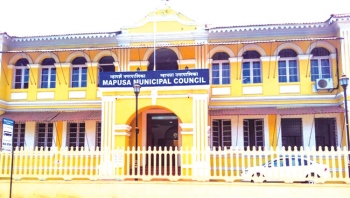
MAPUSA
The Mapusa Municipal Council (MMC) is deliberating on the imposition of service charges on government-owned properties and educational institutions falling within its jurisdiction.
This decision stems from the municipal council's provision of essential civic services such as sanitation, garbage collection, and drain maintenance to households, private establishments, as well as government premises.
Notably, despite benefiting from these services, buildings belonging to both central and state government entities have not been subjected to property tax assessments thus far.
Chairperson of the MMC Nutan Bicholkar disclosed the municipal council's earnest consideration of levying service charges on government establishments, schools, and college infrastructures.
"Very soon, we will convene to discuss this proposal in a council meeting and chart out our future course of action. The imposition of service charges is warranted as the municipal council extends its services to government departments, educational institutions, among others," stated Bicholkar.
She added that the specifics regarding the determination of charges will be meticulously deliberated upon once the council decides to proceed with the proposal.
The cash-strapped Mapusa council anticipates significant financial gains if the plan comes to fruition. It is projected that the MMC could annually accumulate a substantial sum through this initiative.
Sources indicate that several other municipal councils have already implemented similar decisions, imposing service charges on government properties, including educational facilities.
An official from the MMC revealed that the council might need to formalise agreements with the respective government departments before implementing these charges effectively.
The potential imposition of service charges by the Mapusa Municipal Council signals a significant move towards ensuring equitable distribution of financial responsibilities for civic amenities.
As deliberations continue, the decision's impact on various stakeholders, including government entities and educational institutions, remains to be seen.