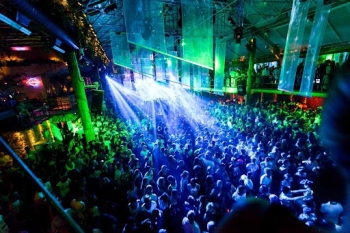
The New Year parties are continuing full blast in Goa, and the troubles of coastal residents seem far from over. The maddening crowds of tourists, the vehicles that clog our roads and fill our air with ‘soot and hoot’, the hawkers and peddlers selling merchandise and drugs, masseurs ready to soothe craving bodies, liquor outlets that invite ‘thirsty’ crowds, capacious stages with glaring lights and blaring music systems and people swaying in trance and ecstasy is the quintessential canvas of Goa’s New Year celebration.
Great going for visitors who seek to chill and unwind as the last sun of the calendar year sets in the vastness of the Arabian Sea, and the tranquil moon rises casting a mystique dimension to the night of revelry. Noise, litter, and insomnia are the unsolicited gifts that the local residents of these party venues in Goa get.
And as the New Year novelty wanes and the visitors return to their routine in faraway places, they leave an indelible footprint on our soil, and incur a ‘debt of damage’ by partaking in an annual ‘vulgar gala’ in total arrogance and indifference to the peace and tranquil that Goa is famed for globally! What a paradox, that guest’s merriment turns out to be the host’s nightmare; with locals rising in revolt against these coastal cacophony of dance and music extravaganza, filing complaints with the local police stations, making passionate appeals to the statutory watchdogs like Goa State Pollution Control Board and even seeking judicial remedy!
Unfortunately the bait of these events is too weighty on the state players to be ignored or forsaken, and after the initial shadow-fighting and delays, the authorities clear these events with riders that remain only on paper. Like a ‘louse on a bald head’, the men in khaki occasionally turn up at such venues to grab media attention with loud dramaturgy.
The tourists pay hefty sums to gain entry into these barricaded venues guarded by the bellicose bouncers; and partake in jarring and jangle, many ‘pilgrims of pleasure’ getting hammered by the ‘adult juice’ and stupefied by club drugs, some even requiring a transfer to the nearest medical care centre. The ‘raring to go’ adrenaline primed youngsters are worst hit by the lure of this ecstasy and drug induced nirvana.
Statistics reveals just the tip of this iceberg of ‘drug decimations’ that have occurred in the last few years, with the ill-fated families coming down to collect the mortal remains of their beloved. It is only when a celebrity is a victim of this mishap that the media gets attentive and so does the state machinery, otherwise many anonymous casualties have occurred due to these ‘filter-less adventures’.
We have scores of locals along Goa’s northern coastal belt who have demonstrated the courage and conviction to raise voice against the ear-splitting noise from restaurants and music festival venues specially on the eve of New Year, not because they are bitten by the bug of activism, but because their young and old have been suffering from this ‘sonic assault’ of deafening and piercing music with severe and serious health consequences.
The thumb rule is, what is not visible is not appreciated; and regrettably noise cannot be seen but only sensed by our auditory faculty. Noise can emerge from something as routine and requisite like transport, industry, automation, and even domestic chores like use of kitchen ware, electronic music and use of public address system.
Also, perception of noise is a relative ascription. What is music to some ears can well be noise to others. The diminished threshold for noise tolerance makes the elderly more prone to detriments of noise. Noise has an objective dimension that can be measured in decibels, but its subjective dimension is relative to the listener. A normal conversation happens at 60 dB, whereas the acoustics of a rock-concert reaches 110 dB. The sonic boom of firecrackers can reach levels of 145 dB!
Constant exposure to loud noise can damage the cochlea, impair hearing, and even cause permanent deafness. That hearing loss is an occupational hazard faced by musicians was proven in a recent study conducted in Norway by medical researchers, reporting 38% prevalence of hearing loss in young adult rock musicians. Also, around 20% of rock musicians had chronic tinnitus, a constant cicada like buzzing or ringing sound in ears.
During our school days in 70s, our teachers would often demand a ‘pin drop silence’ from us. I wonder if in today’s noisy world even a ‘Pen drop silence’ is possible! Likewise I was also astonished by a report on ‘Hearing in Todas of South India’ which indicated that at a ripe age of 90 years these tribals living in the Nilgiris have the same hearing efficiency as that of a city youth! This clearly is a pointer to our rising urban noise levels and its consequences.
Exposure to loud noise can trigger adverse cardiovascular shifts including hypertension, coronary heart disease, and even stroke. Not to forget a range of cognitive and emotional disturbances including insomnia, reduced focus and work efficiency; the aged and those with comorbidities being at higher risk!
Despite strictures passed by the High court of Bombay in Goa that these events be monitored for permissible levels of sound and violations booked, little has changed.
Violating acoustic sanctity of silent zones such as Turtle Nesting Zones in Morjim and Mandrem must be booked under Wildlife Protection Act. The dance venues in the proximity of these eco-sensitive sites pose threat of distracting the hatchlings with refulgent lighting and not letting them venture safely into the sea.
It is astonishing that Julius Caesar the Roman statesman decreed restriction on movement of noisy chariots from public roads and banned them from residential areas throughout the day and night. If only the repute and responsibility of being in power would dawn upon our ministers, the coastal communities would be spared from the horror of constant noise!