


Recently, Atkona a nondescript village about 20 km away from Pilibhit Tiger Reserve in UP, hogged the limelight; thanks to the unprecedented entry of a young tigress that climbed a compound wall in the midst of a residential cluster and took a nap enjoying the winter sun! This regal ‘feline lady’ was at perfect ease, while excited onlookers from near and far poured into this village to witness this extraordinary sight.
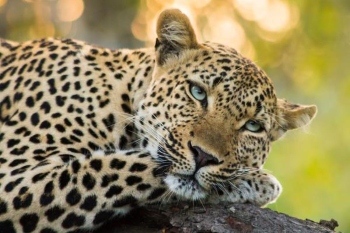
Some days ago in my native village of Borim in south Goa, a young leopard was seen leisurely crossing a busy road. The visibly tired leopard was followed on its heels by a group of overenthusiastic locals shooting this odd spectacle on their mobile cameras, as the animal wandered off the road and entered a human settlement area.
Though sporadic sightings of this cat had raised concerns in the area since the last few days and people were worried for their safety; the carefree manner in which the leopard emerged during the day walking the streets was perplexing. From the images I reasoned that either the animal was desperate for food or water, or it was sick.
By evening, I received a video clipping of the rather noisy and chaotic capture operation, flouting the prescribed SOP for such exigency. The rescue team exuded proletarian excitement, was clumsy in handling the leopard and the situation, and there was total lack of crowd management. Lapses could have cost us precious lives; either that of the leopard, the rescuers or the onlookers. Fortunately, this carnivore was safely trapped and shifted to Bondla for captive care and subsequent release.
The authorized press briefing was light-hearted and pretty much in a tone of trivializing the incident, attributing this episode of the stray cat to non-availability of natural prey in the forest. This theory of dogs and domestic prey luring the leopard into human spaces is a fanciful fallacy that lacks scientific rigour, but gets floated around with conviction and confidence.
Let it be clear that leopards do not visit people looking for food because their prey is depleted in the forest, and they certainly do not stray. Rather leopards are fringe-forest carnivores that live near human habitations, using village forests or even farms as cover during the day, and enter the human neighbourhoods at night, opportunistically preying on small livestock. And dogs are indeed their favourite prey, and not a substitute food; as has been confirmed from their scat analysis even in habitats like Sanjay Gandhi National Park, that shows dominant fraction of dog remains. Noted leopard expert Vidya Athreya’s study in human dominated landscapes in Western Maharashtra also confirms that despite a higher density of available goats, leopards opted for dogs!
As for the tiger, its territory varies from 15-20 km2 for a female, to over 100 km2 for a male! Given such expansive space requirements, this cat is bound to have spatial overlaps with people as human settlements get closer to tiger habitats, and that gets misconstrued as straying of this charismatic cat into human spaces. But of course unlike the leopard, the tiger does not look for small synanthropic prey, and hence dogs and other smaller domestic prey do not figure in its menu regularly by choice. If one sieves through the narratives of Indian mythology and theology, there is an unambiguous representation of wildlife as an indispensable element of human environment, not only admired for its food and aesthetic value, but also as totems of lineage, morality and even sanctified as gods or celestial mounts (Vahan).
No matter what our ‘natal faith’ is, we’ve all grown up getting enthralled with tales of bravery of the monkey God-Hanuman, who set ablaze Ravana’s Golden Lanka, antics of the cute and adorable baby Ganesh, the elephant-headed God or Vighnaharta or ‘remover of obstacles’. The little squirrel that rolled in sand and dusted her body to contribute to construction of Ram Setu has won our appreciation and admiration without letting logic take over.
From the charismatic wild cats that offer a battle-mount to the warring deities, to the cobra that forms a garland around Shiva’s neck are all revered here. The floral species too find place in our rituals and religion, and the bedrock of Indian culture rests on respect for all forms of life, recognizing their right to live and coexist with us with dignity.
Here in Goa, notwithstanding the historical rule by the Muslims and then the invasion and inquisition by the Portuguese, there are clear reflections of paganism and nature based religion even today. For instance, the quintessential predator of our marshes, the crocodile is worshipped by the original settlers in an elaborate ritual called ‘Mannge Thapnee’, while the tiger is deified as ‘Vaghro-Dev’ in hinterland talukas of the state; where its appeasement by the locals is believed to grant protection to people and their cattle.
Changing land-use patterns; demographic swings, acculturation due to neo-colonization and new waves of immigration, and changing political and economic priorities have all contributed to a paradigm shift in our people’s perception of wildlife, which is now being increasingly viewed as threat to human life, assets and aspirations.
Suddenly the idea of coexistence with the wild seems bizarre and unfeasible, and whole discourse of conservation appears extraneous; and our age-old ethos of voluntary ‘forest custodianship’ changes into a profound burden in absence of tangible incentives.
Is our wildlife spilling into urban spaces, or is wilderness getting increasingly urbanized? This ‘conflict of jurisdiction’ must be rationalized and amicably resolved by respecting boundaries. While we must consciously refrain from getting closer to wild spaces, any wildlife that enters ‘our space’ must be offered a ‘safe passage’ to its rightful place.
The authorities must list the ‘conflict species’ of their jurisdiction and prepare a detailed rescue plan inclusive of capture and translocation. The ‘high and mighty stakeholders’ may do well not to be opinionated and jocular, and instead rely on real experts who resist political conciliation and refuse to change their spots just like the leopard!


