The coasts and oceans are repository of placer minerals, phosphorites, fossil fuels, seafloor massive sulphides (SMS) along mid-ocean ridges (MOR), cobalt-rich crusts at seamounts (underwater volcanoes) and polymetallic nodules in the abyssal depth.
The 70,000 km long global system of underwater mountains form the MOR where the seafloor spreads at different rates (measured in mm/yr full rate or as half-rate i.e., spreading on one side of the ridge) due to volcanism, tectonic plates are moved, and earthquakes and hydrothermal activities occur. MOR manifest in the Indian Ocean as the Indian Ocean Ridge System (IORS). This ‘Y’-shaped system comprises of Carlsberg Ridge (CR) with NW trend and protruding into the Red Sea through the Gulf of Aden, Central Indian Ridge (CIR) bifurcating at the Rodriguez Triple Junction (RTJ) into South West Indian Ridge (SWIR) and South East Indian Ridge (SEIR).
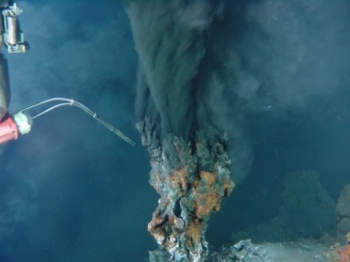
There are two types of smokers: black and white. The former contains sulphides, sulphates and oxides of iron, copper, cobalt, tin, lead, zinc, gold, silver, rare earth elements etc. and manifest in minerals such as chalcopyrite, pyrite, marcasite, wurtzite, sphalerite among others and as alloys. These form the SMS that are useful in high- and green-technology industries. White smokers consist of silica and baryte. The vents can be active, inactive or fossilised. About 600 hydrothermal sites occur with most located in the Pacific and Atlantic oceans.
Red Sea: This site has a stratified pool of high temperature (56°C) brine, about 10 times more saline than the seawater and sediments with high concentrations of zinc, copper, silver and cobalt. The site contains 200 million tonnes (mt) of ore, including 3.2 mt of zinc and 0.8 mt of copper.CR: In 1975, this ridge (half-rate 11-16 mm/yr) revealed iron-rich (28%) sediments. In 2013 COMRA (China Ocean Mineral Resources Research & Development Association) reported two vent fields (Wocan, Daxi).
CIR: In 1997 the CSIR-National Institute of Oceanography, Goa initiated studies of the CIR. Initially it was funded by the Office of Naval Research and NSF USA. Later the CSIR (New Delhi) under the InRidge program included the CR and Andaman Back Arc Basin.
SEIR: This ridge (rate 30-35 mm/yr) is the fastest of all the IORS. The vent sites are along the Antarctic-Australian Ridge, the active Boomerang Seamount and ‘Pelagia.’
SWIR with ultraslow-spreading rates (7-9 mm/yr) showed the first evidence of high-temperature hydrothermal activity in 1998 and later was surveyed by the submersible ‘Shinkai 6500.’
Several countries have discovered hydrothermal vents but only seven have exploration contracts with ISA. The four contractors in the Indian Ocean are India, China, Germany and Korea. The three contractors for the MAR are Poland, France and Russia. The National Centre for Polar and Ocean Research (Goa) of the Ministry of Earth Sciences (MoES) initiated a multi-disciplinary programme to explore SMS. In 2014, India obtained a licence and in 2016 signed a 15-year exploration contract with the ISA. The first cruise was on Jan 12, 2017 along segments of the CIR and SWIR.
Sustainable and profitable mining (land and deep-sea) involves the 5Es: Exploration, Environmental studies, Exploitation, Enrichment and Economics. A successful completion of all these 5Es could result in “Minerals to Market.”
Exploration: In 1997 under the CSIR project, “Tectonic and Oceanic Processes Along the Indian Ridge System and Backarc Basins,” the CR, CIR and Andaman Sea were investigated.
Environment: Recovering the SMS deposits could be a challenging task as the environment would be variably affected. Under ISA’s Regulation 32, Contractors must collect baseline environmental data and mitigatory measures must be outlined.
Exploitation: During mid-1970s a pre-pilot mining and metallurgical testing were conducted at the Atlantis II Deep site. It has been six decades but mining has not started due to environmental concerns. India has developed a nodule mining system, a soil tester and an ROV (ROSUB 6000), all of which are operatable at 6,000 m water depth. In June 2021 the Indian Government approved US$ 550 million (Rs 4,000 crores) to implement the Deep Ocean Mission and blue economy over a period of 5 years.
Enrichment: The SMS deposits consist of metals, oxides, sulphides and sulphates of iron, copper, nickel, cobalt, zinc, lead, gold, silver, barium, silica and so forth.
Economics: Prior to mining, Contractors need to consider costs of ships, manpower, salaries, mining equipment, transport, beneficiation plants, metal prices, vagaries of nature etc.
Metals in the SMS deposits may sometime exceed terrestrial reserves and is estimated to be 6×10⁸ tonnes. The Mount Jourdanne deposit is <3,000 tonnes while the two deposits in the Yuhuang-1 hydrothermal field have 10.6×10⁶ tonnes, with at least 7.5×10⁵ tonnes of copper and zinc and 18 tonnes of gold.
Once mining lease and environmental clearances are obtained then the deposits of Solwara 1 site in the Bismarck Sea (Papua New Guinea) could be the first to be commercially mined. The inferred total mineral resource is 1.54 million tonnes with a grade of 6% of gold gram/tonne and 8% copper.
During the first IORA (Indian Ocean Rim Association) Blue Economy Dialogue (Aug 17-18, 2015, Goa), several sectors were discussed e.g., fisheries, renewable marine energy, ports, shipping, explorations for marine minerals etc. Subsequent to the Goa Declaration, India has embarked on identifying and boosting blue economy sectors, with emphasis on marine minerals. The National Institute of Transforming India, stakeholders and MoES are seriously looking into the issue of blue or oceanic minerals. Presently, the world is managing with land resources, recycling of and alternate metals. It is predicted that by 2030 about 10% of the global minerals could be mined from the deep-sea but we have a long way to go.