The editorial “Urban naxal taunt straight from autocratic playbook” on New Year’s Day 2024, putting the Goa Chief Minister’s comment on urban naxals in its larger context, is exactly to the point. However, the events that led to word ‘naxal’ coming into the popular discourse occurred more than half a century ago, around 1967. Given that more than 65% of India’s population is below the age of 35, it is doubtful how many today may know the reality of how it came about.
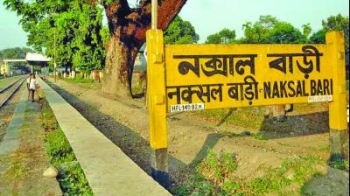
What came to be referred to as the Naxalbari Revolt or the Naxalbari Uprising started in 1967 in the Naxalbari Block of the Siliguri Subdivision in Darjeeling district of West Bengal, mainly led by tribals and the radical communist leaders of Bengal. A section of communist leadership thought the time was ripe for launching a “People’s War” in India on the lines of the 1949 Chinese Revolution, the Vietnam War, and the 1953-59 Revolution in Cuba. One such leader, Charu Mazumdar, wrote “Historic Eight Documents” which became the foundation of the Naxalite movement.
The first confrontation occurred on March 03, 1967, when 150 peasants armed with bows and spears, seized 11,000 kg of paddy and started seizing land. The peasants were enraged that the CPI(M) did not retain workers in the party. A share-cropper, Bigul Kisan, was beaten up by landlord gentries during the first clash. More violent clashes followed, leading the government to start mobilizing the police forces to deal with the uprising.
The killing of a village inspector by peasant committee members led to retaliatory fire by the police resulting in the death of nine women and one child on May 25, 1967. Peasant committees gained hold in more regions, seizing lands, ammunition and food grains from the landlords. The upheaval sustained till July 19, 1967, when it lost steam in the face of paramilitary forces sent by the government. Some leaders were arrested, some like Charu Mazumdar, went underground, some others were killed.
The armed struggle became an inspiration to other groups in the country under the name of the Naxalite movement. Over time it resulted in the breakup of the CPI(M), the Communist Party of India (Marxist), with the formation of the Communist Party of India (Marxist-Leninist), CPI(ML), in 1969.
Urban naxals
The term ‘urban naxals’ acquired its moment of national glory when the Prime Minister said in the Rajya Sabha on February 08, 2022, that “The Congress thinking seems to have been hijacked by urban naxals.” Before that it had been used to describe anti-establishment protesters and other dissenters in the wake of the crackdown on left wingers and other liberals who were alleged to be involved in the Elgaar Parishad case in Maharashtra. It arose out of investigations related to the Bhima Koregaon violence of January 1, 2018.
Even before that it is reported to have been used by film maker Vivek Agnihotri. He made a film by the name 'Buddha in a Traffic Jam' which was released on May 13, 2016. Then he wrote a two-part essay in Swarajaya magazine on May 04 and 06, 2017, titled ‘Urban Naxalism: Strategy And Modus Operandi’. In October 2017, he came out with a book titled Urban Naxals: The Making Of Buddha In A Traffic Jam.
However, the real source seems to be a 2004 Communist Party of India (Maoist) which was formed in 2004 as a merger of several groups, document titled “Urban Perspective”. This document elaborates on CPI(M) gaining leadership from urban areas. It explains the focus on organising the working class, which is “the leadership of our revolution”. It describes the task of the party in urban areas to be to mobilise and organise the proletariat in performing its crucial leadership role. It adds that the urban movement should involve sending cadre to the countryside, supplying arms and ammunition, infiltrating enemy ranks and sabotage actions.
The opening paragraph of Agnihotri’s May 04, 2017 essay reads “Urban naxals are the ‘invisible enemies’ of India, some of them have either been caught or are under police radar for working for the movement and spreading insurgency against the Indian state. One common thread amongst all of them is that they are all urban intellectuals, influencers or activists of importance.”
If this was only the imagination of a ‘creative’ film maker, it could have been left at that but this has been echoed almost identically by a person widely regarded as the third most important person in the security establishment of the country. In a speech to budding police officers at Hyderabad on November 12, 2021, the National Security Advisor, Ajit Doval, said:
“The new frontiers of war, called Fourth Generation of Warfare, is represented by the civil society. … [W]ars have ceased as effective instruments to achieve political and military objectives, as they are too expensive and unaffordable, with an element of uncertainty about their outcome. The place of war, has now been taken over by the civil society, that can be subverted, divided, and can be manipulated, to hurt the interest of the nation”.
State of democracy in India today
Democracy is not only one ‘D’. The ‘D’ is widely considered to be comprised of three others: Dissent, Discussion, and Debate. In 2021, the V-Dem (Varieties of Democracy) Institute at the University of Gothenberg in Sweden classified India as an “electoral autocracy” … there was no ‘D’ at all in the description! Democracy in India has been naxalised!