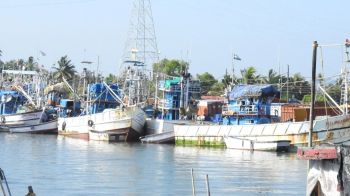
Marine resources have provided humans with the most nourishing nourishment for ages. Fishery resources are renewable natural resources, but indiscriminate harvesting will eventually deplete them.
The Indian Fisheries Act of 1897 and the Marine Fisheries Regulation Act of 1978 established rules and regulations that oversee fisheries management in India. A seasonal fishing ban (SFB) is a conservation-oriented action that regulates the harvesting of marine fish resources and addresses issues related to maritime safety.
The history of SFB began in 1949 when the maximum sustainable yield (MSY) was to be the basis for global fisheries regulation and management.
The most significant amount of fish that can be collected without permanently depleting the fish population is known as the MSY. A unified prohibition was implemented to prevent encroachment into one another's territorial waters and permit fish reproduction without interference.
The majority of maritime states strictly adhere to SFB. In most jurisdictions, the SFB lasts between 45 and 70 days, usually around the pre-monsoon or southwest monsoon season.
The prohibition begins in the middle of April, ends in the middle of June on the East Coast, and concludes at the end of July on the West Coast. During the first two weeks of June, there is a 10-to 14-day overlap during which fishing is prohibited on both Indian coasts.
The two-month restriction is in effect in Goa from June 1 to July 31. However, traditional fishermen are permitted to engage in coastal fishing using non-motorized engines.
Marine life and a healthy population of other aquatic species depend on the SFB. Since the monsoon season is the best for spawning, the seasonal fishing ban is arranged to prevent any disturbances or obstacles to the fish's ability to procreate.
The prohibition's primary effects are to ensure a balance and to stop overfishing. Fishermen are also shielded from the stormy waves and erratic weather brought on by the monsoon.
What does ban mean for
fisheries conservation? (SUBHEAD)
Scientists, academics, policymakers, and activists have been deeply engaged in meaningful discourse over the SFB, with varying perspectives on its effectiveness in increasing fish harvest and preserving the ecosystem.
The Central Government established the Experts' Technical Committee, which examined the length of the ban and reported its findings to the Department of Animal Husbandry, Dairy and Fisheries of India in 2014. That unequivocally stated that no scientific proof links the fishing ban to the recovery of fish stocks.
Since different fish species have distinct spawning months, the analysis could not determine a common peak spawning period for all fish species.
Even different fish species can spawn at various times and places. As a result, spawning could not be a valid justification for imposing the ban.
Scientists at the Central Marine Fisheries Research Institute (CMFRI) conducted a study on the effects of SFB from 1985 to 2008.
Their findings showed that the western coast was not significantly affected by SFB in terms of catch or catch per unit effort (Seasonal Fishing Ban, E. Vivekanandan et al., 2010; Marine Fishing Policy Brief No. 2, CMFRI, Kochi, Kerala).
The SFB has had the following sound effects, too:
It has stopped the annual increase in fishing efforts.
It has improved the price and value of fish because of its increased growth.
It has improved the recruitment of the leading demersal fish species.
Role of climate
change on fisheries
Climate change has been found to affect the behavior of several targeted fish species in terms of age/size-at-maturity, spawning, phenology, fecundity, migration, growth, reproduction, and recruitment.
This suggests that fisheries management practices should be reviewed in light of climate change. (Zacharia et al., 2016, Central Marine Fisheries Research Institute, Kochi, India, pp. 192; Relative vulnerability assessment of Indian marine fishes to climate change using impact and adaptive features. CMFRI Sp Pub No. 125, CMFRI-NICRA Publication no. 5).
The CMFRI-2019 Marine Fish Landings Report states that there has been a decrease in fish landings from the West Coast. Scientists studying climate change blame this decline on rising pollution levels, higher global temperatures, and declining phytoplankton populations.
Experts state that several issues, including a decrease in phytoplankton populations and fish migration, are caused by global warming and impact the fishing sector.
The number of fishing days on the western coast has decreased due to extreme weather occurrences such as strong rains, weather in the Arabian Sea, and overfishing.
Most of these weather-related problems are a result of climate change. Over the last century, the Indian Ocean's surface waters have warmed by 1.2 deg C compared with a global surface warming of up to 0.8 deg C during the same period.
Rapid warming has caused a 20% loss in the marine phytoplankton population which is the food for fish, during the past six decades and a 30% decline in the last 16 years in the western Indian Ocean. Fish typically migrate from warm tropical waters to cooler northern waters based on temperature.
In summary, the SFB cannot be viewed as a stand-alone solution or a magic bullet for problems with unsustainability in marine fisheries.
It will be coupled with other regulations governing the minimum size of fish that can be legally caught, the size of the mesh, the number of vessels and engine capacity, the regular monitoring, control, and surveillance, the licensing of fishing vessels, and the gradual transition to co-management systems of marine ecosystems.