Tourism is a money-spinner for any State or country and even extreme places like Arctic, Antarctic, deserts and rain forests welcome tourists. Goa is no exception as tourism has always been one of the major revenue generators, after mining which has come to a grinding halt. Though being the smallest State with an area of about 3,000+ sq km, Goa has always attracted tourists from far and wide. What started as a trickle in 1970s and 80s has resulted in a sea of people visiting Goa.
A couple of decades or more ago, tourists came in droves except during the four months of monsoon, but in the past few years the scenario has changed. Now they come at any time of the week, month or year to enjoy the sun, sand, surf, food, and feni and have fun.
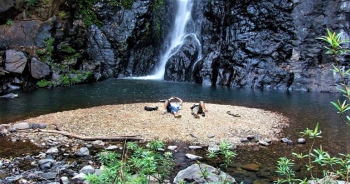
The preferred hotspots are beaches, temples, churches, Mayem lake, waterfalls, spice plantations and take a river cruise. And all these can be covered in a 3-day stay which suits the time and budget for an average middle-class Indian family. There is always a crowd during carnivals, Shigmo and in the last week of December for Christmas and year-end celebrations.
The Goa government has taken steps to encourage several types of tourism such as adventure, forts, lighthouses, cultural, spiritual, eco, hinterland, wellness, wildlife, camping, bird watching, helicopter rides and more are in the offing. In 2022, over 1.1 lakh domestic and 14,000 foreigners explored the hinterlands. There are plans afoot to make Goa a wedding destination and for MICE (Meetings, Incentives, Conferences and Exhibitions).
The 25-year vision document, ‘Destination Goa,’ approved in 2020 is the first tourism masterplan that proposes to wean tourists from the usual tourist circuit of beaches. Therefore, in the coming days, we can expect the government and/or private players to start some of the above-mentioned new activities.
Responsible tourism: ‘Responsibility’ is a crucial aspect of tourism and by this it means the ‘services’ that the State along with the tourist agencies can offer to the tourists. To list a few, these are:
Accommodation: During long holidays and in late December and early January, Goa bursts at the seams due to the influx of tourists. Despite the number of hotels, guesthouses and homestays there is always a shortage of rooms. Dormitories (with maximum stay up to three days) could cater to non-fussy and short-time visitors. Permit homestays for which guests must register online on government-maintained sites. The caveat would be that if anything untoward happens to the hosts and or guests then the State is not responsible.
Safety: Provide proper street lighting, create better traffic sense, have working traffic signals, strictly implement and monitor the safety regulations and measures for water skiing, boating, hot air balloon rides, paragliding etc.
Ticketing: Uniform rates to be charged for the different activities by all the operators and a queue system to be followed which would benefit them. The rate cards must be displayed so that no one is fleeced.
Security: Deploy police to monitor the tourists’ places and book unruly persons and trouble makers. Install CCTVs at vantage points
Facilities: Build washrooms and drinking water facilities in cities, beaches and other spots. At present only a few sites have washrooms and cloak rooms. Parking lots (preferably multi-level, to save space) need to be developed since nowadays people come in their vehicles or hire from the locals.
Transport: Provide affordable and a variety of transport modes that would help tourists and even the locals to move around. Re-introduce hop-on hop-off buses.
Mobile connectivity: Install new and/or better cell towers for efficient connectivity. There could be free Wi-Fi spots with limited usage time.
Boards: Boards cautioning people not to enter water bodies especially when red flags are hoisted. Boards warning not to drink in public, and that swimming and/or driving after drinking would be heavily penalised and even lead to imprisonment.
Entertainment: Not everyone would be interested to visit casinos and dance bars hence, there could be other types of entertainment to beckon the tourists. These could be Goa-by-night tours, camp fires, street plays, showcasing local dances, cuisines, and cultures.
Since responsibility is a two-way street, the tourists too need to do their bit by following the local rules and customs. The sentiments of the locals should not be hurt by wearing inappropriate dresses and behaviour in places of worship. Broad, traffic-less and quite smooth roads do not mean that the tourists can drive like crazy, in wrong directions and after getting drunk.
Sustainable tourism: Goa is dependent on other States for its electricity. Although the government is keen to implement measures such as use of renewable energy (solar, wind), recycled water and rain-water harvesting methods, but the takers are few. Hotels could implement green technology and energy saving devices and methods. Introduce electric and biodiesel buses on tourist routes and give a subsidy to owners of rent-a-car, taxis and bikes who provide EV to their customers. Encourage return of plastic and glass wastes at several collecting kiosks. Do not charge a refund amount for items packed in plastic and glass, as the government proposes to do so.
The government could create templates and standard operating procedures for the various tourism activities. It cannot be a ‘one size fits all’ method. As per reports, domestic tourists make up nearly 90% as compared to the foreigners. Most of the 90% would be middle-to upper-class families and hence, Goa need not emphasise nor try to cater only to high-end tourists. This is a kind of discrimination, so to say! The locals could form associations to run the different tourism activities to prevent bringing in corporates with deep-pockets.
The United Nations World Tourism Organisation has opined that for tourism to recover and grow substantial investments are required. The Goa government together with various stakeholders need to collaborate, adopt green investments and develop a responsible and sustainable tourism industry.